
From Shannon to Modern AI: A Complete Information Theory Guide for Machine Learning
Vinod Chugani,
Machine Learning Mastery,
2025/11/21
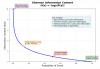
This is a great little article that summarizes the core basis for information theory: "In 1948, Claude Shannon published a paper that changed how we think about information forever... Shannon showed that information could be quantified mathematically by looking at uncertainty and surprise. The information (in bits) of an event is equal to the negative log of the probability of the event. "When an event has probability 1.0 (certainty), it gives you zero information. When an event is extremely rare, it provides high information content." What that means depends on how you interpret probability, but that's a subject for another day.
Web: [Direct Link] [This Post][Share]
Rewiring Mozilla: Doing for AI what we did for the web
Mark Surman,
Mozilla Blog,
2025/11/21
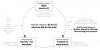
Mark Surman outlines Mozilla's AI strategy (Mozilla makes the Firefox browser). In a nutshell, there are three parts: "Open source AI for developers, public interest AI by and for communities, and trusted AI experiences for everyone." That's fine so far as it goes, but these require rather more detail to make sense. Here's the full strategy document.
Web: [Direct Link] [This Post][Share]
Putting principles into practice: an ethical approach to GenAI
Rosemarie McIlwhan, et al.,
#ALTC Blog,
2025/11/21
The whole concept of ethics and AI continues to dominate discussion, so much so that when someone complains about "shaky foundations of just accepting the 'tech bros magic and misdirection'" I begin to question their credibility. I mean, has any technology been more criticized? Outside of Clippy, I mean? I'm desperately looking for something new in all these reflections, but I'm getting "read the privacy statement, "whose labour is the model built-on", and "develop the ability to critique the outputs." I think the fear is that students won't be like us, or rather, the idealized us. As Simon Buckingham-Shum describes it, "we hope all students will develop as the foundation for lifelong learning: curiosity, agency, sensemaking, a desire to find their own voice, resilience (shock, even enjoyment!) of not-knowing, and working their way through the mess towards comprehension, breakthrough, coherence, beauty." Maybe if the grind of higher education weren't the barrier before the possibility of a decent life, students would be more generous with their ideals.
Web: [Direct Link] [This Post][Share]
Data Visualization – Data Visualization with R
Andrew Heiss,
Data Visualization with R,
2025/11/21
Via this week's Data Science Weekly I encountered the the GitHub repository of all the exercises for this course. You could just try the assignments without any guidance, or you can go to the course content page for some background. Many of the concepts illustrated and demonstrated in this course play out in analyses of the data in our field, and the techniques you can learn can make for better research. Enjoy.
Web: [Direct Link] [This Post][Share]
Physical AI
Archetype,
2025/11/21
If 'content knowledge' were enough, we could teach students everything they need to know from books and instruction. Our experience with AI shows that this isn't so. Hence we are seeing the rise of 'Physical AI', for example, a foundational model called Newton that helps AIs learn from physical data such as current, temperature and vibration. "By combining these signals, Newton reasons across modalities and uncovers patterns of physical behavior that are difficult or impossible to detect from any single source." No doubt there are many such projects underway, and it will be interesting to see what results from them. Meanwhile, in education, let's not lose our focus on experience and discovery.
Web: [Direct Link] [This Post][Share]
Elsevier launches LeapSpace: an AI-Assisted workspace to accelerate research and discovery
Library Technology News Service,
2025/11/21

I'm not sure what to make of this. The press release: "Elsevier launches LeapSpace: an AI-Assisted workspace to accelerate research and discovery... One seamless assistant: Generate ideas, plan projects, explore literature, find collaborators, and identify funding... AI that analyzes abstracts and full text to deliver structured, referenced answers (plus) Integrated funding discovery: Access 45,000 active and recurring grants worth over $100 billion." The access to funding is, I guess, the cherry on top, though why governments would continue to fund researchers for simply using an AI tool remains an open question. According to the launch page it's available today to institutions. Via DigitalKoans.
Web: [Direct Link] [This Post][Share]
There are many ways to read OLDaily; pick whatever works best for you:
- Read in your web browser on this web page, updated weekdays
- Receive a daily or weekly email newsletter by subscribing here
- Subscribe to the RSS feed using your favourite feed reader
- Follow @OLDaily@mastodon.social on Mastodon or elsewhere in the fediverse
- Follow @OLDaily on Bluesky
- Read OLDaily as a LinkedIn Newsletter
- Integrate the open API using the JSON feed
This newsletter is sent only at the request of subscribers. If you would like to unsubscribe, Click here.
Know a friend who might enjoy this newsletter? Feel free to forward OLDaily to your colleagues. If you received this issue from a friend and would like a free subscription of your own, you can join our mailing list. Click here to subscribe.
Copyright 2025 Stephen Downes Contact: stephen@downes.ca
This work is licensed under a Creative Commons License.