This $150 Robot Arm Is The Best Way to Start With Advanced Robotics
Nikodem Bartnik,
YouTube,
2025/11/20

Two fun things in one post. First is this video, which describes a robot arm tool you can build, control and trail. Looks like a great learning activity. I learned of it via an email sent to the Learning Engineering mailing list about a tool called TubeDummies, which takes a video, like this robot arm demonstration, and breaks it down into step-by-step instructions. While I wouldn't use it for everything, I can see how it would be useful for video-based instructions I'm actually trying to follow.
Web: [Direct Link] [This Post][Share]
He got sued for sharing public YouTube videos; nightmare ended in settlement
Ashley Belanger,
Ars Technica,
2025/11/20

Ars Technica covers the story of Ian Linkletter's five year struggle with Proctorio. The article is generally sympathetic with Linkletter and (from what I can tell) relates the story in an accurate and even-handed way. "In my opinion, and this is just my opinion, one of the purposes of the lawsuit was to have a chilling effect on public discourse around proctoring," Linkletter told Ars. "And it worked. I mean, a lot of people were scared to use the word Proctorio, especially in writing."
Web: [Direct Link] [This Post][Share]
The State of the Open Social Web
Ben Werdmuller,
2025/11/20

This is mostly an introductory post on the open social web (normally called the 'fediverse' as a whole, though Ben Werdmuller reserves this term for ActivityPub alone). It is mostly focused on ActivityPub and ATmosphere, though it mentions some others, most notably Frequency, funded by Project Liberty. Also mentioned are Buffer and Fedica, which allows you to "schedule, and automate with unique capabilities across 12 platforms." See also this Slashdot item about DeVine.
Web: [Direct Link] [This Post][Share]
Sensing Ethics in Postdigital Future Classrooms - Postdigital Science and Education
Dewa Wardak, Sandris Zeivots,
SpringerLink, Postdigital Science and Education,
2025/11/20
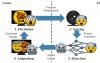
There's a lot of overlap between the approach to ethics described in this paper (17 page PDF) and my own approach. The authors describe an approach they lable 'sensing ethics', drawing from Varela to say "our ability to sense a situation and react appropriately 'is so immediate, not only do we not see it, we do not see that we do not see it'." What they call 'sensing' I call 'recognition'. Thus we agree when we say "since sensing is embodied, it cannot be neutral as it is always tainted with educators' unconscious bias and interwoven with politics of power" (though I would say it is interwoven with much more than just this). I'd want to have a longer discussion to make the finer points in this paper a lot more precise. The authors break down 'sensing' into 'sayings', 'doings' and 'relatings', hich to me is a pointless taxonomy. Similarly, I have complaints about the three examples they offer. But the overall statement is correct, in my view: "by framing sensing ethics as a practice rather than an abstract concept, we highlight its temporal, relational, and contextually embedded nature within the educational landscapes of postdigital future classrooms." Image: Melhart, et al., The Ethics of AI in Games.
Web: [Direct Link] [This Post][Share]
There are many ways to read OLDaily; pick whatever works best for you:
- Read in your web browser on this web page, updated weekdays
- Receive a daily or weekly email newsletter by subscribing here
- Subscribe to the RSS feed using your favourite feed reader
- Follow @OLDaily@mastodon.social on Mastodon or elsewhere in the fediverse
- Follow @OLDaily on Bluesky
- Read OLDaily as a LinkedIn Newsletter
- Integrate the open API using the JSON feed
This newsletter is sent only at the request of subscribers. If you would like to unsubscribe, Click here.
Know a friend who might enjoy this newsletter? Feel free to forward OLDaily to your colleagues. If you received this issue from a friend and would like a free subscription of your own, you can join our mailing list. Click here to subscribe.
Copyright 2025 Stephen Downes Contact: stephen@downes.ca
This work is licensed under a Creative Commons License.