Discord and Discourse - Better Together
Rishabh Nambiar,
Discourse,
2025/11/13

Alan Levine links to this article from 2021 on two different products with similar names: Discourse and Discord. Discourse is software for hosting online forums, while Discord is software for hosting live discussions. "Discord is immediate and synchronous, while Discourse is gradual and asynchronous." There's a lot of overlap between the two, and as this article shows, they can be used effectively together to support virtual communities. That said, they each have a learning curve, especially if you're the host; the Ghost Forums implementation, highlighted in the article, for example, shows a lot of the thought that has gone into making the discussion board navigable and intuitive (which it certainly isn't right out of the box - contrast with OEGlobal Connect, and try to find the most recent posts). They also require community members to commit to the platforms, because they're not really integrated with social media.
Web: [Direct Link] [This Post][Share]
The educational robot inspiring students of all ages
TU Delft,
2025/11/13

This is the kind of story I like. "On a mission to make robotics education more accessible, affordable, and inspiring, Martin Klomp led the development of MIRTE - a low-cost, fully open-source educational robot. Through this project, he aims to help students - from primary school to university - engage with technology in meaningful, hands-on ways." This is a view of technology that is empowering and liberating. It leads to innovations like this, opening up the world to people who had no agency before. The best uses of AI and innovative technology will come when they're freed from commercial silos and put into the hands of people who will unleash their real needs and imagination on them.
Web: [Direct Link] [This Post][Share]
Maybe 'Know Thyself' Was Never Advice but a Warning
Abhishek Chakraborty,
The Sunday Wisdom,
2025/11/13

"Somewhere between the Renaissance and LinkedIn, between Descartes' 'I think, therefore I am' and Instagram's 'I post, therefore I exist,' we began treating identity as a deliverable—something to refine, brand, and present to the world for validation." Thus argues Abhishek Chakraborty. It's an interesting thought, comparing the accumulation of 'self' to the accumulation of cruft in your midwestern suburban bungalow. Too much is tied up in things; there's no freedom to become something new. "A small identity has large permission," writes Chakraborty. "When the stakes are low, curiosity breathes again. It's easier to throw a stone into a river when you don't care if it skips." There may be a case for this, a case for less focus on learning and teaching identity, and more on exploration and ambiguity.
Web: [Direct Link] [This Post][Share]
65daysofstatic’s new No Man’s Sky album searches for humanity in an AI-filled world
Tom Regan,
The Verge,
2025/11/13

I've been playing No Man's Sky since its launch in 2016 (heridium pillars, anyone?) and continue to enjoy it. It's more of a relaxation or a meditation these days. What makes NMS different from most games (though that's probably changing now) is that it sweeping scope of more than 18 quintillion (1.8×10¹⁹) planets to explore is made possible through procedural generation. So the whole emergence of generative AI was no real surprise to me. The other part of NMS, though, is how it manages to keep players in touch with basic humanity, partially though obvious methods, such as interaction with other players in the cloud environment, and partially through content elements, like little woodland huts, fishing, and the music. And that's what this article is about, the release of an album by 65daysofstatic, the band behind the No Man's Sky soundtrack. "I think there's a huge difference between (AI slop) and No Man's Sky's generative systems … Now it's all about making more content to churn through, just to keep people's attention for a few seconds. The whole thing is miserable."
Web: [Direct Link] [This Post][Share]
The SoTL Guide: (Re)Orienting the Scholarship of Teaching and Learning
Nancy L. Chick, Peter Felten, Katarina Mårtensson,
Center for Engaged Learning, Elon University,
2025/11/13
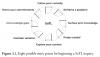
This open access book (134 page PDF) is "a book for readers who are relatively new to SoTL" but which will also, the authors say, offer "more experienced scholars... things that surprise and even challenge them." It offers a perspective on education that is, to draw from Boyer, "not only to prepare students for productive careers but also to enable them to live lives of dignity and purpose." And it emphases that in research "projects need to be open to peer review and feedback and contribute to scholarly knowledge beyond our self." This includes students, who aren't just the 'subjects' of research, but partners in the research process. There are eight potential entry points (illustrated) for entering an SoTL inquiry, "and no one is at the door checking credentials or blocking anyone's entry." I like that. The guide offers a definition of 'meaningful questions', offers advice on 'situating your work' in SoTL, describes relational SoTL ethics, and outlines how to design an inquiry.

Web: [Direct Link] [This Post][Share]
There are many ways to read OLDaily; pick whatever works best for you:
- Read in your web browser on this web page, updated weekdays
- Receive a daily or weekly email newsletter by subscribing here
- Subscribe to the RSS feed using your favourite feed reader
- Follow @OLDaily@mastodon.social on Mastodon or elsewhere in the fediverse
- Follow @OLDaily on Bluesky
- Read OLDaily as a LinkedIn Newsletter
- Integrate the open API using the JSON feed
This newsletter is sent only at the request of subscribers. If you would like to unsubscribe, Click here.
Know a friend who might enjoy this newsletter? Feel free to forward OLDaily to your colleagues. If you received this issue from a friend and would like a free subscription of your own, you can join our mailing list. Click here to subscribe.
Copyright 2025 Stephen Downes Contact: stephen@downes.ca
This work is licensed under a Creative Commons License.