
Universities (still) suck at learning analytics
Colin Beer,
Col's Weblog,
2025/10/24
Why are universities are almost universally poor at implementing learning analytics? asks Colin Beer. To get at the answer he appeals to the theory of situational awareness (SA), and specifically, how "SA is core to framing the purpose component of PIRAC (Purpose, Information, Representation, Affordances, Change)." The standardised approaches employed by universities do not respond to variations across these dimensions. They "treat analytics as static reporting tools rather than decision-support systems... Enterprise systems reflect managerial priorities of control, predictability and standardisation, whereas universities thrive on diversity, autonomy and emergence."
Web: [Direct Link] [This Post][Share]
Populism fast and slow
Joseph Heath,
In Due Course,
2025/10/24

The argument offered in this post is that populism is based on our intuitive ways of thinking, in contrast with political stances based on more analytical styles of thinking. These are often in accord, but populists emphasize areas in which they differ, for example, (over-estimating) the influence of punishment on crime, (insensitive) uses of language, (resisting) solutions based on collective action, (disregarding) rule of law, and (inclination toward) conspiracy theories. It's tempting to depict the populist as always wrong (and in these five areas they generally are) but the analytical approach is also not without faults. "Analytical reasoning is sometimes a poor substitute for intuitive cognition. There is a vast literature detailing the hubris of modern rationalism... Democratic political systems are fairly responsive to public opinion, but they are still systems of elite rule, and so there are specific issues on which the people genuinely have not been listened to, no matter how angry or upset they got."
Web: [Direct Link] [This Post][Share]
Coursera Is Just Not That Into You
Phil Hill,
On EdTech,
2025/10/24

The 'you' in question in the heading of this post is 'universities' (revealing an interesting designation of audience, but I digress). It comes on the heels of "the new 15% 'platform fee' (that) comes on top of de-emphasizing OPM degrees and university content." According to Phil Hill's analysis, which seems right, it means Coursera is taking a 15% cut off the top of course fees, after which they will be split with providers according to the existing formula. OPM contracts are not affected, probably because "OPM contracts went through much more review by university lawyers and executives, and that Coursera cannot unilaterally change those terms." More significant is the logic at work here, as described by Hill: " Coursera is... an aggregator. Aggregators create demand (learners) and leverage that to control markets and set terms with suppliers (universities)." There are (in my view) two possible responses: to block aggregation, or to encourage multiple aggregators. The latter is to my mind the better option.
Web: [Direct Link] [This Post][Share]
A new core curriculum: seven comprehensive video modules from the Wikimedia Foundation for beginners
Asaf Bartov,
Diff,
2025/10/24

From the web page: "Want to learn how to edit Wikipedia? A new free self-paced course, all in video with subtitles, is available from the Wikimedia Foundation! The course covers the core content policies of English Wikipedia, and will teach you everything you need to contribute with confidence and to avoid the mistakes that often get people's contributions rejected." Having students edit Wikipedia has long been a great learning activity, and these videos, plus the experience of editing, will develop research, validation and critical thinking skills.
Web: [Direct Link] [This Post][Share]
Is Misinformation More Open? A Study of robots.txt Gatekeeping on the Web
Nicolas Steinacker-Olsztyn, Devashish Gosain, Ha Dao,
arXiv,
2025/10/24
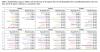
I have often used the phrase "democracy dies behind a paywall". It is of course a riff on the Washington Post's slogan that democracy dies in darkness, and both allude to the idea that democracy depends on timely access to accurate facts and information. This article gets at the other side of that slogan, that when access to trusth is blocked, falsehoods and misinformation flourish, with the consequent undermining of democracy. This article focuses on how genuine news sites and misinformation sites restrict (or not) access by AI agents and scrapers. Unsurprisingly, the misinformation sites are happy to welcome AI while "AI-blocking by reputable sites (increased) from 23% in September 2023 to nearly 60% by May 2025... raising essential questions for web transparency, data ethics, and the future of AI training practices."
Web: [Direct Link] [This Post][Share]
To Explain or to Predict?
Galit Shmueli,
Statistical Science,
2025/10/24
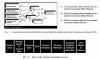
This is a great article, 15 years old, but still popular, as reported in today's Data Science Newsletter. It argues at length and in considerable depth that explanation is not the same as prediction. To explain is to have a model that describes the causes of an event; to predict is to use that model to, well, predict future events. Galit Shmueli shows how they are not the same across four dimensions: causation-association, theory-data, retrospective-prospective, and bias-variance. People who read education research articles will find themselves nodding at a lot of what's discussed here. Though still a heady read, you can get the essence of the paper by reading sections 1 and 4. Section 1 describes the four dimensions. Section 2 outlines how the distinction plays out in each stage of the statistical modelling process, while Section 3 offers two examples of the distinction. Section 4 contains conclusions and recommendations.
Web: [Direct Link] [This Post][Share]
There are many ways to read OLDaily; pick whatever works best for you:
- Read in your web browser on this web page, updated weekdays
- Receive a daily or weekly email newsletter by subscribing here
- Subscribe to the RSS feed using your favourite feed reader
- Follow @OLDaily@mastodon.social on Mastodon or elsewhere in the fediverse
- Follow @OLDaily on Bluesky
- Read OLDaily as a LinkedIn Newsletter
- Integrate the open API using the JSON feed
This newsletter is sent only at the request of subscribers. If you would like to unsubscribe, Click here.
Know a friend who might enjoy this newsletter? Feel free to forward OLDaily to your colleagues. If you received this issue from a friend and would like a free subscription of your own, you can join our mailing list. Click here to subscribe.
Copyright 2025 Stephen Downes Contact: stephen@downes.ca
This work is licensed under a Creative Commons License.