
Is AI Conscious? A Primer on the Myths and Confusions Driving the Debate
Susan Schneider, David Sahner, Robert Lawrence Kuhn, Mark Bailey, Eric Schwitzgebel,
Center Center for the Future of AU, Mind and Society, PhilPapers,
2025/10/14

I'm not going to summarize this paper - I'll let Justin Weinberg do that - beyond saying that it treats the problem of AI consciousness like a warm bath into which you just want to immerse yourself for a Saturday afternoon (not that I've ever done that). Without a clear understanding of consciousness we will as humans be hard-pressed to recognize it when it appears in machines, and moreover, as machines begin to design themselves, any AI-native consciousness may be completely unrecognizable as such to us. I've written elsewhere that 'consciousness is experience', which will do in a pinch; it might be compared to Thomas Nagel's question, "what is it like to be a bat"? Consciousness is "what it's like" to be something, to that something. So there's no question in my mind as to whether AI will be consciousness; it will. But what that consciousness will be like, I would be hard-pressed to say.
Web: [Direct Link] [This Post][Share]
Wiley Launches Interoperable Platform to Power Scientific Discovery in World's Leading AI Technologies
Wiley,
2025/10/14
You really have to parse the text carefully to undertsand what's being offered here, and I won't say for sure that my interpretation is exactly right, but here we go. Wiley (the publisher, not the person) writes in this press release that its product works by "integrating scholarly content and data subscriptions with today's leading AI platforms." There's a promotional video. So what I think is happening is that there's an access point (specifically, an MCP) that allows an AI like Claude to access your subscribed content from the publisher. So you get to pay twice: once for the AI, once for the content. The product is called Wiley AI Gateway. Stock market analysts liked it. But I'm wondering whether it will make other partner research applications, like Perplexity, just not work as well any more. Via Jill Oneill.
Web: [Direct Link] [This Post][Share]
WhyTorch
Adam Allevato,
Kukanani,
2025/10/14
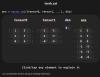
This website helps you learn what PyTorch functions do by showing them in action. PyTorch itself is an open-source machine learning library, and per Wikipedia "used for applications such as computer vision, deep learning research and natural language processing, originally developed by Meta AI and now part of the Linux Foundation umbrella." In order to benefit from this website you need to run through the examples and then actually think about what's happening in the simulation. torch.cat, for example, concatinates one tensor (which is a data strructure like an array or matrix) with another - and you can see them put together, one after another. Torch.minimum will compare two tensors and take the minimum value for each element. Do this sort of stuff with very large datasets and you get machine learning.
Web: [Direct Link] [This Post][Share]
The future of the CLO: Leading in a world of merged work and learning
Bryan Hancock, Heather Stefanski, Lisa Christensen,
McKinsey,
2025/10/14
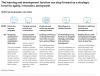
This article is less about the 'new mandate for CLOs' than it is about what it calls the 'new paradigm for workplace learning', one where "Advanced technologies are now being deployed not only to assist agents in being more productive but also to coach them as they work... technology can embed learning into the flow of work, making development a natural and continuous part of the employee experience." Since this article is aimed at Chief Learning Officers (CLO) there's less emphasis on exactly how this is is done and more on priorities, alignment and case studies. For example: "Instead of identifying skills employees lack, learning teams can partner with business leaders to analyze how roles, workflows, and even organizational structures need to evolve to meet future challenges." None if this is wrong, from my perspective, but it also reads like an in-depth analysis of the tip of the iceberg. Via Mark Oehlert.
Web: [Direct Link] [This Post][Share]
The Pragmatic Engineer 2025 Survey: What’s in your tech stack? Part 3
Gergely Orosz,
The Pragmatic Engineer,
2025/10/14
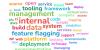
This is the third of a great three-part series (Part 1, Part 2, Part 3) on tools used by software engineers. You can read it as a well-organized list of tool categories, and so understand the landscape a bit better, or for insight into what tools professionals are actually using (and it's really interesting to compare this list with Jane Hart's EdTech list, as there's almost zero crossover). I see the Engineering survey as a pretty good snapshot that lags a little (but not a lot) behind the leading edge; I recognized the vast majority of the tools and have used many of them. Probably nobody is an expert in all of these tools, but if you're hiring an edtech developer you should be looking for expertise in at least one of these in each category.
Web: [Direct Link] [This Post][Share]
The world’s largest library of lies has good news about fake news
Bianca Giacobone, Guido G. Beduschi,
Big Think,
2025/10/14

As a philosophy student I recall studying briefly the work of Pseudo-Dionysius, who, as the name suggests, "acquired almost apostolic authority" by faking the origin of his works on Neoplatonism. He is still studied today, not because we are still fooled, but for the originality of his thought. And in any case, "it must also be recognized that 'forgery' is a modern notion." And that brings us to the main point of this article: fakery and forgery were not invented recently, but have been with us since antiquity. Studying fakes and forgeries shifts our focus "from 'Is it true?' to 'Who created this? Who benefits from this, and why? What are they trying to do? What are they trying to exploit?'" Asking these questions is a skills that will become increasingly necessary as we become increasingly aware of our uncertain grounds. "Playing fast and loose with authorities, cooking and pasting strings of citations, fudging and bashing arguments in bad faith has always happened." And while new technology makes it a lot easier to generate fakes, it also stands to make it a lot easier to detect them.
Web: [Direct Link] [This Post][Share]
Learning Networks and the Age of AI with Stephen Downes
Jose Escamilla,
EduTrends,
2025/10/14

I am interviewed for the EduTrends podcast. "In this episode of EduTrends, Stephen Downes, one of the pioneers of online learning and co-developer of the theory of connectivism, shares how learning is not just about absorbing content, but about building meaningful connections within networks of people, ideas, and technologies. At the same time, Downes warns of the risks that come with over-reliance on AI in education."
Web: [Direct Link] [This Post][Share]
There are many ways to read OLDaily; pick whatever works best for you:
- Read in your web browser on this web page, updated weekdays
- Receive a daily or weekly email newsletter by subscribing here
- Subscribe to the RSS feed using your favourite feed reader
- Follow @OLDaily@mastodon.social on Mastodon or elsewhere in the fediverse
- Follow @OLDaily on Bluesky
- Read OLDaily as a LinkedIn Newsletter
- Integrate the open API using the JSON feed
This newsletter is sent only at the request of subscribers. If you would like to unsubscribe, Click here.
Know a friend who might enjoy this newsletter? Feel free to forward OLDaily to your colleagues. If you received this issue from a friend and would like a free subscription of your own, you can join our mailing list. Click here to subscribe.
Copyright 2025 Stephen Downes Contact: stephen@downes.ca
This work is licensed under a Creative Commons License.