
The speech wars come for Wikipedia
Aaron Mak,
Politico,
2025/10/03

I've had my concerns over the years about how Wikipedia editors manage themselves, but I never agreed with former co-founder Larry Sanger's proposal to manage them through a top-down process. Now "Sanger, has triggered a fresh chorus of Republican calls for reform, with a comprehensive proposal to overhaul the platform and make it more open to conservatives." He offers nine theses which run counter to procedures and guidelines editors have adopted over the years. For example, Sanger would end consensus, "because it hides legitimate dissent under a false veneer of unanimity," he would abolish the list of perennial sources that assesses the reliability of commonly referenced news and information sites, he would let the public 'rate' articles, and he would end 'permanent bans' of authors he says "are too often used to enforce ideological conformity." I honestly don't think turning Wikipedia into the X/Twitter of reference materials would be helpful. Thankfully, it's a lot harder to bully Wikipedia that it is to bully CBS or ABC.
Web: [Direct Link] [This Post][Share]
Why are human networks important? Part one
Valdis Krebs,
RSU,
2025/10/03
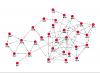
Long-time OLDaily readers will be familiar with the concepts outlined in this three part series (Part 1, Part 2, Part 3) by Valdis Krebs on human relationship networks. He summarizes "why human networks matter and how social network analysis can help us understand them. Then he shows how data and visualizations can help us understand them. Finally, he looks at relationships between different types of nodes (for example, people and documents). For my own part (and here this is me speaking, not Krebs), I look at the analogy between social networks, as described by Krebs, and neural networks, including artificial neural networks. I think the same underlying logic is at play in all three, which means that societies (understood as social networks) can 'know' in the same way brains and computers can 'know'. Note that you can't simply extract social knowledge through things like exit interviews (the way Mark Sheppard suggests here). It is literally the structure of a society or organization. Via Mark Oehlert.
Web: [Direct Link] [This Post][Share]
OpenAI launches ChatGPT Pulse to proactively write you morning briefs
Maxwell Zeff,
TechCrunch,
2025/10/03
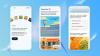
The new feature, which basically writes a personal newsletter for you, is only available to Pro users on a mobile phone, but at $US 200 a month, it's out of my price range. But it's still a neat idea. I like to check my morning news (I ready CityNews and CBC news summaries) and I'd prefer if it were news that interests me rather than the current mix of crome, traffic and politics (I exaggerate, but you get the idea). But not for $200 a month.
Web: [Direct Link] [This Post][Share]
Colleges And Schools Must Block And Ban Agentic AI Browsers Now. Here’s Why.
Dr. Aviva Legatt,
Forbes,
2025/10/03

My first response to this bit of moral panic is, "Yeah, good luck with that." Readers may recall that I automated the LinkedIn version of my newsletter using a simple Python script. There's no difference between automated Stephen and real Stephen. I'm actually using Chrome to make the requests. If instead of reading from an RSS file my script got its input from a large language model (LLM) using, say, the ChatGPT API the way I do in CList, I would have an automated agentic AI browser. I could do things like "move through an LMS to locate assignments, complete quizzes, and submit results" or, with access credentials, "impersonate instructors by grading student work and posting feedback." These are simple off-the-shelf technologies anybody can mis and match to automate whatever they want. Good luck banning them.
Web: [Direct Link] [This Post][Share]
Credential Schemas Standards
Knut Sveidqvist,
Decentralized Identity Foundation,
2025/10/03
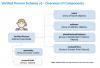
We can think of distributed identity as blockchain networks of people, not coins. Specifically, a 'decentralized identifier' (DID) is composed of a "Unique ID URI string and PKI metadata document format for describing the cryptographic keys and other fundamental PKI values linked to a unique, user-controlled, self-sovereign identifier in a target system (i.e. blockchain, distributed ledger)." This document defines the approved specification for credential schemas version 1.0 from the the Decentralized Identity Foundation. Use cases are mainly in "financial services, but can also be used in telecommunications, and any sector requiring identity verification for customer onboarding, transaction verification, and regulatory compliance, enabling streamlined and standardized data handling for 'Know Your Customer' (KYC) procedures."
Web: [Direct Link] [This Post][Share]
Everything Feels Empty Now
Carlo Iacono,
Hybrid Horizons,
2025/10/03

I take photographs of light, not objects. Carlo Iacono does some brilliant work with light in this post. The gist: "The warmth of sunlight on skin, the weight of grief in the chest, the expansion of joy that seems to push against the boundaries of the body: these are not metaphors for 'real' knowledge. They are knowledge itself... ambiguity is not failure; it is often the only honest response to the complexity of experience. When we demand that everything be made clear, we don't achieve greater understanding."
Web: [Direct Link] [This Post][Share]
There are many ways to read OLDaily; pick whatever works best for you:
- Read in your web browser on this web page, updated weekdays
- Receive a daily or weekly email newsletter by subscribing here
- Subscribe to the RSS feed using your favourite feed reader
- Follow @OLDaily@mastodon.social on Mastodon or elsewhere in the fediverse
- Follow @OLDaily on Bluesky
- Read OLDaily as a LinkedIn Newsletter
- Integrate the open API using the JSON feed
This newsletter is sent only at the request of subscribers. If you would like to unsubscribe, Click here.
Know a friend who might enjoy this newsletter? Feel free to forward OLDaily to your colleagues. If you received this issue from a friend and would like a free subscription of your own, you can join our mailing list. Click here to subscribe.
Copyright 2025 Stephen Downes Contact: stephen@downes.ca
This work is licensed under a Creative Commons License.