
Buy it in ChatGPT: Instant Checkout and the Agentic Commerce Protocol
OpenAI,
2025/09/29
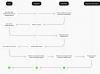
OpenAI has launched an 'instant checkout' button in ChatGPT and open sourced the Agentic Commerce Protocol that it, along with Stripe, employs to support this function. The idea is that it bridges the gap between AI as an information tool and AI as an e-commerce tool (and, I guess, the gap between AI that loses money and AI that makes money). In sum, "AP2 uses cryptographically signed, verifiable mandates to prove user intent, authorization and accountability." It's for U.S. customers only at the moment; other countries will have to wait (presumably to satisfy security and consumer protection regulations). See also: ZDNet, CMSWire, CNBC.
Web: [Direct Link] [This Post][Share]
2025 Horizon Action Plan: Building Skills and Literacy for Teaching with GenAI
EDUCAUSE,
2025/09/29

My dissatisfaction with this action plan (11 page PDF) starts with the 'goals for future state' collectively described by the panelists. Partially this stems from the obvious way politics is driving the process (leading to a desire for "clear boundaries between politics and education") but most of it stems from the way the document emphasizes institutional states and processes and nothing at all about the value students and society are supposed to derive from that. And that's why you get what in essence for each level the time-worn mantra running from policies to collaboration to share understanding to alignment to implementation to community (except for the individual, whose only real imperative is to obey). There's no real understanding that what people will want in the future will force changes in institutional structure and decision-making.
Web: [Direct Link] [This Post][Share]
Adapting for scale: Experimental Evidence on Technology-aided Instruction in India
Karthik Muralidharan, Abhijeet Singh,
The Learning Agency, National Bureau of Economic Research,
2025/09/29
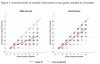
What attracted me to this paper (69 page PDF) was the assertion in the abstract that "Many interventions that 'work' in small-scale trials often fail at scale, highlighting the centrality of effective scaling for realizing the promise of evidence-based policy." So that's what done here. But also, it's noteworthy that they change the application of the personalized adaptive learning (PAL) software from a take-home implementation to one that happens in-school (though "substituting classroom teaching with computer-aided instruction has typically not been effective"). So they do realize learning gains, but it's interesting that "while absolute treatment effects are similar across students, gains relative to the counterfactual are higher for weaker students." However, "because students were often so far behind, even meaningful increases in learning from this low base are unlikely to be captured by grade-level school exams." Also worth noting is that scaling is less about fidelity to the original implementation and "often requires adapting the intervention design in ways that build on the insights and principles illustrated by initial efficacy trials, but may lead to substantially different implementation protocols."
Web: [Direct Link] [This Post][Share]
What Games Have to Teach Us About AI-Enhanced Learning
David C. Gibson,
AI Enhanced Learning,
2025/09/29
This paper (16 page PDF) draws from (and very nicely summarizes) James Paul Gee's 'learning principles linked to game design elements' and from this discussion derives four principles (augmentation, partnership, connection and metacognition)and five elements (agency, interaction, challenges, representation and structure) of AI-enhanced learning. "AI-enhanced learning fundamentally transforms the mediational relationship between learners, knowledge, and communities," writes David Gibson. "AI systems can unobtrusively and continuously analyze the entire trajectory of a learner's interactions, noting patterns in questioning strategies, tracing the evolution of problem-solving approaches, and identifying moments of conceptual breakthrough or confusion. This continuous assessment creates opportunities for precisely calibrated, timely feedback that targets not just the correctness of outcomes but the quality of thinking processes." Quite so. This article is from the first edition of a new journal, AI Enhanced Learning - I wasn't able to find the contents linked from the journal home page, but the contents can be found here (scroll down).
Web: [Direct Link] [This Post][Share]
Teaching and Learning in the Age of Generative AI: Rethinking the Educational Cycle
Halszka Jarodzka,
AI Enhanced Learning,
2025/09/29
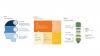
The Educational Cycle referenced in the title of this paper (17 page PDF) is the usual process of teach-practice-assess. This paper doesn't exactly 'rethink' the cycle so much as it adds AI elements to the cycle. What comes out the other end is a more detailed description of typical educational practices with AI accoutrements (see figures 3, 4 and 6 for each of the three stages). This article is from the first edition of a new journal, AI Enhanced Learning - I wasn't able to find the contents linked from the journal home page, but the contents can be found here (scroll down).

Web: [Direct Link] [This Post][Share]
AI for Student Engagement: A Global Review of Emerging Strategies
Digital Education Council,
2025/09/29
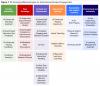
This article (39 page PDF) is a survey of "106 global case studies" (which are not listed) and "identifies 24 emerging methodologies for using AI to enhance student engagement." It reads more as a classification and brainstorming exercise. The methodologies are subdivided into six categories, five of which are useful while one ('instructional delivery', which includes things like 'Avatar Teaching', is a bit strained. You have to pass through a spamwall to get to it but this link should take you straight to it.
Web: [Direct Link] [This Post][Share]
There are many ways to read OLDaily; pick whatever works best for you:
- Read in your web browser on this web page, updated weekdays
- Receive a daily or weekly email newsletter by subscribing here
- Subscribe to the RSS feed using your favourite feed reader
- Follow @OLDaily@mastodon.social on Mastodon or elsewhere in the fediverse
- Follow @OLDaily on Bluesky
- Read OLDaily as a LinkedIn Newsletter
- Integrate the open API using the JSON feed
This newsletter is sent only at the request of subscribers. If you would like to unsubscribe, Click here.
Know a friend who might enjoy this newsletter? Feel free to forward OLDaily to your colleagues. If you received this issue from a friend and would like a free subscription of your own, you can join our mailing list. Click here to subscribe.
Copyright 2025 Stephen Downes Contact: stephen@downes.ca
This work is licensed under a Creative Commons License.