Why are so few professors troublemakers?
Paul Bloom,
Small Potatoes,
2025/09/25
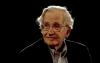
This post (also in the Chronicle) is a response to a survey on taboos and self-censorship among U.S. psychology professors by Cory J. Clark and others. To be fair, I don't think the ten views studied are actually taboo, though the subject matter touches on cultural sensitivities in the U.S. at the moment. But the key statement from the study is that "almost all professors worried about social sanctions if they were to express their own empirical beliefs." To which I reply, I guess, "welcome to society". Or as Chomsky says (p. 111), "the whole educational and professional training system is a very elaborate filter, which just weeds out people who are too independent." We can all believe what we want, and in a free society, we can all express these beliefs. And professors have rather more latitude than most. But just as I don't see many corporations around here hiring avowed communists these days, I don't see institutions eager to hire people with antisocial views. And it is the nature of capitalism that people need a job in order to survive. As Apostolos K says, "most of the professoriate are low paid adjuncts with no security and oodles of precarity." You want full freedom of expression? Build a society where people don't live lives two paycheques away from homelessness. Or at the very least, join a union.
Web: [Direct Link] [This Post][Share]
Project Zero and Its Impact
Ellen Winner,
Harvard Graduate School of Education,
2025/09/25
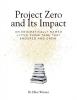
It's interesting to me that I have studied the work of both Nelson Goodman and Howard Gardner without ever appreciating the association between the two. But Peter Skillen pointed to this calling is a 'valuable resource' and it is. This massive 525 document provides a comprehensive history and overview of Project Zero (see also), launched 60 years ago at Harvard by Goodman and Gardner along with Howard Perkins, which first focused on art education, but later branched into a range of initiatives familiar to most educators today, including multiple intelligences, visual thinking, and other inquiry-based methods. The document also gave me some practical experience because it is published as a Flipbook, so there's no downloadable version at all (you can't even copy text to quote it in a post like this) - no matter, I figured it out: go to the page you want to download, go to fullscreen, download the web page (ctl/S), then use Python as described here to OCR the page image (which will be a .webp). And to Harvard: next time, just post a document people can download.
Web: [Direct Link] [This Post][Share]
Perplexity Comet and online quizzes
D'Arcy Norman,
2025/09/25
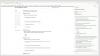
Here's D'Arcy Norman: "I just logged into our Brightspace environment using Comet and took a quiz. With the quiz open in the browser, I asked the AI assistant 'what are the answers?' ... And the Comet AI thing answered all of the questions correctly, in about a minute, right in the browser... this feels like another escalation in the 'AI is everywhere and is changing everything' gestalt that is 2025." Note that if it's getting the answers right we can even respond with the traditional "but AI is biased" or "but AI hallucinates" type of response. What we should be learning is that the days of the simple quiz are over. My first experience with Comet.
Web: [Direct Link] [This Post][Share]
There are many ways to read OLDaily; pick whatever works best for you:
- Read in your web browser on this web page, updated weekdays
- Receive a daily or weekly email newsletter by subscribing here
- Subscribe to the RSS feed using your favourite feed reader
- Follow @OLDaily@mastodon.social on Mastodon or elsewhere in the fediverse
- Follow @OLDaily on Bluesky
- Read OLDaily as a LinkedIn Newsletter
- Integrate the open API using the JSON feed
This newsletter is sent only at the request of subscribers. If you would like to unsubscribe, Click here.
Know a friend who might enjoy this newsletter? Feel free to forward OLDaily to your colleagues. If you received this issue from a friend and would like a free subscription of your own, you can join our mailing list. Click here to subscribe.
Copyright 2025 Stephen Downes Contact: stephen@downes.ca
This work is licensed under a Creative Commons License.