What I learned building an AI university over the last 2 1/2 years: Part 1 of many
George Siemens,
elearnspace,
2025/09/17

In this post George Siemens describes meeting with Bill Gates and partnering with former SNHU president Paul Leblanc saying to him, "You know what? Why don't we partner and change higher education?" Writes Siemens, "most critically, higher education faculty and staff need to become AI product builders. Agents, workflows, and automation of existing processes (like course building or creating learning content) are spaces where academics can own the emerging knowledge processes (sensemaking, meaning making, wayfinding). Learning as an act itself will be massively augmented and improved by AI. We need to build AI products the way that we now build courses."
Web: [Direct Link] [This Post][Share]
WTF is headless browsing, and how are AI agents fueling it?
Sara Guaglione,
Digiday,
2025/09/17

My introduction to headless browsing came last week when I set up a system to publish issues of OLDaily as issues of a LinkedIn newsletter. Using a Python library called Selenium, I input a series of commands to Chrome to sign in and enter the contents into a form - all this was necessary because LinkedIn does not provide an API for this, and yet there was a desire from people on LinkedIn to follow OLDaily (and more than 500 people subscribed in the first few days). It's worth noting that I knew nothing about how to do this until ChatGPT taught me. This article describes how new AI-powered browsers like Perplexity's Comet (which I am testing), Blackbird's Compass (ditto), and Browser Company of New York's Dia are using headless browsing to consult various websites to provide services. But it's not all smooth sailing. "Publishers have already moved to take a stronger stance against AI bot traffic and content scraping. AI headless browsers could be the next evolution of that battle."
Web: [Direct Link] [This Post][Share]
OpenAI says models trained to make up answers
Iain Thomson,
The Register,
2025/09/17

This item raises some interesting questions. For example: if I asked you what time it is, would you tell me? Probably. But why? Because (a) you have a good idea of what it is, (b) there's room for some error, and (c) it doesn't really matter if you're wrong. But if I asked you whether it's safe to eat this mushroom, the parameters change. Now the stakes are a lot higher, there's less room for error, and you might not really know. So you'd probably respond with an "I don't know" or even a "Probably not," just to be on the safe side. In the case of OpenAI models, these parameters are (maybe) tunable. But are they adjusted for specific contexts? Probably not - which is whysome of OpenAI's errors are a lot more serious than others.
Web: [Direct Link] [This Post][Share]
AI Ethical Guidelines
EDUCAUSE,
2025/09/17
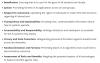
This set of guidelines came out earlier this summer and appeared at the top of today's newsletter. They draw direction from the 1979 Belmont Report which "laid out foundational ethical principles for conducting research involving human subjects." Each of the eight principles is defined, then its relevance to AI higher education is described. Applications of the principle in key areas are listed, and then a scenario is outlined. Concluding the article is a discussion of why the principles were developed, including key considerations (such as privacy, for example, or educational equity), why the principles matter, and application of the principles. The article as a whole for me raises the question of whether 'ethics in a context' can be a thing - the discussion in the article is clearly addressed to educational institutions and their 'stakeholders', and so ethical considerations outside that context are not discussed. For example, the only 'environment' considered is the academic or learning environment. Or while 'justice' is listed, there is no mention of 'social justice'.
Web: [Direct Link] [This Post][Share]
There are many ways to read OLDaily; pick whatever works best for you:
- Read in your web browser on this web page, updated weekdays
- Receive a daily or weekly email newsletter by subscribing here
- Subscribe to the RSS feed using your favourite feed reader
- Follow @OLDaily@mastodon.social on Mastodon or elsewhere in the fediverse
- Follow @OLDaily on Bluesky
- Read OLDaily as a LinkedIn Newsletter
- Integrate the open API using the JSON feed
This newsletter is sent only at the request of subscribers. If you would like to unsubscribe, Click here.
Know a friend who might enjoy this newsletter? Feel free to forward OLDaily to your colleagues. If you received this issue from a friend and would like a free subscription of your own, you can join our mailing list. Click here to subscribe.
Copyright 2025 Stephen Downes Contact: stephen@downes.ca
This work is licensed under a Creative Commons License.