
The false hope of skills-based hiring
Michael B. Horn,
eCampus News,
2025/09/15

In this article there are in my opinion two major arguments offered against skills-based hiring, though only one is presented as such. The first: "employers tend not to know which skills are at the heart of their most successful employees in specific roles. Nor do they know how to define or measure the skills that seem important, per the above point. As a result, asking employers to hire based on skills is asking them to select from a bunch of parameters they don't really understand." Quite so. Second, and more implicitly: "so much of hiring continues to be based on who you know - despite the effort of skills-based hiring pushes to make it otherwise. According to estimates, at least 50% and as high as 85% of roles are filled through one's network." AI only makes this more likely, not less. I think these two points combine make a pretty persuasive case, and it leads me to rethink the future potential of AI-enabled skills assessment. Originally published at the Christensen Institute.
Web: [Direct Link] [This Post][Share]
Separate or embedded? Strategic choices for universities in online education — Neil Mosley Consulting
Neil Mosley,
Neil Mosley Consulting,
2025/09/15

"There are fundamental differences between the audience most universities are set up to serve and the core online student audience," argues Neil Mosley. So universities designed to serve traditional students "are often not well aligned to a different audience." We see this difference manifest in several areas: pathways into courses, scaling marketing efforts, branding choices, and long-term commitment. "Ultimately, most of the universities regarded as examples in online education are those that do not treat it as a bolt-on to address short-term concerns, but rather embrace it as a key part of the university's identity and focus." Good argument.
Web: [Direct Link] [This Post][Share]
Five facts about first-generation excellence gaps
Uditi Karna, John A. List, Andrew Simon, Haruka Uchida,
National Bureau of Economic Research,
2025/09/15
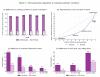
"We document stark and persistent gaps in academic excellence between first-generation and continuing-generation students that emerge no later than 3rd grade and compound throughout their education," write the authors after studing student achievement in North Carolina (55 page PDF). Social-Economic Standing (SES) and schools account for about a third of this gap, they write. "The majority remain unexplained by observable factors, underscoring the critical, yet often invisible, role of parental human capital." Maybe, but you can't simply replace the parents of these students. One wonders what wider role society could play to make up for things first-generation parents are unable to provide. Via Jonathan Kantrowitz.
Web: [Direct Link] [This Post][Share]
N.L.'s 10-year education action plan cites sources that don't exist | CBC News
Patrick Butler,
CBC,
2025/09/15

It's easy to jump to the conclusion that AI was responsible for authoring at least parts of this document (418 page PDF) and some experts have done just that, but I'm not so sure. I did a quick scan of some of the references and managed to find an error on my own, with a DOI that points to this paper, with the correct author, but the wrong journal and article title. That feels more like a human error than an AI error (and yeah, I know that my 'feels like' doesn't amount to much). Newfoundland and Labrador's education minister Bernard Davis is taking the same line. "One error is one error too many. We're disappointed that's happening, but it never impacted the body of the report or any of the recommendations," Davis told reporters on Friday.
Web: [Direct Link] [This Post][Share]
Humans and Machines Learn Differently
Filip Ilievski, Barbara Hammer, et al.,
IDW,
2025/09/15
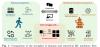
I have often argued that humans and artificial neural networks learn in more or less the same way. The paper referenced here, Aligning Generalisation Between Humans and Machines, argues for the exact opposite conclusion, going so far as to say "a critical challenge of human-AI teaming is reconciling the fundamentally different reasoning paradigms of humans and AI, such as human causal models and AI's deep learning associations." The paper deserves a deep read, if only to identify its flaws. Much of its argumentation is based on a critique of traditional machine learning (for example, referring to the no-free-lunch theorem from 1997). When looking at more recent generative AI, the argument turns from "it can't" to "we don't know how it does it". The paper also makes statements about human learning that are questionable (for example, "a major reason why humans can learn from little data and seemingly generalise beyond the observed distribution is that, through evolution, experience, or both, they have access to strong common sense priors at multiple hierarchical levels," which is academic-speak for "we just know". The paper is published behind a paywall in Nature, but here's the ArXiv version (37 page PDF) from a few months ago.
Web: [Direct Link] [This Post][Share]
There are many ways to read OLDaily; pick whatever works best for you:
- Read in your web browser on this web page, updated weekdays
- Receive a daily or weekly email newsletter by subscribing here
- Subscribe to the RSS feed using your favourite feed reader
- Follow @OLDaily@mastodon.social on Mastodon or elsewhere in the fediverse
- Follow @OLDaily on Bluesky
- Integrate the open API using the JSON feed
This newsletter is sent only at the request of subscribers. If you would like to unsubscribe, Click here.
Know a friend who might enjoy this newsletter? Feel free to forward OLDaily to your colleagues. If you received this issue from a friend and would like a free subscription of your own, you can join our mailing list. Click here to subscribe.
Copyright 2025 Stephen Downes Contact: stephen@downes.ca
This work is licensed under a Creative Commons License.