
Against the Uncritical Adoption of 'AI' Technologies in Academia
Olivia Guest, et al.,
2025/09/08
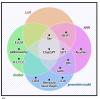
I can't think of anything that is uncritically adopted in academic, let alone artificial intelligence. Indeed, I think AI has to be the single most criticized technology I've seen in my years in the field. No other technology comes close, not even online learning itself, which was widely criticized in its own right, nor any of the artifices that have led to modern industrial society. As more of the same, this paper has the feeling of grasping at straws (I mean: they quote Jerry Fodor from 2000 as an argument against neural networks). But more, I fear the critics who have authored this article are attacking the wrong target. They write, "In addition to scientific integrity, university core values - such as sustainability, openness, responsibility, critical reflection, and diversity, equity and inclusion - should naturally constrain AI use in academia." Attacking AI instead of defending these values explicitly (and they do need defending) serves their opponents far more than it serves the values themselves.
Web: [Direct Link] [This Post][Share]
Revisiting the Legal Framework for Students' Unions - HEPI
Gary Attle,
HEPI,
2025/09/08

This article is set strictly within a U.K. context but it raises what I think is a wider issue: who determines what it is that students' unions ought to do? Here we have the the Secretary of State noting, "I fully expect student unions to protect lawful free speech, whether they agree with the views expressed or not." I would point out that there is a very wide chasm between a requirement to respect free speech, as expected of a democratic organization, and which would govern the students' union internally, and to protect free speech, which requires that they take on actions against external agencies (and most notably, the university administration) and in contexts outside their own internal operations. Whatever I may think about the matter, I think it should be up to students to determine how, whether and when to protect free speech, and especially to determine exactly what sort of speech is to be protected.
Web: [Direct Link] [This Post][Share]
Thomas Kuhn
Alexander Bird,
Stanford Encyclopedia of Philosophy,
2025/09/08
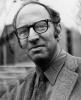
This a substantial revision of the Stanford Encyclopedia of Philosophy's article on Thomas Kuhn and is recommended reading if you're interested in the philosophy of science and theory change. The article stresses (correxctly) that "as far as the history of science and science studies more generally are concerned, Kuhn repudiated at least the more radical developments made in his name," especially including the doctrine of incommensurability. Specifically, "Kuhn wanted to reject the kind of 'convergent' realism that took science to be aiming at providing, ultimately, an unified, accurate, and complete description of a (largely) human-independent natural world, a task at which it is held to be increasingly successful. On the other hand he rejected the extreme relativism according to which there is no measure by which one could say that science is progressing." A scientific theory or paradigm, he would argue, is rather more than just a 'point of view' or 'lens' through which to look at the world. Kuhn's The Structure of Scientific Revolutions was (ironically) first published in the International Encyclopedia of Unified Science.
Web: [Direct Link] [This Post][Share]
John Rawls
Leif Wenar,
Stanford Encyclopedia of Philosophy,
2025/09/08

This a substantial revision of the Stanford Encyclopedia of Philosophy's article on John Rawls and is recommended reading for anyone interested in social and political philosophy (including ethics). It states Rawls's central arguments clearly and concisely: "His theory of justice as fairness describes a society of free citizens holding equal basic rights and cooperating within an egalitarian economic system. His theory of political liberalism explores the legitimate use of political power in a democracy, and envisions how civic unity might endure despite the diversity of worldviews that free institutions allow." I also recommend reading his A Theory of Justice, though at 561 pages it's a much more substantial investment in time.
Web: [Direct Link] [This Post][Share]
Reimagining online belonging: Creating a community site for online students on Viva Engage – Teaching Matters
Rose Day,
Teaching Matters,
2025/09/08

This article feels a bit like advertorial content, though it might not be. In any case, it introduces Microsoft's Viva Engage (the answer to the question, "Whatever became of Yammer?"). The article is sort of a case study where a class replaces Learn Ultra, a Blackboard product, with the Microsoft replacement. "Viva Engage," writes Rose Day, "offered a social-media-style interface better suited to student-led discussion. It allowed us to create a dedicated, cross-programme space that felt separate from academic content but still part of the university ecosystem."
Web: [Direct Link] [This Post][Share]
There are many ways to read OLDaily; pick whatever works best for you:
- Read in your web browser on this web page, updated weekdays
- Receive a daily or weekly email newsletter by subscribing here
- Subscribe to the RSS feed using your favourite feed reader
- Follow @OLDaily@mastodon.social on Mastodon or elsewhere in the fediverse
- Follow @OLDaily on Twitter
- Integrate the open API using the JSON feed
This newsletter is sent only at the request of subscribers. If you would like to unsubscribe, Click here.
Know a friend who might enjoy this newsletter? Feel free to forward OLDaily to your colleagues. If you received this issue from a friend and would like a free subscription of your own, you can join our mailing list. Click here to subscribe.
Copyright 2025 Stephen Downes Contact: stephen@downes.ca
This work is licensed under a Creative Commons License.