
The U.S. had the blueprint for a high-class education--but abandoned it
Yuvraj Verma,
eSchool News,
2025/06/10

Pretty much my assessment as well: "Finland borrowed key elements from the United States and went on to build one of the most effective and equitable educational systems in the world, but the United States systematically dismantled its own blueprint for success." The result? "The crisis narrative took root, and the focus shifted from 'equity and opportunity' to 'accountability and performance' ... The reforms were ineffective, as well as damaging." There is a warning in this, I think. "Education is a public good and not a marketplace, teachers are professionals as opposed to test administrators, equity is the foundation instead of an afterthought, and learning is a holistic process instead of a score."
Web: [Direct Link] [This Post][Share]
Expert in the loop
Clark Quinn,
Learnlets,
2025/06/10
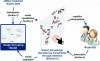
I'm linking to this post just for this sentence: "I think that just a 'human in the loop' could be wrong. Having an expert in the loop, as Markus suggested, may be a more appropriate situation." Image: Guo, et al. See also: Ian O'Byrne: Being the Human in the Loop.
Web: [Direct Link] [This Post][Share]
Trusting your own judgement on 'AI' is a huge risk
Baldur Bjarnason,
2025/06/10
This is a lovely argument based on the following live of reasoning: "What 'AI', homeopathy, naturopathy, and psychic cons have in common isn't just that they tap into a number of biases and 'effects' that the human mind is vulnerable to." And fair enough, we have no real protection from being scammed. As Baldur Bjarnason writes, "Intelligence is not a defence. Most of these mechanisms and situations feel reasonable and intelligent in the moment." It reminds me of how I was so easily led into overpaying for a lens for my new camera in the Canary Islands. In the hands of a pro, I was an easy mark. But, but, but... we can't live our lives that way. Via Paul Walk.
Web: [Direct Link] [This Post][Share]
Expert Learning Instructor
Notion,
2025/06/10
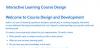
From the website: "This prompt turns AI into an expert AI instructor who crafts interactive, stepwise courses on any subject, tailored for learners of all backgrounds. It starts by asking users about their topic, learning goals, prior experience, and interests." It's set up for use on Notion, an AI workspace. I tried it out (asking for a refresher course on modal logic) and it's ok. It definitely understands modal logic. It figured out my skill level (some 35 years after my last course in the subject) and responded appropriately. It takes a bit to get used to the notion interface. Via Mark Oehlert.
Web: [Direct Link] [This Post][Share]
Academy Online
LibreTexts,
2025/06/10
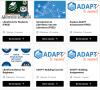
From the email launch announcement: "Part of our larger Academy Center for Open Instructional Innovation and Professional Development, Academy Online offers a number of professional development opportunities to help grow your open education programs, develop ZTC pathways, and curate OER.... a series of free, asynchronous courses designed to introduce you to (the) Open Education toolbox... and a short introduction to our open homework and assessment platform, ADAPT." This is the way to do open, not a series of $500 certificates that lock in the 'developed country advantage'.
Web: [Direct Link] [This Post][Share]
Meta and Yandex are de-anonymizing Android users’ web browsing identifiers
Dan Goodin,
Ars Technica,
2025/06/10

One thing that should be clear about presenting one's identity to a web service or application is that it should be voluntary (defined more formally as 'informed consent'). The tracking deployed here by Meta and Yandex are exactly the opposite of that. "Browsers access (localhost ports on the 127.0.0.1 IP address) ports without user notification. Facebook, Instagram, and Yandex native apps silently listen on those ports, copy identifiers in real time, and link them to the user logged into the app." There's only one real solution: "refrain from installing the Facebook, Instagram, or Yandex apps on Android devices."
Web: [Direct Link] [This Post][Share]
The Memory Paradox: Why Our Brains Need Knowledge in an Age of AI
Barbara Oakley, Michael Johnston, Ken-Zen Chen, Eulho Jung, Terrence Sejnowski,
PsyArXiv Preprints,
2025/06/10
This book chapter preprint (50 page PDF) makes the argument that the explanation for declining IQ scores in developed nations since the 1970s can be explained by "the growing prevalence of cognitive offloading and pedagogical trends that minimize direct knowledge acquisition." I should be clear at the outset that I disagree with most of what's in this paper, even if we ignore its obvious circularity (IQ tests reflect specific practiced skills; less practice in these specific skills by definition results in lower IQ scores). The paper is mostly about why these specific skills are necessary, and the article essentially reduces to the need to have internalized specific "engrams, schemas, and manifolds that neuroscience now recognizes as central to understanding and enhancing learning". I would argue that neuroscience recognizes no such thing: even if engrams, schemas, and manifolds constitute a significant part of cognition (which I doubt) these would develop in any case, no matter how we were taught, and the question of which specific engrams, schemas, and manifolds best suit the needs of learners is a question of social science, philosophy and politics, not neuroscience. There's a lot more to disagree with on a paragraph-by-paragraph level; readers should not be convinced by this mish-mash of conflicting theories and research. Via Brian Mulligan.
Web: [Direct Link] [This Post][Share]
There are many ways to read OLDaily; pick whatever works best for you:
- Read in your web browser on this web page, updated weekdays
- Receive a daily or weekly email newsletter by subscribing here
- Subscribe to the RSS feed using your favourite feed reader
- Follow @OLDaily@mastodon.social on Mastodon or elsewhere in the fediverse
- Follow @OLDaily on Twitter
- Integrate the open API using the JSON feed
This newsletter is sent only at the request of subscribers. If you would like to unsubscribe, Click here.
Know a friend who might enjoy this newsletter? Feel free to forward OLDaily to your colleagues. If you received this issue from a friend and would like a free subscription of your own, you can join our mailing list. Click here to subscribe.
Copyright 2025 Stephen Downes Contact: stephen@downes.ca
This work is licensed under a Creative Commons License.