Let's fund the open social web
Ben Werdmuller,
Werd I/O,
2025/05/21

There are two parts to Ben Werdmuller's argument. The first is that people who develop new platforms should be able to earn a living. The second is the outline of a proposal for pro-social funding. I don't really disagree with either part; everybody needs an income of some sort, and the world does need things like open social software. But is the 'founder' approach really the way to go? I mean, even Werdmuller's admittedly progressive vision proposes, "Fund the founders, not the project... long-term success is tied more to founder mindset than to initial product ideas." In other words, "fund people like us". People who believe their service should make money. I don't think you can create essential social services on the VC model. The benefits are not realized by the providers of the service, but by the people using them, and there's no way to charge for the service without undermining access and renting it out to private interests. That's why they must be provided (and paid for) as public services.
Web: [Direct Link] [This Post][Share]
Student engagement and AI: Research overview and findings
Kristin Bailey Wilson, Kristen Gay, Dylan Barth, Colette Chelf, Cristi Ford, Emma Zone,
Online Learning Consortium, D2L,
2025/05/21
According to this report (29 page PDF), "students benefit when institutions and instructors take a proactive approach to AI use." Nonetheless, "institutional support for student use of AI remains a challenge" while most research focuses only on writing tasks. This report broadens the question, asking how "student use and perceptions of AI in higher education impact student engagement." It's interesting, because while some students do indeed use AI to write assignments, we see more use dedicated to things like idea generation, time-saving on routine tasks (like grammar and spell check), tinkering with ideas, and summarizing articles. "Participants turned to AI when they believed assignments to be repetitive, redundant, or busy work." On engagement, the paper argues that "AI deepened emotional engagement, such as interest, meaningfulness, and belonging." And they note that "The transcripts also make clear that students are going to use AI whether it is allowed or not. This tension is not going to resolve itself."
Web: [Direct Link] [This Post][Share]
Public AI White Paper - A Public Alternative to Private AI Dominance
Felix Sieker, Alek Tarkowski, Lea Gimpel, Cailean Osborne,
Bertelsmann Stiftung, Open Future,
2025/05/21
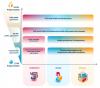
"Advanced AI systems are developed and controlled by a small number of private companies," write the authors of this report (74 page PDF). "This concentration of power poses not only economic risks but also significant democratic challenges." I agree. Here's what's needed, they say, to support a public AI alternative (quoted):
- providing strategic public computing resources, particularly supporting open-source AI development;
- creating high-quality datasets as digital public goods through commons-based governance; and
- fostering an ecosystem of fully open source AI models.
I think we would also need the equivalent of an 'open AI practices' section to model and demonstrate how to use AI openly and ethically in the public interest. The report contains a nice overview of AI, with attention to introducing the vocabulary to non-technical readers, contrasts (as illustrated) public and private AI, then maps the roadmap to public AI.

Web: [Direct Link] [This Post][Share]
Consuming and verifying credentials in GOV.UK Wallet
Gov.UK,
2025/05/21

The lack of a decent digital identity system has to my mind slowed the adoption of numerous online services, and most especially, creation and presenting of digital credentials. This is changing with the European Digital ID and, as described here, the Gov.UK Wallet. Robin Tombs comments, "a highly adopted Gov wallet under this 'model' means it will be hard for 1 or 2 private brands who gain high network market share, to over exploit their position." Over-exploitation is the likely scenario in the U.S., which has long eschewed government digital ID programs, though there are signs of change. I am hopeful Canada will follow the European path, which will likely be shared by the rest of the world over time.
Web: [Direct Link] [This Post][Share]
Chicago newspaper prints a summer reading list. The problem? The books don't exist
Natalie Stechyson,
CBC,
2025/05/21

As CBC reports, "The Chicago Sun-Times is being roasted online after it confirmed that a freelancer used AI to generate a summer reading list made up of real authors and fake books." Everybody is quick to blame AI, but it takes a special talent to produce a list of fake books. I asked ChatCPT for my own summer reading list and checked and, no surprise, every book on the list was real. So I'm not sure what the "licensed editorial content from King Features" authors were doing.
Web: [Direct Link] [This Post][Share]
Beyond Books / Disposable Learning Resources
TeachOnline, Contact North,
2025/05/21

From the web page: "A flood of AI-generated content. It's a fact that AI is capable of producing convincing and often useful text and other content. Yes, there are concerns about the quality, accuracy and even the environmental impact of that content, but there';s no doubt AI can produce it and that it is already widespread. It is legitimate to ask now whether any piece of content was authored." This is an argument I've made frequently and though it has yet to resonate in the OER community, I think it's an accurate description of the future.
Web: [Direct Link] [This Post][Share]
There are many ways to read OLDaily; pick whatever works best for you:
- Read in your web browser on this web page, updated weekdays
- Receive a daily or weekly email newsletter by subscribing here
- Subscribe to the RSS feed using your favourite feed reader
- Follow @OLDaily@mastodon.social on Mastodon or elsewhere in the fediverse
- Follow @OLDaily on Twitter
- Integrate the open API using the JSON feed
This newsletter is sent only at the request of subscribers. If you would like to unsubscribe, Click here.
Know a friend who might enjoy this newsletter? Feel free to forward OLDaily to your colleagues. If you received this issue from a friend and would like a free subscription of your own, you can join our mailing list. Click here to subscribe.
Copyright 2025 Stephen Downes Contact: stephen@downes.ca
This work is licensed under a Creative Commons License.