
They Cheated Themselves...But Don't Realize Why: Eternally In Search of the Thinker's High
Steven Gimbel,
3 Quarks Daily,
2025/05/20

I sometimes think there is a fundamental difference between the way I see the world and the way 'an academic' might see the world (put in scare quotes to imply as little as possible by that phrasing). It's like this: Steven Gimbel writes, "There is nothing like it when you read a passage that alters your consciousness. The world shrinks. You feel interconnected with reality itself." Now, I have never read a passage that altered my consciousness like that. No, when I want my consciousness altered I go out into the world and gain as diverse a range of experiences as I can. Though I am well and widely read, reading has never been for me a substitute for direct experience of reality. Indeed, I see 'reading' and 'using AI' to both be ways of 'cheating themselves'. Reading is at best an abstration or summarization of someone else's experience. And it is this reverence for the printed word, which I simply do not have, that distinguishes me from 'an academic' (and maybe, what allows me to see a future of learning beyond text and books).
Web: [Direct Link] [This Post][Share]
Bionic brains
Language Log,
2025/05/20

As Victor Mair summarizes, "The robot is designed to implant flexible microelectrodes – thinner and softer than a strand of hair – into the cerebral cortex." Having a robot do the work takes us a lot closer to widespread use of brain-computer interfaces (BCI). "Implantable BCI offers powerful benefits such as thought-controlled devices, speech synthesis, and vision restoration for people with disabilities. It also allows scientists to study brain function using high-throughput neural data." The two sources Mair provides are in Chinese, but of course modern browsers can translate the web pages.
Web: [Direct Link] [This Post][Share]
The tail wagging the dog
David Truss,
Daily-Ink by David Truss,
2025/05/20

I agree with Dave Truss. "The worst part of schooling is marks chasing. It undermines meaningful feedback and it misses the point that this is a learning environment with learning opportunities. Instead it's about the mark." Indeed, this thinking is so pervasive that it is common in instructional design to start with the assessment and work back to learning activities and learning objectives. If I could, I would make assessment irrelevant.
Web: [Direct Link] [This Post][Share]
Writing is Thinking: The Paradox of Large Language Models – improving learning
David Wiley,
improving learning,
2025/05/20

This is just the first of what will be a series of posts recounting David Wiley's talk at at UNC Charlotte so it would be unfair to judge it prematurely. That won't stop me, though. :) And while I appreciate the 'writing is thinking' line (for me, talking is thinking, but I digress) it doesn't really support the idea that the 'new skill' is prompt writing. The idea does remind me of advice along the lines of saying that the key to being a researcher is 'knowing what questions to ask'. But that would be to misrepresent what 'being a researcher' is, and I think prompt engineering (or as Wiley terms it, 'generative writing') misconstrues what 'thinking with AI' might be.
Web: [Direct Link] [This Post][Share]
AI Agents vs. Agentic AI: A Conceptual Taxonomy, Applications and Challenge
Ranjan Sapkota, Konstantinos I. Roumeliotis, Manoj Karkee,
arXiv.org,
2025/05/20
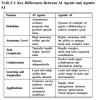
This paper (32 page PDF) goes fairly deeply into the weeds to develop its own terminology but as Mark Oehlert says, "I think the new language is fine because we also have new systems evolving and we will need that new vocabulary to semantically find our way around." The primary distinction is stated thus: "AI Agents are an autonomous software entities engineered for goal-directed task execution within bounded digital environments" while "Agentic AI systems represent an emergent class of intelligent architectures in which multiple specialized agents collaborate to achieve complex, high-level objectives."
Web: [Direct Link] [This Post][Share]
Catch them Learning: A Pathway to Academic Integrity in the Age of AI
Tony Frontier,
Cult of Pedagogy,
2025/05/20

Good article that offers "clear, practical strategies for helping students use AI responsibly and maintain academic integrity." Integrity, writes Tony Frontier, is different from 'not cheating'. To cheat is to use a resource to misrepresent one's claim to have done something. Integrity, by contrast, is a commitment to "accurately represent the knowledge and skills one actually possesses." Cheating has to be proven by an accuser. Integrity is more akin to explainability; it can be shown by person who has it by talking about the process and expanding on the results. Frontier's article stresses minimizing opportunity and incentive to cheat, but is mostly about helping people demonstrate integrity. Which is great, but it also looks like a very labour-intensive process.
Web: [Direct Link] [This Post][Share]
There are many ways to read OLDaily; pick whatever works best for you:
- Read in your web browser on this web page, updated weekdays
- Receive a daily or weekly email newsletter by subscribing here
- Subscribe to the RSS feed using your favourite feed reader
- Follow @OLDaily@mastodon.social on Mastodon or elsewhere in the fediverse
- Follow @OLDaily on Twitter
- Integrate the open API using the JSON feed
This newsletter is sent only at the request of subscribers. If you would like to unsubscribe, Click here.
Know a friend who might enjoy this newsletter? Feel free to forward OLDaily to your colleagues. If you received this issue from a friend and would like a free subscription of your own, you can join our mailing list. Click here to subscribe.
Copyright 2025 Stephen Downes Contact: stephen@downes.ca
This work is licensed under a Creative Commons License.