
Wittgenstein and the Paradoxes at the Limits of Language | Blog of the APA
Graham Priest,
Blog of the APA,
2025/04/30

"My propositions are elucidatory in this way," writes Wittgenstein in the Tractatus (6.54): "he who understands me finally recognizes them as senseless." It's a stunning reversal, where one of the founding documents of analytical philosophy reaches the limits of what can be said with language. "There is indeed the inexpressible. This shows itself; it is the mystical" (6.522). It is, in my view, the sort of thing one can recognize, and yet not be able to express. This post - an interview with Graham Priest - discusses the end of the Tractatus. What can we say about it? There's Bertrand Russell, who writes, "what causes hesitation is the fact that, after all, Mr. Wittgenstein himself manages to say a good deal about what cannot be said." And there's Wittgenstein himself, who says "Whereof one cannot speak, thereof one must be silent" (7).
Web: [Direct Link] [This Post][Share]
Performing AI literacy
Ben Williamson,
Code Acts in Education,
2025/04/30

Ben Williamson comments "James O'Sullivan recently argued, provocatively and compellingly, the case for AI illiteracy, noting that most discussion frames AI literacy 'as a form of compliance: one learns the tools so as not to fall behind'" and then suggests this "foregrounds the politics of calling for universal AI literacy standards and the kinds of exclusions in terms of knowledge, learning and skills that most definitions impose." He then points to OECD as instantiating the politics in question. "The OECD is no neutral actor when it comes to AI." He notes, "the significance of the AI literacy assessment is not necessarily the quantitative results it will produce in more than half a decade's time. It's the activity that it incites in education systems in anticipation of the assessment." This is true of all such 'rankings'. They are promoting specific metrics as valuable. "It is the use of a test to incite anticipatory actions that is often referred to as 'performativity,'" writes Williamson.
Web: [Direct Link] [This Post][Share]
In Praise of a Democracy on Paper
Nick Heer,
Pixel Envy,
2025/04/30

This post references a Globe and Mail editorial (paywalled but archived here) defending the use of the paper ballot in Canadian elections. I concur. It's not the fact that the ballot is on paper that matters; it's that the process of creating and counting the ballot is tangible, open and verifiable. I have worked in polling places and seen the process for myself. Each ballot is marked by hand by the voter, then when counter, each ballot is shown individually to the counters and to the scrutineers, who are representatives of the candidates who are running. The issue with digital voting isn't that it is digital, it's that it takes this entire process and hides it. The Globe and Mail editorial says, "A hand count renders the proper respect - reverence, even - for democracy." But it's not that. It's not about faith. It's about accountability.
Web: [Direct Link] [This Post][Share]
Measuring the Internet Economy
John Deighton, Leora Kornfeld,
Internet Advertising Bureau,
2025/04/30

This report (179 page PDF) is focused primarily on the U.S., which makes it unrepresentative, but more to the point, it is focused on the digital economy, as measured by the value of things like advertising, content, commerce, and innovation, which means that it is missing a large part of what makes the internet valuable. Now I'm not saying there is no value to be found in the digital economy qua economy, as highlighted in metrics like growth, employment, and income. I'm saying that these aren't why we have an internet, and it's in this 'why' where we find the true value. Having said all this, what we have in this report is a comprehensive review of the economic side of the internet - where economic value lies, and where it is being produced.
Web: [Direct Link] [This Post][Share]
PitcherNet: Powering the Moneyball Evolution in Baseball Video Analytics
Jerrin Bright, Bavesh Balaji, Yuhao Chen, David A Clausi, John S Zelek,
arXiv.org,
2025/04/30
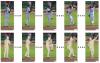
If you follow Canadian news media you may have seen a report motivated by a recent Waterloo press release about PitcherNet, an AI tool that helps baseball scouts recognize developing talent. This is an article (14 page PDF) that explains the technology in more detail. Now you could do what the old-fashioned baseball scouts used to do, which is to break down the task of pitching a baseball into component parts and analyzing talent against a set of formal parameters. But an AI is able to consider orders of magnitude more variables, and often variables that can't even be described. The trick, though, is to take that awareness and represent it as something scouts can see and take home to their managers. Human-accessible data representation - like the image - is going to be a thing, and not necessarily something AI will be able to do on its own.
Web: [Direct Link] [This Post][Share]
There are many ways to read OLDaily; pick whatever works best for you:
- Read in your web browser on this web page, updated weekdays
- Receive a daily or weekly email newsletter by subscribing here
- Subscribe to the RSS feed using your favourite feed reader
- Follow @OLDaily@mastodon.social on Mastodon or elsewhere in the fediverse
- Follow @OLDaily on Twitter
- Integrate the open API using the JSON feed
This newsletter is sent only at the request of subscribers. If you would like to unsubscribe, Click here.
Know a friend who might enjoy this newsletter? Feel free to forward OLDaily to your colleagues. If you received this issue from a friend and would like a free subscription of your own, you can join our mailing list. Click here to subscribe.
Copyright 2025 Stephen Downes Contact: stephen@downes.ca
This work is licensed under a Creative Commons License.