Why Now Is the Moment to Back Up the Web
Ian O'Byrne,
2025/04/25
The reason my website exists is that I learned early on that, contrary to what people say, the web is not forever. Databases can become corrupt, content can be moderated out of existence, discussion boards can be closed or acquired, companies can go out of business, governments can try to change history. I haven't tried to archieve other people's content beyond my own summaries, partially for legal reasons but mostly for practical reasons. In this post, Ian O'Byrne argues we should set aside these reasons and start archiving now. Track every draft, he writes, capture the 'behind the scenes', archive on publication, and support rich metadata. "By embracing a culture of redundancy, openness, and community engagement, we can ensure that the web remains a reliable, enduring home for research and teaching. Let's start today, because the history we save now will be tomorrow's foundation."
Web: [Direct Link] [This Post][Share]
Evaluating Generative AI Systems is a Social Science Measurement Challenge
Hanna Wallach, et al.,
arXiv,
2025/04/25
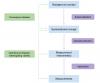
The argument in this short paper (6 page PDF) is that "measurement tasks involved in evaluating GenAI systems are highly reminiscent of measurement tasks found throughout the social sciences" and thus "the ML community would benefit from learning from and drawing on the social sciences when developing approaches and instruments for measuring concepts related to the capabilities, impacts, opportunities, and risks of GenAI systems." That doesn't mean "naïvely transferring measurement instruments designed for humans," but rather, adopting a framework based on four levels, "the background concept, the systematized concept, the measurement instrument(s), and the instance-level measurements themselves," as described in the paper.
Web: [Direct Link] [This Post][Share]
Reciprocity in the Age of AI
Anna Tumadóttir,
Creative Commons,
2025/04/25

The gist of this article is that "We believe reciprocity must be embedded in the AI ecosystem in order to uphold the social contract behind sharing." Specifically, "If you benefit from the commons, and (critically) if you are in a position to give back to the commons, you should." I know Creative Commons is adopting something like this as an organizational stance, but I don't agree with it. When I share, I'm not trying to tie you to some sort of social contract or create some sort of obligation on your part. That's not sharing, that's exchange, and the ethics of the two are very different. It turns our space into a marketplace, not a commons. Even if people use it to train AI, the commons is still there as long as we keep it a commons. It's when we convert our commons to a marketplace that it can become inaccessible, which is exactly what I don't want when I share. Via OEGlobal.
Web: [Direct Link] [This Post][Share]
From Systems to Actor-Networks: A Paradigm Shift in the Social Sciences
Andréa Belliger, David J. Krieger,
Ethics International Press, Research Gate,
2025/04/25
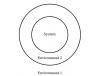
I've only read the introduction this far, but this book (359 page PDF), recommended to me by one of the authors after my post yesterday, has definitely caught my interest (and this, may I add as an aside, is precisely why I share my thoughts and finds with people). The introduction sets up the contrast between systems and networks nicely, which is the main point of interest for me. It argues for the replacement of a systems paradigm with a network paradigm on the grounds that the network paradigm can explain itself at the level of meaning in a way the systems cannot. Now I have my own story of what happens here (based on the concepts of emergence and recognition) that I believe is distinct from Actor-Network theory, which is what the book focuses on, so I will be interested to see how the book approaches this.
Web: [Direct Link] [This Post][Share]
There are many ways to read OLDaily; pick whatever works best for you:
- Read in your web browser on this web page, updated weekdays
- Receive a daily or weekly email newsletter by subscribing here
- Subscribe to the RSS feed using your favourite feed reader
- Follow @OLDaily@mastodon.social on Mastodon or elsewhere in the fediverse
- Follow @OLDaily on Twitter
- Integrate the open API using the JSON feed
This newsletter is sent only at the request of subscribers. If you would like to unsubscribe, Click here.
Know a friend who might enjoy this newsletter? Feel free to forward OLDaily to your colleagues. If you received this issue from a friend and would like a free subscription of your own, you can join our mailing list. Click here to subscribe.
Copyright 2025 Stephen Downes Contact: stephen@downes.ca
This work is licensed under a Creative Commons License.