
The *&%$! Baseball Study: Why Are Fans of Fact-Focused Teaching Still Citing a Small, Unconvincing Experiment From the ’80s?
Alfie Kohn,
National Education Policy Center,
2025/04/09

"For the last few years," writes Alfie Kohn, "we have witnessed a defensive, defiant embrace of instructional strategies that turn back the clock, notably a focus on transmitting chunks of information to students - and doing so through direct instruction." But the evidence that supports this approach is slim and misleading. Take, for example, the oft-cited 'baseball study'. It has a tiny sample size, is narrowly focused, and assumes its own conclusion when it evaluates 'success'. And yet it's called "seminal". What really matters, says Kohn (and I agree) is that "getting kids to unpack or remember a specific text is a very different goal from helping them to become 'successful independent readers' over time. Moreover, knowing more stuff has a very limited role to play in helping students to read more proficiently, or think more clearly, or solve problems better."
Web: [Direct Link] [This Post][Share]
From Shopify's AI Mandate to Higher Education's Wake-Up Call
Carlo Iacono,
Hybrid Horizons: Exploring Human-AI Collaboration Hybrid Horizons,
2025/04/09

While most people probably would not endorse Shopfy's approach of using a top-down edict to demand that everyone use AI, the example is nonetheless useful as a wake-up call, and that's how Carlo Iacono treats it here. "One key insight from Shopify's approach is the focus on human-AI collaboration as a source of innovation. Yes, there's an efficiency drive (doing more with less), but there's also a strong message of agency – empowering each individual to achieve more with AI, to level up their work in ways previously impossible." I'm not going to disagree with that. AI is a force-multiplier.
Web: [Direct Link] [This Post][Share]
Anthropic Education Report: How University Students Use Claude
Anthropic,
2025/04/09

This is a study of what are obviously early adopters of Anthropic's AI by students in the U.S., so it's a glimpse, and not an authoritative sample, as the authors readily acknowledge. There are some interesting observations, for example, the uses AI is put to by students in different disciplines; computing science students will ask the AI to create or analyze code, while social sciences students will ask the AI to explain theories. I wonder, though, whether the sample didn't capture a fair number of teachers, because the two types of 'collaborative' use seem suspiciously like teaching tasks: "teach programming fundamentals with Python examples" and "provide feedback and revision for student writing assignments".
Web: [Direct Link] [This Post][Share]
Inhibitory cells orchestrate neural activity in mouse brain
Katie Moisse,
The Transmitter,
2025/04/09

The focus of this article is the one Nature article on inhibitory cells, but you can read about the full set 10 open access articles on the mouse connectome released today. It's a good choice of article to focus on, because most people don't think of inhibitory cells when they think of neural nets (though they feature prominently in some types of artificial neural network). Data from the ten papers are accessible in an interactive online resource called the MICrONS Explorer (pictured). "The result is a map with an exquisite level of detail that researchers can use to probe how structural features shape connectivity, uncover local rules of circuit organization and test long-standing hypotheses about functional motifs that are repeated throughout the cortex." For example, as often cited in these pages: "Neurons that have similar firing patterns in response to a visual stimulus tend to connect with one another."

Web: [Direct Link] [This Post][Share]
Let’s get specific
Martin Weller,
The Ed Techie,
2025/04/09
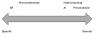
Somewhere in all of this is a good point, and that's what I would like to focus on. The good point is this: "part of the problem of ed tech is that the industry always wants a General application. They have been raised on a diet of 'Disruption' blather, and 'Revolution' nonsense. For disruption to occur it has to impact across the sector." But in education, says Martin Weller, "we're more often concerned with specific applications." All that is true. The rest of the analysis, however, that characterizes specific technologies as 'specific' or 'general', is confused and mostly wrong. XR can be general or specific. AI can be general or specific. What makes a technology - any technology - general rather than specific is that it seeks to standardize on something. Even then, that can be OK: syntactic generalization is great; we want our tools to be interoperable. Semantic generalization, where we want people to all learn the same thing, believe the same thing, follow the same learning path - that is where generalization becomes problematic, no matter what technology you use.
Web: [Direct Link] [This Post][Share]
Building Bridges: A Trauma-Informed Approach to Transforming Classrooms
Julia Matson,
Teach Magazine,
2025/04/09

I wouldn't say I'm a trauma survivor, but as somebody who has never been comfortable in social environments I would still appreciate these five suggestions in any classroom (quoted or paraphrased): get rid of the "everything must be earned" mindset; structured 'community circles' emphasizing active listening and respectful communication; discouraging loud noises, yelling, sudden movements, or chaotic environments; clear and consistent classroom routines; and skipping the 'brain breaks' some instructors seem to love (I don't like being told to stand up, talk to a random person, jump around, clap in rhythm, or do some other purely performative activity, not even (as happened the other day) at concerts). One of the great things (for me) about online learning is that these disruptive things never happen, leaving me able to focus on what I'm doing on whether my performance will meet the approval of the other kids in the room.
Web: [Direct Link] [This Post][Share]
Kant vs Hume: Can We Access Reality?
Emily Fitton,
Blog of the APA,
2025/04/09

This is a really nice account of the distinction between Hume and Kant. The distinction between a quaestio facti ("question of fact") and a quaestio juris ("question of law") isn't really necessary to grasp Kant's major argument, and most (introductory) accounts elide it, but Emily Fitton makes a nice use of it to underline the force or the argument from 'conditions for the possibility of perception'. "A successful transcendental argument establishes that the concept in question applies to objects in the physical world because it's somehow intrinsic to this framework of knower and objective world to be known... existence or objective reality is already necessarily governed by the concepts and principles that make the distinction between inner and outer sense - subjective experience and an objective world - possible at all." But that move isn't really Hume's at all - it's Descartes's, and Hume is criticizing it. And I think you can read Hume - as I do - without requiring that distinction at all.
Web: [Direct Link] [This Post][Share]
There are many ways to read OLDaily; pick whatever works best for you:
- Read in your web browser on this web page, updated weekdays
- Receive a daily or weekly email newsletter by subscribing here
- Subscribe to the RSS feed using your favourite feed reader
- Follow @OLDaily@mastodon.social on Mastodon or elsewhere in the fediverse
- Follow @OLDaily on Twitter
- Integrate the open API using the JSON feed
This newsletter is sent only at the request of subscribers. If you would like to unsubscribe, Click here.
Know a friend who might enjoy this newsletter? Feel free to forward OLDaily to your colleagues. If you received this issue from a friend and would like a free subscription of your own, you can join our mailing list. Click here to subscribe.
Copyright 2025 Stephen Downes Contact: stephen@downes.ca
This work is licensed under a Creative Commons License.