
Models in Science
Roman Frigg,
Stanford Encyclopedia of Philosophy,
2025/04/08
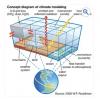
Thge questions raised in this article are the sorts of questions that go through my mind when, say, someone nonchalantly talks about using a theory as a 'lens' through which to view some phenomenon. Do they mean the theory is a model (as opposed to a law of nature)? If so, what sort of model? Do they mean it in the sense of a system? Do they have an epistemology for that model? Etc. "Models raise questions in semantics (how, if at all, do models represent?), ontology (what kind of things are models?), epistemology (how do we learn and explain with models?), and, of course, in other domains within philosophy of science." Anyhow, this is a great article, a clear and well-developed account of our development and use of models, from physical objects, to metaphors, to abstractions. Image: Britannica.
Web: [Direct Link] [This Post][Share]
Looking North: A uniquely Canadian path for education in an AI-rich world
Chris Kennedy,
Culture of Yes,
2025/04/08
"A coordinated Canadian approach to AI education could become our international differentiator—setting us apart from the fractured approaches seen in the United States and elsewhere," writes Chris Kennedy. "Imagine a national commitment to AI literacy and digital citizenship that becomes our educational signature globally. A collaborative approach to education that honours Indigenous knowledge alongside scientific understanding. A shared investment in modernizing curriculum and assessment—not to standardize, but to reimagine and humanize." I'm not going to say the idea is a bad one, though it is understandably vague. But I'm not sure what a national consensus would look like. I don't think AI - or AI literacy, for that matter - is just another subject you can teach the way you currently teach math or physics. AI becomes implicated ion the teaching from the outset, and rapidly enables people to begin learning on their own. A consensus among teachers might be as dedicated to stopping that as to supporting it. If there's a Canadian approach here, it's going to be something like ensuring nobody is left out, so we all share in the benefits from AI. But, again, that's a little vague.
Web: [Direct Link] [This Post][Share]
First Person Identity
Phil Windley
,
Technometria,
2025/04/08
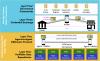
Short little article that hearkens back to the days when we spoke of a personal cloud and argues that "first person" is a more powerful descriptor than "self-sovereign". Specifically, "First person describes exactly the kind of thinking that will allow people create their own oneline relationships without an intermediating administrator like a social network." The post references a talk by Drummond Reed that I couldn't find, but you can get the gist at this post where Doc Searls discusses "how individuals, acting as first parties, can proffer their privacy requirements as contractual terms," which is the subject of a new IEEE PAR, IEEE P7012, nicknamed MyTerms (VRM, by the way, stands for Vendor Relationship Management and is meant to serve as the customer-side counterpart of Customer Relationship Management, according to Searls).
Web: [Direct Link] [This Post][Share]
The recipient test: a simple test for ethical and responsible AI use in education
George Veletsianos,
2025/04/08
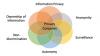
It's kind of like the Golder Rule but for AI. "Two questions I've started asking myself are these," writes George Veletsianos. "Would I be comfortable being on the receiving end of this? Would I want this for my loved ones, like my niece and nephew?" Call this, he says, the "Recipient Test." He then runs through a few examples. Unfortunately, his imagination is perhaps not so broad as mine. AI-generated income tax returns, for example, would make my day. Privacy? Hah! I grew up in a small town; privacy is for other people (usually rich people hiding their wrondoings). Automated assessment of skills and capabilities that doesn't take into account whether or not I went to Yale? Yes, that's for me. The only real place I wouldn't want AI is the same place I don't want any technology: when it's used by some money-grubbing corporation to take advantage of me. But they don't need AI for that. Image: Kerr.
Web: [Direct Link] [This Post][Share]
Open Universities: Reinventing, repurposing and reimagining innovative futures | Journal of Open, Distance, and Digital Education
Don Olcott, Jr.,
2025/04/08

Honestly, this article (17 page PDF) could have come from 2005. The case for mega open universities hasn't really changed (even if the world has). But that case is still relevant today. Don Olcott summarizes the game-changers on the post-secondary system as "1) leadership, 2) expanding mega-universities, 3) repositioning open universities within the mainstream HE ecosystem, 4) open universities smaller in size, fewer students, niche research, and a mix of niche-focused degrees, certificates and micro-credentials, 5) a focused national mission and renewed partnerships,and 6) monitoring AI and digital technology developments."
Web: [Direct Link] [This Post][Share]
There are many ways to read OLDaily; pick whatever works best for you:
- Read in your web browser on this web page, updated weekdays
- Receive a daily or weekly email newsletter by subscribing here
- Subscribe to the RSS feed using your favourite feed reader
- Follow @OLDaily@mastodon.social on Mastodon or elsewhere in the fediverse
- Follow @OLDaily on Twitter
- Integrate the open API using the JSON feed
This newsletter is sent only at the request of subscribers. If you would like to unsubscribe, Click here.
Know a friend who might enjoy this newsletter? Feel free to forward OLDaily to your colleagues. If you received this issue from a friend and would like a free subscription of your own, you can join our mailing list. Click here to subscribe.
Copyright 2025 Stephen Downes Contact: stephen@downes.ca
This work is licensed under a Creative Commons License.