Making 768 servers look like 1
Aug 14, 2026
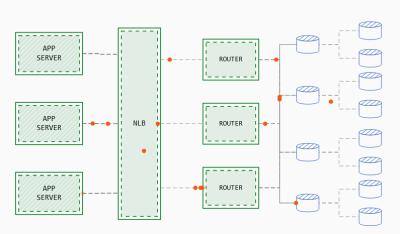
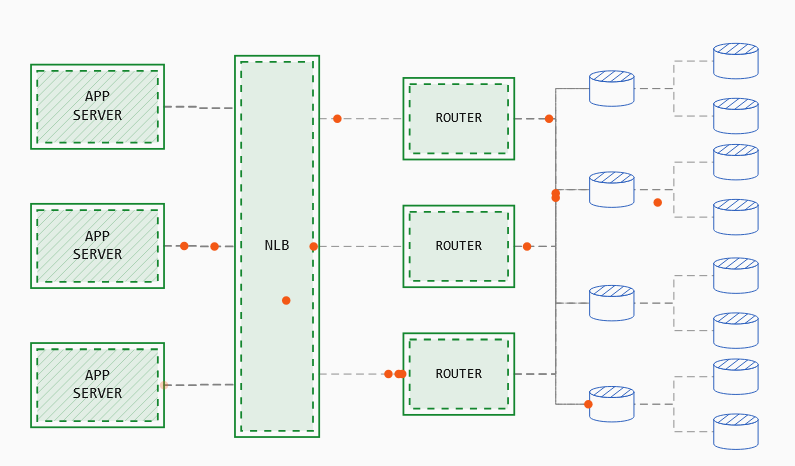
This article describes the practice of sharding databases in order to serve more requests across larger data sources than a single database could handle. In sharding, each of several (or several hundred) databases contains a certain segment of the data. This division of data is defined by a simple function (for example, each database might handle only certain record numbers - the first handles records 1-10, the second handles records 11-20, and so on). A router then sends the request to the right database depending on the request. Multiple identical routers may exist, and traffic to them is distributed through a load balancer. It's a good article, and only touches the basics of sharding (there's no discussion of how search is managed, for example), but well worth reading for a detailed outline.
Today: Total: [] [Share]