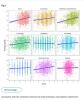

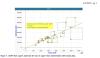
This article doesn't actually offer 10 simple rules - that's a different document - but it does lay out four themes based on the ten rules (and some personal experience). The themes are reasonable - you still need to know what you are doing, you need to know how to work with coding assistants for things like context management, you need to work within a testing framework, and you need to ensure the code is valid - that it actually does what the AI says it does. The article made me wonder: how would the same rules apply for using AI to write articles (assuming we need more articles in the world, a proposition I am beginning to doubt)?
Today: Total: Russell Poldrack, The Transmitter, 2025/12/16 [Direct Link]Select a newsletter and enter your email to subscribe:
Stephen Downes works with the Digital Technologies Research Centre at the National Research Council of Canada specializing in new instructional media and personal learning technology. His degrees are in Philosophy, specializing in epistemology, philosophy of mind, and philosophy of science. He has taught for the University of Alberta, Athabasca University, Grand Prairie Regional College and Assiniboine Community College. His background includes expertise in journalism and media, both as a prominent blogger and as founder of the Moncton Free Press online news cooperative. He is one of the originators of the first Massive Open Online Course, has published frequently about online and networked learning, has authored learning management and content syndication software, and is the author of the widely read e-learning newsletter OLDaily. Downes is a member of NRC's Research Ethics Board. He is a popular keynote speaker and has spoken at conferences around the world.

Stephen Downes,
stephen@downes.ca,
Casselman
Canada
A couple of weeks ago Emil Stenström wrote How I wrote JustHTML using coding agents. I read it at the time - I thought maybe I had posted it here, but I guess I hadn't (it's one of those niche posts that really interesting to me but maybe less interesting to the broader e-learning readership). It describes using AI to write a fully compliant HTML5 parser in Python (not trivial, because there are so many ways to write HTML incorrectly, and a parser can't choke on them). It was significant to me because it suggests that testing, rather than reading lines of code, will be how we validate software in the future. Anyhow, in this article Simon Willison describes porting the software from Python to Javascript - "It took two initial prompts and a few tiny follow-ups... Time elapsed from project idea to finished library: about 4 hours, during which I also bought and decorated a Christmas tree with family and watched the latest Knives Out movie." So is that what software development is now? "Is it responsible and appropriate to churn out a direct port of a library like this in a few hours while watching a movie? What would it take for code built like this to be trusted in production?" Here's the playground for the new software. Works perfectly.
Today: Total: Simon Willison, 2025/12/16 [Direct Link]I was reviewing something I had written the other day when I realized I had used the word 'delve'. What did this mean? Had I succumbed to parroting the AI style? Wasn't I afraid of being labeled an AI user? Neither: it was just the word that seemed to fit. I left it in. So anyhow, this article wrestles with a similar dilemma for academic writers. What happens to creative thought when AI is everywhere? "Users become both architects and artefacts." I had a few responses to the paper: one, a visceral dislike for the writing style; another, wherein I commented on LinkedIn, "Makes you pine for the days when only the rich could afford intellectual dishonesty and unearned advantage." Another, where I considered the possibility that there was a genuine issue being raised that addressed both human and AI content equally. In the end, all I was left with was 'meh'.
Today: Total: Peter Bannister, Higher Education Research & Development, 2025/12/15 [Direct Link]The most recent bit of AI jargon is something that might take you back to the days of the Amazon Echo and Alexa: skills. Today's version, however, comes from Anthropic and is being (quietly) adopted by OpenAI. "A skill is just a folder with a Markdown file and some optional extra resources and scripts, so any LLM tool with the ability to navigate and read from a filesystem should be capable of using them." Here's where they show up in OpenAI. "Skills are a keeper," says Simon Willison.
Today: Total: Simon Willison, Simon Willison's Weblog, 2025/12/15 [Direct Link]I didn't have much money when I was young so for me reading meant buying used mass market paperbacks. These were at best temporary books, and would often fall apart. But I wasn't building a library to decorate a house! Anyhow, with the arrival of the internet I was able to read as much as I wanted essentially for free, and I stopped buying them (I remember the point in time exactly - I had read the first two Game of Thrones books and was waiting for the third to come out in paperback... and it never did (maybe it did eventually, but I waited years). No way I was going to pay for a hardcover, so that was the end for me.) Anyhow, Ben Werdmuller writes, "ReaderLink, the largest book distributor in America, is going to stop carrying them - and we'll notice the effect immediately."
Today: Total: Jim Milliot, Sophia Stewart, PublishersWeekly.com, 2025/12/15 [Direct Link]Alan Levine makes a point of offering a Hat Tip for the OER Foundation. He writes, "The courses shared through OERu are built on the web first approaches of collaborative authoring via a wiki and a dynamic distribution system based on open protocols. This is a credit to the vision and commitment of Wayne Mackintosh over 16 years. And so much was built and share in not only the tools, but the methods, but technologist Dave Lane, who always shared his expertise with me for years and years." I do hope someone in the world can step forward to host the content and services.
Today: Total: Alan Levine, OE Global Connect, 2025/12/15 [Direct Link]Web - Today's OLDaily
OLDaily Email - Subscribe
Web - This Week's OLWeekly
OLWeekly Email - Subscribe
RSS - Individual Posts
RSS - Combined version
Podcast - OLDaily Audio
Websites
Stephen's Web and OLDaily
Half an Hour Blog
Leftish Blog
MOOC.ca
Stephen's Guide to the Logical Fallacies
gRSShopper
Let's Make Some Art Dammit
Email: stephen@downes.ca
Email: Stephen.Downes@nrc-cnrc.gc.ca
Skype: Downes
Professional
National Research Council Canada
Publications
Presentations
All My Articles
My eBooks
About Stephen Downes
About Stephen's Web
About OLDaily
Subscribe to Newsletters
gRSShopper
Privacy and Security Policy
Statistics
Archives
Courses
CCK 2008, 2009, 2011, 2012
PLENK 2010
Change 11 - 2011
Education Futures - 2012
Learning Analytics - 2012
REL 2014
Personal Learning - 2015
Connectivism and Learning - 2016
E-Learning 3.0 MOOC - 2018
Ethics, Analytics - 2020
Stephen Downes, Casselman, Canada
stephen@downes.ca
Last Updated: Dec 16, 2025 11:37 a.m.