
Stephen Downes

Knowledge, Learning, Community

Please select a newsletter and enter your email to subscribe.

Stephen Downes spent 25 years as an expert researcher at the National Research Council of Canada, specializing in new instructional media and personal learning technology. With degrees in Philosophy and a background in journalism and media, he is one of the originators of the first Massive Open Online Course, has published frequently about online and networked learning, and is the author of the widely read e-learning newsletter OLDaily. He is a popular keynote speaker and has presented at conferences around the world. [More]

Support OLDaily

OLDaily has been free and open to all readers since 2001. It is a valuable and widely-used resource for educators, researchers, and learners worldwide. Please consider a monthly contribution to sustain the time and resources required to publish it every day.


Here's what's in the latest edition of OLDaily

COMPASS GenAI Reflection Version 1
79388 image icon

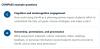
Presented at a conference today: "The COMPASS tool supports instructors to develop key recommendations for student use of GenAI. As students report using GenAI in their task planning, task enactment, and reflection, COMPASS guides instructors to consider potential benefits and consequences of GenAI across seven evidence-informed categories."

Today: Total: Netlify, 2026/06/09 [Direct Link]
 Pedagogy of Human Flourishing with READCO.ai
79387 image icon

This is an approach I can get behind: "instead of viewing students primarily as future economic assets, our approach is grounded in the Education for Human Flourishing framework, integrating arts, Socratic AI, and the United Nations' Sustainable Development Goals (SDGs) to nurture the 'whole person' in an increasingly automated world." The Readco.ai framework includes five major elements: "adaptive problem-solving; ethical competency; interpreting the world; appreciating the world; and acting in the world." Now to be sure, I might have a different list, and I'd word them differently, but this is much better than thinking of people as economic units.

Today: Total: Chryssa Themelis, AACE, 2026/06/09 [Direct Link]
What it feels like to work with Mythos
79386 image icon

How good is the newest Claude model (known to the world as Mythos, but named Fable for some reason)? "In experiment after experiment I conducted, it outperformed basically every other public model I have used by a considerable margin. It was capable across many problems and produced some startling results — it would work up to a dozen hours executing on multi-page specifications." When (and if) it becomes available to me I'll follow up with my own assessment.

Today: Total: Ethan Mollick, One Useful Thing, 2026/06/09 [Direct Link]
Speaker feeds
79385 image icon

Why don't more conferences do this? "Browse speakers from past FFConf who still publish on their own blog. Filter by year or topic, search by name or session keyword, then download an OPML file of the feeds you picked and drop it into your feed reader." Sure, we often get lists of X/Twitter accounts or Facebook identities, so often by people who complain about corporate takeover of the learning space. We are the ones who make our choices; we should stop making the wrong ones.

Today: Total: 2026/06/09 [Direct Link]
Open Source Software Sovereignty Evaluation Matrix
79384 image icon

This is from Emma Irwin's digital sovereignty presentation and overviews a mechanism for evaluating software based on the four freedoms that define open source software: to use, to inspect, to share, and to modify. A fifth layer is added: to govern. She suggests "turning this table into an RFP questionnaire with written response fields for vendors" or "developing a numerical scoring system to weight the operational impact versus technical compliance."

Today: Total: Emma Irwin, GitHub, 2026/06/09 [Direct Link]
Web Domain Castles in the Sand
79383 image icon

The main lesson here is that web domains are temporary. I mean, we've always known this (after all, we have to keep paying year after year or the domains will expire). Institutions have never shown any sort of domain loyalty - Otago Polytech allowing Open Education Global's Mastodon domain to expire is just the latest example of this. And as Alan Levine comments, " digital durability rides more on the individual than the institution." But maybe this is more about dukkha than domains, "the anxiety or stress of trying to hold onto things that are constantly changing." Anyhow, Levine seems ready now to let time pass. "I love keeping my old sites up and going or at least archived, but who am I kidding? It's all just sand piled up and the big waves will come one day."

Today: Total: Alan Levine, CogDogBlog, 2026/06/09 [Direct Link]

Stephen Downes Stephen Downes, Casselman, Canada
stephen@downes.ca

Copyright 2026
Last Updated: Jun 09, 2026 11:37 p.m.

Canadian Flag Creative Commons License.