
Stephen Downes

Knowledge, Learning, Community

Please select a newsletter and enter your email to subscribe.

Stephen Downes spent 25 years as an expert researcher at the National Research Council of Canada, specializing in new instructional media and personal learning technology. With degrees in Philosophy and a background in journalism and media, he is one of the originators of the first Massive Open Online Course, has published frequently about online and networked learning, and is the author of the widely read e-learning newsletter OLDaily. He is a popular keynote speaker and has presented at conferences around the world. [More]

Support OLDaily

OLDaily has been free and open to all readers since 2001. It is a valuable and widely-used resource for educators, researchers, and learners worldwide. Please consider a monthly contribution to sustain the time and resources required to publish it every day.


Here's what's in the latest edition of OLDaily

Four Arguments Ontologists Never Finished (And Why AI Teams Will Have Them Again)
79405 image icon

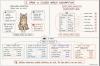
I've kept this item in a browser tab for a couple of weeks waiting to give it the proper attention it deserves, and while I never did, I still want to pass it along. There's a whole debate under the surface of the AI revolution on the relevance of knowledge structures from good old fashioned AI (GOFAI) such as ontologies, graphs and namespaces. The suggestion in this article is that new AI (that we see in large language models, for example) will not escape four issues that dogged (and still dog) these activities: open world (multiple 'truths') vs closed world (single 'truth') models; reification (statements about assertions); context graphs and the primacy of time; and the relation between 'authority' and namespaces ("there is no neutral graph"). Many of the issues people have with large language models can be traced directly to these four issues: questions of bias, authority, the meanings of words, and the passage of time create reasons to doubt generative AI, and AI in general. Well, and human knowledge too. Anyhow, this is a great article. Do spend some time with it.

Today: Total: Kurt Cagle, Context & Chaos, 2026/06/12 [Direct Link]

xAPI Extensions:A Brief Guide for Learning Engineers
79404 image icon

I haven't added xAPI to CList yet, but I do plan to when I get back to it in the fall. This guide will help. The focus is on xAPI extensions. An xAPI statement "may describe who did what, to which activity, and with what result, but many real-world use cases need additional information, such as environmental conditions, system state, scoring details (etc)." Hence, the need to add an extension to include the additonal information. (My favourite statement from the whole document: "There are only ~150 prepositions in English.")

Today: Total: Shelly Blake-Plock, Cliff Casey, Yet Analytics, 2026/06/12 [Direct Link]
Learning through community service
79403 image icon

This is a light article, but it speaks to an interest of mine, community service learning (CSL), which "allows students to get involved with community organizations, often on a volunteer basis, and to collaborate with them on projects that meet community needs." As usual, I have critiques around the edges. For example, Sivane Hirsch, a professor of education at ULaval, says, "The idea is to make academic knowledge accessible, not just through scientific articles, but by putting academics to service in the community." I would actually emphasize the other direction, whereby students and academics learn from the community. Additionally, at the University of Ottawa, the program "gives students the option of volunteering around 30 hours of their time to a community organization each semester in lieu of completing a final project." 30 hours is not nothing, but it's too transactional, too temporary and too late.

Today: Total: Julie Leduc, University Affairs, 2026/06/15 [Direct Link]
From mission to market: a case study and analysis of the commercialisation of institutional publishing
79402 image icon

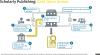
This article (18 page PDF) is in reaction to the partial sale of Amsterdam University Press (AUP) to Taylor and Francis. "Our criticism of the primacy of commercial interests in academic publishing is not an arbitrary purity test," write the authors. "Academic research within publicly funded universities is (still, for now) a collaborative endeavour that aims to serve societal needs, not a private activity intended to generate profit for a small group." A primary issue is governance, "and the importance of good, participatory governance. In the case of university presses... what their ownership and governance structures are, what their economic models are, and who has a meaningful say in their operations and future direction." Additionally, "It also ties into concerns about 'community-washing' that Copim, among others, has begun to raise (Hopkins et al 2024): commercial companies adopting the rhetoric of non-profit and community-led enterprises as marketing spiel." Image: Open Access Network.

Today: Total: Kevin Sanders, Lucy Barnes, Tom Grady, Kira Hopkins, Anna Hughes, Scottish Journal of Open Research, 2026/06/15 [Direct Link]
The Excellence Trap – A Glass Ceiling for Swedish Universities
79401 image icon

As HESA comments when introducing this item, the same concern applies in Canadian research finding as well. " the excellence trap: the effect that arises when the majority of research is funded through a project-based model in which many projects require co-funding. Such requirements mean that the more successful a university is in securing competitive funding, the less room it has to invest in the long-term development of excellence." Martin Nilsson Jacobi argues, "society is not best served by allocating resources in ways that are too narrowly targeted and too short-term. Academic freedom is not only a fundamental principle underpinning democratic values; it is also the most effective means of maximising the value that academia delivers to society." Governments are able to enter into longer term contracts and infrastructure agreements with companies; I see no reason they can't do so with universities and consortia.

Today: Total: Martin Nilsson Jacobi, Chalmers University of Technology, 2026/06/12 [Direct Link]
Preparing future math teachers to teach data science
79400 image icon

I think it's really important for people who lead with 'theory' and see it as a 'lens' to rethink their understanding of the scientific method in the era of data science. "In data science, you don't start with a hypothesis or prediction," Weber said. "You start with the data that already exists - maybe numbers someone collected years ago, or information gathered for a totally different purpose - and you work backward. You look for patterns, connections or surprises in the data, and those clues help you figure out what questions you should even be asking. So, instead of testing a hypothesis, you're discovering one." This article is based on a paywalled paper by Eric Weber, et al., though there's an archive version available (nor now) here.

Today: Total: Jonathan Kantrowitz, Education Research Report, 2026/06/11 [Direct Link]

Stephen Downes Stephen Downes, Casselman, Canada
stephen@downes.ca

Copyright 2026
Last Updated: Jun 13, 2026 03:37 a.m.

Canadian Flag Creative Commons License.