
To put it simply, in 'modernism' there was one point of view (one type of truth, one view of the world, one way of describing it), which had its good and bad points. Then came 'post-modernism', which allowed for many points of view. "Instead of thoughtful maps, we had endless competing realities." Now we're in a mess that "leaves us trapped in blinded deadens of certainties of yesterday and the endless fragmentation of today." Now what we're searching for is a way to support 'shared meaning' and 'collective action'. That's the article. Here's my take: there never was just one point of view; there were always multiple points of view, but we just weren't able to see them. Now, the scales have fallen from our eyes, and we see the complexity of perspectives for what it is. Trying to force the entire world into having 'one point of view' is a fool's errand. Forget shared meaning and collective action. Focus on global networks and cooperation. (That's my pitch, and if you like it, you can subscribe to my newsletter).
Today: Total: Hamish Campbell, Open Media Network, 2026/06/15 [Direct Link]Please select a newsletter and enter your email to subscribe.

Stephen Downes spent 25 years as an expert researcher at the National Research Council of Canada, specializing in new instructional media and personal learning technology. With degrees in Philosophy and a background in journalism and media, he is one of the originators of the first Massive Open Online Course, has published frequently about online and networked learning, and is the author of the widely read e-learning newsletter OLDaily. He is a popular keynote speaker and has presented at conferences around the world. [More]
Support OLDaily
OLDaily has been free and open to all readers since 2001. It is a valuable and widely-used resource for educators, researchers, and learners worldwide. Please consider a monthly contribution to sustain the time and resources required to publish it every day.
Here's what's in the latest edition of OLDaily
Lucy Suchman writes (5 page PDF), "The term 'AI' can be read as a label for currently dominant computational techniques and technologies that extract statistical correlations (designated as patterns) from large datasets, based on the adjustment of relevant parameters according to either internally or externally generated feedback." Great definition. So how did AI come to be thought of as a 'thing'? "'AI' is a term that suggests a specific referent but works to escape definition in order to maximize its suggestive power... the thingness of AI works through a strategic vagueness that serves the interests of its promoters, as those who are uncertain about its referents (popular media commentators, policy makers and publics) are left to assume that others know what it is." Image: Heaven.
Today: Total: Lucy Suchman, 2026/06/15 [Direct Link]My own take is that Anthropic's competitors (one especially that rhymes with 'tusk') have been given a gift by the U.S. government (there are a million other points of view being expressed out there that I won't attempt to review). "The US government, citing national security authorities, has issued an export control directive to suspend all access to Fable 5 and Mythos 5 by any foreign national... The net effect of this order is that we must abruptly disable Fable 5 and Mythos 5 for all our customers to ensure compliance." I tried Fable briefly to run a security scan on my software; it did find a new issue, but also ate my (admittedly meagre) budget quickly.
Today: Total: Anthropic, 2026/06/15 [Direct Link]As a long-time government employee I learned early that there's no such thing as job security, and when I retired in April the entire Human-Computer Interaction (HCI) team was cut, which took the bloom off the rose. I've never understood layoffs; it really is like "chopping off their own arms and legs in a vain attempt to protect the heart." Layoffs seem like recognition that your workload is shrinking, and instead of using all the resources already at your disposal to find a way to expand your services develop new offerings, you just contract to make sure the next quarter is profitable. As this article makes clear, if you thought universities were different, you're wrong. "Our universities have now become hollowed-out and unmoored from their original purpose... they are more like aggressive medium-sized enterprises struggling for market share than the school-like cloisters that voters perhaps picture."
Today: Total: Glen O'Hara, Independent Social Research Foundation, 2026/06/15 [Direct Link]We see the word 'community' a lot in these pages, but how big is a community? We can use Tom Watson's discussion of the term 'neighbourhood' as a proxy for this question. The answer depends on who you ask (though a very informal poll makes it less than 1,000 rather than some larger number). When you ask actual people to define a neighbourhood, "the answers were never about population counts (although the numbers were in the 4k range). People drew lines around a few streets. A park. The shop. The school run. The boundaries were small, personal, and there was nuance and disagreement." Contrast that with a definition that "becomes a unit of administration dressed up as a unit of belonging. A word borrowed to make bureaucracy feel human." What's the test? "Would the people inside the line say it's theirs? If yes, you've defined a neighbourhood. If no, you've defined a delivery area."
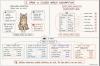
Today: Total: Tom Watson, Tomcw.xyz, 2026/06/15 [Direct Link]I've kept this item in a browser tab for a couple of weeks waiting to give it the proper attention it deserves, and while I never did, I still want to pass it along. There's a whole debate under the surface of the AI revolution on the relevance of knowledge structures from good old fashioned AI (GOFAI) such as ontologies, graphs and namespaces. The suggestion in this article is that new AI (that we see in large language models, for example) will not escape four issues that dogged (and still dog) these activities: open world (multiple 'truths') vs closed world (single 'truth') models; reification (statements about assertions); context graphs and the primacy of time; and the relation between 'authority' and namespaces ("there is no neutral graph"). Many of the issues people have with large language models can be traced directly to these four issues: questions of bias, authority, the meanings of words, and the passage of time create reasons to doubt generative AI, and AI in general. Well, and human knowledge too. Anyhow, this is a great article. Do spend some time with it.
Today: Total: Kurt Cagle, Context & Chaos, 2026/06/12 [Direct Link]Web - Today's OLDaily
OLDaily Email - Subscribe
Web - This Week's OLWeekly
OLWeekly Email - Subscribe
RSS - Individual Posts
RSS - Combined version
JSON - OLDaily
Podcast - OLDaily Audio
Websites
Stephen's Web and OLDaily
Half an Hour Blog
Leftish Blog
MOOC.ca
Stephen's Guide to the Logical Fallacies
gRSShopper
Let's Make Some Art Dammit
Email: stephen@downes.ca
Email: Stephen.Downes@nrc-cnrc.gc.ca
Skype: Downes
Professional
National Research Council Canada
Publications
Presentations
All My Articles
My eBooks
About Stephen Downes
About Stephen's Web
About OLDaily
Subscribe to Newsletters
gRSShopper
Privacy and Security Policy
Statistics
Archives
Courses
CCK 2008, 2009, 2011, 2012
PLENK 2010
Change 11 - 2011
Education Futures - 2012
Learning Analytics - 2012
REL 2014
Personal Learning - 2015
Connectivism and Learning - 2016
E-Learning 3.0 MOOC - 2018
Ethics, Analytics - 2020
Stephen Downes, Casselman, Canada
stephen@downes.ca
Last Updated: Jun 14, 2026 3:37 p.m.