Redesigning Workflows for AI
Jakob Nielsen,
UX Tigers,
2026/04/10

Come for the Viking meme images, stay for the long Jakob Nielsen article on adapting workflow design to new affordances created by AI. He writes, "In a controlled field experiment, startups that redesigned end-to-end workflows around AI generated 90% more revenue than equally equipped peers that used AI mainly to speed up individual tasks." We're going to see similar scenarios (and similar reports) across the field of education. "If AI can handle much of the routing, summarizing, monitoring, reporting, scheduling, drafting, and cross-functional translation that once absorbed so much managerial effort, then the classic corporate pyramid becomes harder to justify."
Web: [Direct Link] [This Post][Share]
What is Mastodon for?
Laurens Hof,
connectedplaces.online,
2026/04/10

This article was the source of the Scott Jensen post, which I just linked to. I'm treating it separate item because it's a long discussion of what it means to be a community in the fediverse. He quotes Jaz-Michael King, who writes, "the fediverse is not a place, it is the means to build a place." His vision, writes Laurens Hof, "is a million small places, each with its own governance and its own front door, connected where it makes sense and disconnected where it doesn't." Which sounds great, but as Hof writes, "The difficulty is that almost nobody experiences Mastodon at the instance level. People experience it through their home timeline, which composites content from across the entire federation." This is true - but my home timeline is composed of people I have chosen to follow. And the problem, Hof seems to be saying, is that nobody controls that. "The software has not caught up, and until it does, the community will keep enforcing its boundaries the only way the federation layer allows: person by person, reply by reply."
Web: [Direct Link] [This Post][Share]
Is #mastodon becoming an echo chamber?
Scott Jenson,
Mastodon,
2026/04/10

Why don't media and journalists like Mastodon? I think that it's because it lacks an algorithm. Various 'representative' voices are not privileged in the name of, shall we say, 'balance'. Scott Jenson raised this issue in the most provocative way possible: "Is #mastodon becoming an echo chamber? This post from @carnage4life has me questioning our community... I *know* people here don't want this to be a classic social media-clone but we'd *like* journalists to be here right?" (I added the link to Dare Obasanjo's post; in classic journalist fashion Jensen doesn't link to the source, so it becomes 'his' story). I like Mastodon founder Eigen Rochko's response: "I'm not interested in following any 'AI people'. That doesn't make it an echo chamber. We don't need equal amounts of people who love puppies and want to kill puppies, not everything needs to be equally represented." The whole thread is well worth reading (even some of the oh-so-Mastodon digressions). Especially this point: "Literally anyone can spin up a server and talk about anything/try to get more folk to listen... But other folk have to want to listen to whatever they are saying. Servers and individuals can just decide not to. No one is guaranteed an audience, just the ability to speak." Via Laurens Hof.
Web: [Direct Link] [This Post][Share]
Project Glasswing: Securing critical software for the AI era
Anthropic,
2026/04/10
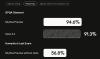
Just for the record, Annthropic's announcement of Mythos: "We have used Claude Mythos Preview to identify thousands of zero-day vulnerabilities (that is, flaws that were previously unknown to the software's developers), many of them critical, in every major operating system and every major web browser, along with a range of other important pieces of software." The Mythos model, therefore, won't (yet) be released to the public, but Project Glasswing partners will be able to use the model to identify and fix the vulnerabilities.
Web: [Direct Link] [This Post][Share]
Same Data, Different Results
Matthias Burghart,
Max Planck Institute,
2026/04/10
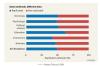
A study published in Nature last week - behind a paywall, naturally - confirms what many previous studies have shown: about half of all studies in the social sciences cannot be replicated. The situation is slightly better for education research. "When the same data is analyzed differently by various researchers, the conclusions drawn can vary significantly... The choice of analysis method has a significant impact on the findings. Decisions regarding data cleaning, variables, and statistical models are crucial and can lead to different outcomes." I would apply these findings not only to individual studies, but also systemic reviews. "These results do not call into question the credibility of earlier research," says Balázs Aczél of Eötvös Loránd University. "Rather, they show that presenting a single analysis often does not reflect the true extent of empirical uncertainty. Ignoring analytical variability can lead to a false sense of confidence in scientific conclusions." See also: Science, Stewart-Williams, National Tribune, Kau.se, Phys.org.
Web: [Direct Link] [This Post][Share]
ADAMS: Parents, not government, should decide what children do online
Will Adams,
The Provincial Times,
2026/04/10

This article essentially just repeats the same point over and over again, in slightly different wording, but it's a point that needs addressing: "The answer is not to demand that the government police the internet for them. It is to do what parents have always done: take responsibility for their own children, and leave the rest of us alone." And that sounds great, especially in the many ways the same thing can be addressed. But it's wrong. While it would be nice if we could count on parents to protect and care for children, history teaches us that we cannot. Many parents abdicate their responsibility, either out of carelessness, maliciousness, incompetence, or because they simply don't exist. The 'leave it to the parents' attitude expresses the perspective of privilege, where we leave those without a supportive home environment to fend for themselves. This is not to discount the technical challenges and implementation issues. But we have laws that protect children from other things that may harm them - drugs and alcohol, firearms, cars, etc - and society ought to consider a similar responsibility when it comes to technology and connection.
Web: [Direct Link] [This Post][Share]
Belonging and Place: A Case Study of Digital Practice at the University of the Highlands and Island
Bonnie Stewart,
All Ireland Journal of Higher Education,
2026/04/10

What I found interesting in this paper (17 page PDF) was the balance required to, on the one hand, encourage "authentic human connections in both physical and digital teaching environments," and on the other hand, respective "diverse modes of engagement, recognition of different learning capacities and preferences, and accommodation of various life circumstances." It can be tricky. Many cultural traditions, both online and offline, favour conformity (I'm think especially of Reddit here, where a voting system punishes unpopular opinions). "As one staff member noted, 'belonging does not require uniform participation.'" It takes a careful hand, negotiation around existing hierarchies, and a fostering of a "live and let live" attitude. Bonnie Stewart writes, "UHI campuses were described as 'surprisingly accepting of diversity despite the region being rural and relatively homogeneous demographically.'" So while "breakout rooms was emphasized as an important humanizing practice across disciplines and content," it is important that "instructors also recognized student agency, with one noting they offer breakout opportunities while recognizing 'some students may not want to build those ties as much as others.'"
Web: [Direct Link] [This Post][Share]
There are many ways to read OLDaily; pick whatever works best for you:
- Read in your web browser on this web page, updated weekdays
- Receive a daily or weekly email newsletter by subscribing here
- Subscribe to the RSS feed using your favourite feed reader
- Follow @OLDaily@mastodon.social on Mastodon or elsewhere in the fediverse
- Follow @OLDaily on Bluesky
- Read OLDaily as a LinkedIn Newsletter
- Integrate the open API using the JSON feed
This newsletter is sent only at the request of subscribers. If you would like to unsubscribe, Click here.
Know a friend who might enjoy this newsletter? Feel free to forward OLDaily to your colleagues. If you received this issue from a friend and would like a free subscription of your own, you can join our mailing list. Click here to subscribe.
Copyright 2026 Stephen Downes Contact: stephen@downes.ca
This work is licensed under a Creative Commons License.