It was the best of times to make a website, it was the worst of times to make a website
Pete Millspaugh,
Val Town Blog,
2026/11/11
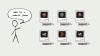
It's easy for me to forget that people don't know how to make their own websites by hand any more (mostly, they never did, which is why platforms and social media become so popular). These days, people are using AI to work with website-creation and hosting sevrices. In this post, Pete Millspaugh conduct vibe coding trials with Lovable, v0, Replit, Claude Artifacts, and ChatGPT Sites all making the same website, feeling the same prompt to each tool. It can be annoying; for example, he writes, "I'm using up 'credits' as the machine works—0.70 so far, now 2.30, now 3.10, oh boy—and I have no clue what that means. There are no units. I'd prefer dollars." It's pretty easy to make a website in 2026, he says, lauding the fact that "end-user programming, the idea that everyone should be able to customize their own software, seems more possible than ever." Still, "a slopsite, an AI-generated website with little to no human thinking involved, is often worse than no website at all." Via Jim Nielsen.
Web: [Direct Link] [This Post][Share]
Education Technology Trends: What Holds Up in 2026
Robert A. Lee,
SQ Magazine,
2026/11/11

As a short-term list this isn't bad, though it generally points to things that are already happening or are very clearly in the planning stages. As such, it's a good monitor of what's happening, but the list doesn't prepare for or account for change. What I do notice (and it's a trend not limited to this list) is that its focus is mostly on the formalization of AI processes using existing structure or schemas. AIs are thus expected to conform for workflows, credential schemas, interoperability standards, structured data, and public policy such as accessibility requirements. This isn't necessarily bad; as the systems AI builds get larger and more complex, they need to interoperate, which means standards and requirements. But tehse standards are currently the best humans can come up with, and AIs might actually be better at designing these. That's what I would be looking for longer term. Via SmartBrief.
Web: [Direct Link] [This Post][Share]
RealCity Transit
Daniel Duris,
RealCity Transit,
2026/11/11
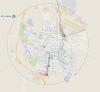
I used to spend hours playing Sim City and Cities Skylines, and one of my favourite features was designing the transit network. Now here's a game that focuses on that, while using maps of real cities. I was in danger of frittering away my entire morning. I can imagine all sorts of uses for this, beginning of course with working with people to understand why the city's transit network looks the way it does. Via Alan Levine.
Web: [Direct Link] [This Post][Share]
The Students Missing from the Screen Time Debate
Kris Astle,
Teach Magazine,
2026/11/11

I am supportive of this argument. "Few educators would defend endless scrolling, constant notifications, or technology that encourages passive consumption rather than active learning." However, "who might be affected when those tools are taken away?" It's an important question. "A learner who struggles with written expression may use speech-to-text to communicate ideas, demonstrate understanding, and contribute to classroom discussions. These tools do not interfere with learning. They make it possible." It's not the tool itself that is the problem. It's the ineffective use of the tool. "The real challenge facing schools is not reducing screen time at all costs. It is distinguishing between purposeful and passive technology use."
Web: [Direct Link] [This Post][Share]
There are many ways to read OLDaily; pick whatever works best for you:
- Read in your web browser on this web page, updated weekdays
- Receive a daily or weekly email newsletter by subscribing here
- Subscribe to the RSS feed using your favourite feed reader
- Follow @OLDaily@mastodon.social on Mastodon or elsewhere in the fediverse
- Follow @OLDaily on Bluesky
- Read OLDaily as a LinkedIn Newsletter
- Integrate the open API using the JSON feed
This newsletter is sent only at the request of subscribers. If you would like to unsubscribe, Click here.
Know a friend who might enjoy this newsletter? Feel free to forward OLDaily to your colleagues. If you received this issue from a friend and would like a free subscription of your own, you can join our mailing list. Click here to subscribe.
Copyright 2026 Stephen Downes Contact: stephen@downes.ca
This work is licensed under a Creative Commons License.