
AI hasn’t taken my writing job — but it is living rent-free in my head
Jasna Hodzic,
Big Think,
2026/10/27

This is a good longish article in which the author reflects on her decision whether or not to use AI in her writing. I liked it cause it reflects many of the same issues I have considered. The article is fresh and breezy and really seems to reflect the personality of the author. I wonder, though. The company - 'Big Think' - is listed as a co-author. So it makes me wonder what part of her voice I'm not hearing, and what part is the company speaking through her. Still a good article though.
Web: [Direct Link] [This Post][Share]
Teachers Pay Teachers curriculum marketplace to ban AI-generated curriculum resources
Lily Altavena,
ChalkBeat,
2026/10/27
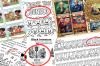
The story is in the headline - the popular teaching resource marketplace is banning AI-authored content. This assumes they can detect it, which isn't certain. And a number of vendors are protesting. And it comes amid other moves by Teachers Pay Teachers (TPT) to tighten its hold and extract more revenue from the platform.
Web: [Direct Link] [This Post][Share]
Evidence Into Action: A Public Education System Where Every Child Can Learn and Thrive
Elena Silva,
Learning Policy Institute,
2026/10/27

The focus here is on U.S. schools, but there is a broader point worth making. " Too many of our schools sort children more reliably than they develop them," writes Elena Silva, referencing "segregation by race and income". This is a problem because "Learning is fundamentally relational. The brain develops through attachment and interaction." This sort of interaction works best with diversity, not homogeneity. Sorting, in other words, breaks interaction. "This relationship-centered approach is not a soft alternative to academic rigor; it is its essential mechanism."
Web: [Direct Link] [This Post][Share]
Digital Education Council
Digital Education Council, Pearson,
2026/10/27
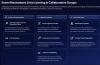
This is interesting, though the full report is behind a stupid subscription wall, which is very frustrating and makes me think a lot less of them. The premise is that AI is interfering with student collaboration because all the students depend on the same AI model, which means when they come together they're already saying the same thing. Apparently the report documents this in more detail, though we get a good sense of it on this open page. The tease is 'seven methods that drive learning in collaborative groups'. We are led to believe the DEC report details a solution, though this is craftily hidden - and thus, to my view, is nothing but a fake. Here also is the press release.
Web: [Direct Link] [This Post][Share]
AI Could Radically Accelerate How We Learn About Learning
Allison Dulin Salisbury,
The Humanist,
2026/10/27
According to this article, "Recent advances in AI raise the possibility of building something education has never really had: a virtual laboratory for learning. At the center of this possibility are synthetic students." The problem, of course, is that we don't know how to simulate students. "When you ask a capable model to play a struggling student, its mistakes tend to come out inconsistent or superficial."Now are we good at "predicting how a particular lesson or explanation or piece of feedback changes what a student understands and remembers later." Ultimately, I think, the article is a pitch to philanthropy: "Much of what we need, it turns out, is shared scientific infrastructure that no individual lab or company has much incentive to build today."
Web: [Direct Link] [This Post][Share]
Learning Design Wiki
David Porcaro,
2026/10/27
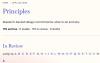
This is "a persistent, LLM-maintained knowledge base for learning design" containing sections (a.k.a. 'knowledge types') on "principles, elements, patterns, designs, products and programmes, strategies, design processes and methods, research methods, theories, learner variables, and empirical claims." It's in a very raw state: "models wrote this wiki, and no person has yet checked any page." Still, in broad strokes, it reflects the state of the literature, and the literature is messy: 170 principles, 1360 theories, 26495 claims. No doubt a first pass could reduce this number somewhat, but it's no wonder there's no real progress in learning time when just about every paper starts anew with a revision of the basics.
Web: [Direct Link] [This Post][Share]
There are many ways to read OLDaily; pick whatever works best for you:
- Read in your web browser on this web page, updated weekdays
- Receive a daily or weekly email newsletter by subscribing here
- Subscribe to the RSS feed using your favourite feed reader
- Follow @OLDaily@mastodon.social on Mastodon or elsewhere in the fediverse
- Follow @OLDaily on Bluesky
- Read OLDaily as a LinkedIn Newsletter
- Integrate the open API using the JSON feed
This newsletter is sent only at the request of subscribers. If you would like to unsubscribe, Click here.
Know a friend who might enjoy this newsletter? Feel free to forward OLDaily to your colleagues. If you received this issue from a friend and would like a free subscription of your own, you can join our mailing list. Click here to subscribe.
Copyright 2026 Stephen Downes Contact: stephen@downes.ca
This work is licensed under a Creative Commons License.