Can you spot an essay written by AI?
Eval Liu,
University Affairs,
2026/09/30

This is important: "To say there is a definitive checklist approach to AI detection is unreliable, and at times dangerous." I would also add that our confidence that we can detect AI versus non-AI writing is probably misplaced. Having said that, I think this is at least partially true: "I was able to gain a direct sense of how each student writes in their own, authentic voice - how arguments were organized, evidence was cited and personal styles were manifested." It feels to me that if you read a lot you can feel a sense of narrative arc - or reasoning, story-telling, movement toward an end - that just isn't present in AI writing, not because AI inherently can't, but because of current context-window limitations. Articles I spot as overly-long AI pieces go from one topic to another to another, each related to the other, but none of them leading to any overall point. Again, though, I would hesitate before pronouncing with certainty that anything is AI or not.
Web: [Direct Link] [This Post][Share]
Sunsetting the HASTAC Network After 25+ Great Years
Cathy Davidson,
HASTAC,
2026/09/30

This post announces the closing of the Humanities, Arts, Science, and Technology Alliance and Collaboratory (HASTAC), the self-described "world's first and oldest academic social network". It will also be the final year of the final year of the HASTAC Scholars, the student version of the network. "A social network is costly and tremendously complex to run and, after more than 25 years, is no longer sustainable. Rather than let HASTAC dwindle and die, we are sunsetting it with dignity and enormous pride in a quarter century of thinking together about, through, with, and sometimes against new technologies and their application in society." I don't see why running a network is so 'costly and complex' - real networks, like (say) the RSS blogging network - are decentralized and distribute cost and complexity across participants, rather than being centrally managed. See also: Cathy Davidson: How to Lead an Academic Social Network.
Web: [Direct Link] [This Post][Share]
Theory of collective mind
Garriy Shteynberg, Jacob B. Hirsh, Wouter Wolf, John A. Bargh, Erica J. Boothby, Andrew M. Colman, Gerald Echterhoff, Maya Rossignac-Milon,
Trends in Cognitive Sciences,
2026/09/30
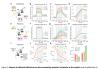
I've been doing some background reading on the concepts of collective experience, collective consciousness, and collective mind. Mostly, I don't think there are any such things, at least, not in the way they're talked about in this paper and also in Garriy Shteynberg's Psychology of Collective Consciousness. It's based on what's called 'autonoetic cognition', the idea that inherent in any experience is the idea that "I am" having that experience; in the same way, collective autonoetic cognition generates an experience that "we are" having that experience. This paper takes the idea of representing 'our' experience further, on the one hand, arguing for the "necessity of collective mind representations," and on the other, offering empirical arguments "identifying a social context, the synchronous arrival of information." Like I say, I disagree - if there are collective minds, they're more likely to be described as in Dynamics of collective minds in online communities, originating in network interactions in communities, and not based in some form of common experience or consciousness. But there's much more to read and to say about all this.
Web: [Direct Link] [This Post][Share]
OpenAI launches Dots, its Muse competitor
Emma Roth,
The Verge,
2026/09/30
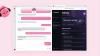
OpenAI has launched Dots, "a customizable AI assistant capable of browsing the web, making purchases, generating documents, tracking goals, and more." This article frames it as a response to Meta's AI assistant called Muse. The plan seems to be to get people addicted, then upsell. "OpenAI notes that conversations with your Dot won't count toward ChatGPT usage limits. 'In the future, you'll be able to add more dots, and scale the output of each dot by either increasing its speed or the total amount of work it can take on per month.'" For most of us, there's not much value here - access is limited to people paying $100/month or more.
Web: [Direct Link] [This Post][Share]
Interview: What Does the ‘I’ in AI Really Mean?
Sara Talpos,
Undark,
2026/09/30

This is a set of interviews with five experts about whether AI can ever match human intelligence. The interviews are relatively short and easy to read, and the content is well-informed. The experts mostly default to the view that 'machine intelligence and human intelligence are fundamentally different' and while they offer explanations of how they differ (eg., as Emily Bender says, in attaching meaning to words) we don't really get any insights on what makes them difference. I suspect that this is because they don't know (eg., how do humans actually attach meaning to words?). My own thought is that human and machine intelligence are fundamentally the same, with limited differences based on the nature of their physical composition.
Web: [Direct Link] [This Post][Share]
AI Tutors Are Changing Education - But Are Students Actually Learning?
Alex Kennedy,
Next Horizon,
2026/09/30

According to this article, "the race is shifting from 'Who has the smartest chatbot?' to 'Who can build an AI that helps a person learn without doing the learning for them?'" It's a good question, because it's not exactly clear what the answer would look like (and indeed, it might be different for each student). "The problem is timing. If a beginner uses AI to bypass the exact mental operation they are trying to learn, they may become efficient before they become competent." This would have been a stronger article had it stuck to this question, but the AI-assisted text wanders as it goes on, talking more about the role of the teacher and that the AI can, and cannot, replace. "The winning model is unlikely to be 'AI teaches, humans watch.' It is more likely to be a deliberately designed triangle: the student does the learning, the AI supplies adaptive support, and the teacher decides what the learning is for."
Web: [Direct Link] [This Post][Share]
There are many ways to read OLDaily; pick whatever works best for you:
- Read in your web browser on this web page, updated weekdays
- Receive a daily or weekly email newsletter by subscribing here
- Subscribe to the RSS feed using your favourite feed reader
- Follow @OLDaily@mastodon.social on Mastodon or elsewhere in the fediverse
- Follow @OLDaily on Bluesky
- Read OLDaily as a LinkedIn Newsletter
- Integrate the open API using the JSON feed
This newsletter is sent only at the request of subscribers. If you would like to unsubscribe, Click here.
Know a friend who might enjoy this newsletter? Feel free to forward OLDaily to your colleagues. If you received this issue from a friend and would like a free subscription of your own, you can join our mailing list. Click here to subscribe.
Copyright 2026 Stephen Downes Contact: stephen@downes.ca
This work is licensed under a Creative Commons License.