
Manifesto for Generative AI in Higher Education – The Book Project
Hazel Farrell, Ken McCarthy,
PressBooks,
2026/09/25
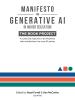
This is the book-length version of the much briefer manifesto (64 page PDF) released last year. It's available in Pressbooks format or 197 page PDF. It is composed of 30 essays from various authors organized around the three major themes: rethinking teaching and learning; responsibility, ethics and power; and imagination, humanity and the future. I have mixed feelings about both the messaging and the purplish prose, but I do like the structure. And we don't have to fret silently if we disagree; there's an interactive website where you can respond to each of the essays (and it's nice to see people actually interacting on it). My favourite comment so far, on the section called "Curiosity surpasses completion": "I interpret this as learning is in the process, not in the product. In which case I agree. Could be made plainer English." The same (?) anonymous poster reaction to another chapter: "This is a bit abstracty as it stands."
Web: [Direct Link] [This Post][Share]
Designing Self-Paced Modules for Learners Who Can’t Attend Every Session
Tessa Dodson,
ALTC Blog,
2026/09/25

At first, based on the title, I thought this was a great new way to help people attending a conference to experience different sessions virtually, so they didn't miss out on multiple simultaneous sessions that are the norm for a conference experience. Alas, no, it's just a standard presentation on how do design a self-paced module for a course, and looks at such standards as chunking, flexible resources, and keeping the cohort connected. But it would be a good idea to convert conference sessions into virtual experiences - not just a video recording of someone talking and showing slides, but something engaging and interactive.
Web: [Direct Link] [This Post][Share]
The Origin and Meaning of Land Acknowledgements
Robert Jago,
BC Humanist Association,
2026/09/25
This paper (28 page PDF) is not only fascinating, it is well worth reading for those charged with expressing land acknowledgements. The paper serves three objectives: to describe the history of land acknowledgements in the Coast Salish region of British Columbia, specifically, the ch'ech'itsul code; to identify how traditional acknowledgements are being "culturally misappropriated" to contain references to "stolen land", to express personal feelings, and to describe remorse or regret; and to describe the correct form of a land acknowledgement for the region, consisting of three parts: to introduce and situate the speaker, to acknowledge the stewards of the territory, and to explain the intent behind the event. Where I live, some 3500 kilometres away, my home sits on land where the traditional territories of four distinct nations overlap: the Omàmìwininìwag (Algonquin), Wendake-Nionwentsïo, Ho-de-no-sau-nee-ga (Haudenosaunee), and Anishinabewaki, and is acknowledged in a treaty called the Crawford Purchase (1783).
Web: [Direct Link] [This Post][Share]
The AI Tools that L&D Teams Are Building (Rather than Buying)
Philippa Hardman,
Dr Phil's Newsletter,
2026/09/25

Good article on the emerging practice of learning and development (L&D) building their own tools, using AI, rather than buying from vendors. There are good reasons for this: it's fast, it's cheap, and you can get exactly the tool you want instead of settling for whatever the vendor has available The bulk of the article lists types of tools L&D teams are building, and the variety tells the story, everything from problem statement bots to job aid bots.
Web: [Direct Link] [This Post][Share]
Copyright Infringement Still Isn’t Theft, Even When A Microsoft Employee Says It Is
Mike Masnick,
TechDirt,
2026/09/25

You've probably seen the headline of a Microsoft employee calling AI scraping "the largest theft of labor in human history." Case closed, right. No. As Mike Masnick says, "An exec's statement doesn't change the underlying facts: fair use isn't copyright infringement, and even when something is infringement, it still isn't theft." I know that a lot of people disagree with this, on both counts. But it is well established that, for example, "the use of the books at issue to train Claude and its precursors was exceedingly transformative and was a fair use under Section 107 of the Copyright Act." There may be an argument for changing the law, or creating new law, though I don't think so. But training AI on legally acquired text is perfectly legal under current law, and it should stay that way, not for the sake of Anthropic and OpenAI, but for the rest of us.
Web: [Direct Link] [This Post][Share]
There are many ways to read OLDaily; pick whatever works best for you:
- Read in your web browser on this web page, updated weekdays
- Receive a daily or weekly email newsletter by subscribing here
- Subscribe to the RSS feed using your favourite feed reader
- Follow @OLDaily@mastodon.social on Mastodon or elsewhere in the fediverse
- Follow @OLDaily on Bluesky
- Read OLDaily as a LinkedIn Newsletter
- Integrate the open API using the JSON feed
This newsletter is sent only at the request of subscribers. If you would like to unsubscribe, Click here.
Know a friend who might enjoy this newsletter? Feel free to forward OLDaily to your colleagues. If you received this issue from a friend and would like a free subscription of your own, you can join our mailing list. Click here to subscribe.
Copyright 2026 Stephen Downes Contact: stephen@downes.ca
This work is licensed under a Creative Commons License.