
We used to log off
Wira Indra Kusuma,
DOC,
2026/09/07

"Online used to be a place you could leave," writes Wira Indra Kusuma. "We designed the exit out of it because an exit reads as a leak." But without that exit, we can never really log off and the online world becomes just another layer of the real world, one we can never escape. "We used to be able to log off because someone left the door open. Now, if people are still allowed a moment to stop, we are the ones who have to put the door there. And we had better know why it is worth putting back, before we forget it was ever there without anyone having to ask." I'm sure this all appeals to this line of reasoning, which is why I'm passing it along, but my own response is ... meh. I want the online world to remember - I want my bank account balance to persist, I want my credentials to continue to be recognized, I want the power to stay on and email to keep coming to the right address. Yes, it used to be the case that we couldn't count on any of that, but today saying "I want an exit" is like saying "I want to leave society".
Web: [Direct Link] [This Post][Share]
Bespoke: A Programming Language for People Who Say Please
Larvitz Blog,
2026/09/07

This is pretty funny. Nothing to do with learning technology, unless you're very into programming, but I can't resist passing it along. "Bespoke, a statically typed and uncompromisingly civilised programming language for developers who believe that machine execution should never come at the expense of good manners. Informally it is known as The Queen's Code: Victoria's, naturally; the etiquette committee has yet to approve the twentieth century. Source files use the .charming extension, and the compiler reserves the right to be disappointed in you."
Web: [Direct Link] [This Post][Share]
Salesforce just put its entire CRM inside Claude - and says you’ll never need its app again
Michael Nuñez,
VentureBeat,
2026/09/07

It's important to understand that the headline in this post is dramatically overstated, and that it's not nearly true yet that "the future of enterprise software may not involve enterprise software's own screens at all." The possibility, though, is out there, and this item shows what it might look like. Following a partnership called Claudeforce that was announced last month, the two companies launched a project to allow a user to interact with a Salesforce CRM from within Claude, not using the Salesforce interface at all. A Claude Skill called Salesforce Development enables "building apps and agents on the Salesforce Platform: metadata, Apex, deploy/retrieve, security, and reporting." We can immediately imagine how this approach could be used with other management applications, including especially learning management systems and learning experience platforms.
Web: [Direct Link] [This Post][Share]
“Next-token predictor” is the wrong mental model for LLMs
Garrin McGoldrick,
Garrin's Blog,
2026/09/07
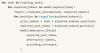
This is a brief article that argues convincingly that the 'Next-token predictor' picture is the wrong mental model for LLMs. Consider, writes Garrin McGoldrick, a chess-playing LLM. "Given a new position, it predicts the move a grandmaster would most likely play next. That is a next-move predictor." By contrast, "Given a position, it chooses the move that leads to the highest probability of winning. Unlike the first system, it is not trained only on games that grandmasters already played. It also learns from games generated by its own exploration." Calling this a next-move predictor, he says, "would be strange". Both systems will give you a 'next move'. But one of them is basing its next move on more than just statistical probability from past events. And that's what contemporary LLMs do today. Via Doug Belshaw.
Web: [Direct Link] [This Post][Share]
The Institutional AI Readiness Pack
Michael J. Zyphur,
Instats,
2026/09/07

This workbook accompanies the Responsible AI in Academic Research framework from last May (and covered in OLDaily here) along with an instruments catalogue and describes a mechanism institutions can use to assess their AI readiness. Basically the pack maps five 'evaluation dimensions' (eg., 'human in the loop', 'responsible use', etc.) against four axes (policy, people, systems, process) graded by four levels of achievement. There are what might be called 'drill-down' elements for some of the dimensions (for example, 'modes' of responsible use, 'procurement criteria' for tools, 'competencies' for AI literacy). The workbook also offers guidance on how to run the assessment, warning against (for example) having it completed by a single individual or role. It's good stuff if this is the sort of thing your institution needs, though there's always the risk of running a long and complex assessment (which this definitely amounts to) while producing no real change, implementation or outcome.
Web: [Direct Link] [This Post][Share]
Learning Along the Way: Designing Travel for Discovery, Growth, and Becoming
Ana-Paula Correia,
2026/09/07

True story: when I was in public school, we once went on a field trip to Ottawa's Lower Town so that our teachers could show us how poor people lived. "Look at their laundry on a line," said the teacher (not knowing that this is how we did our laundry at home). The trip was illuminating, though perhaps not in the intended way, and in general, I think travel is among the best of learning opportunities. That's what this article is about. "Meaningful learning happens when people actively engage with problems and experiences, drawing on what they already know while constructing new knowledge. The learner is not simply a recipient of information. Learning is designed with the learner at the center, and learners often actively participate in shaping their own learning experiences. Travel functions in much the same way." Travel, though, is a privilege, though were it up to me I would incorporate it as much as possible in the education of young people.
Web: [Direct Link] [This Post][Share]
AI for Academic Libraries: Open-Weight AI Models for Local and Private Use
Kari D. Weaver,
Choice 360,
2026/09/07
This is a good article arguing that "open-weight AI models offer librarians the advantages of AI but addresses many of the profession's ethical concerns around privacy." The models can be run locally, so user data is never sent into the cloud and use of the models doesn't require data centres. The article outlines the models and applications (a.k.a. 'model engines') academic librarians can use. "Model engines such as LM Studio and Ollama have lowered the barriers to experimentation and deployment, making it possible for individuals and institutions to run increasingly capable models on local hardware. At the same time, models such as Ministral-3 14B, Qwen3 14B, and Olmo-3 demonstrate that open-weight alternatives can support many of the practical tasks academic libraries encounter."
Web: [Direct Link] [This Post][Share]
There are many ways to read OLDaily; pick whatever works best for you:
- Read in your web browser on this web page, updated weekdays
- Receive a daily or weekly email newsletter by subscribing here
- Subscribe to the RSS feed using your favourite feed reader
- Follow @OLDaily@mastodon.social on Mastodon or elsewhere in the fediverse
- Follow @OLDaily on Bluesky
- Read OLDaily as a LinkedIn Newsletter
- Integrate the open API using the JSON feed
This newsletter is sent only at the request of subscribers. If you would like to unsubscribe, Click here.
Know a friend who might enjoy this newsletter? Feel free to forward OLDaily to your colleagues. If you received this issue from a friend and would like a free subscription of your own, you can join our mailing list. Click here to subscribe.
Copyright 2026 Stephen Downes Contact: stephen@downes.ca
This work is licensed under a Creative Commons License.