When Are Your Feelings Really Yours?
Krista K. Thomasson,
Blog of the APA,
2026/08/26

This article is focused on emotions specifically, not the more general topic of 'feelings' as indicated in the title, and the central point is to make us wonder how we know whether an emotion we have is or is not genuine (and, indeed, what we even mean by a 'genuine' emotion). For example, we sometimes feel emotions that conflict with who we think we are. "Some emotions, like my fear of the mouse, can catch us completely off guard because they conflict with who we take ourselves to be. Call these alienated emotions." Are we really like that? "We have no way to know immediately which of our emotions are authentic - which ones tell us something about ourselves and which ones don't."
Web: [Direct Link] [This Post][Share]
Cialdini’s 7 Influencing Principles
Jakob Nielsen,
UX Tigers,
2026/08/26
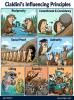
This article summarizes and discusses Robert Cialdini's 7 principles of persuasion: reciprocity, commitment and consistency, social proof, authority, liking, scarcity, and unity. You can read Cialdini's 1984 book here (279 page PDF). However as Jakob Nielsen argues, "Each principle is an appetite tuned for a world that no longer exists." So in user experience design, they have to be manufactured. For example, 'commitment and consistency' on the web is "progressive engagement, the art of asking for small steps before large ones." The problem is that on the web, "the same mechanism traps people. The negative option, where a free trial silently converts to a paid plan unless you cancel, exploits inertia dressed as consistency." So there's a need to apply these principles ethically, and Nielsen outlines how for each principle. Interesting article. I could do without the lavish AI-generated images, but the concept is well executed.
Web: [Direct Link] [This Post][Share]
From Research to Open Resource: Developing a Multilingual Pedagogy of Care Course for Refugee Educators
Lauryn Oates,
OEGlobal,
2026/08/26

Right to Learn, along with its partners, provides a variety of programs supporting access to education for girls and women from Afghanistan. This article describes the process behind the creation of a course in one of those programs. The caption in the OEGlobal post drew me to it - the article "shares how listening first to refugee educators' lived experience reshaped a new open course on Pedagogy of Care." And, of course, the philosophy of care is ultimately about how providers and recipients come together, community, create a relationship, and design solutions together. The article said less about that than I would have liked, and I would have preferred to hear from the people actually developing the course but the executive director who actually authored the piece doesn't really bring them ino the story.
Web: [Direct Link] [This Post][Share]
AI in Education
Doug Holton,
AI Ed Wiki,
2026/08/26

This is not for everyone, but for those inteerested could be a useful resource. Creator Doug Holton explains, "It's just meant to be a quick reference and to help keep up more easily with new research. The site is public domain (CC0), since it's generated by AI with my guidance. It ingests recent open-access research articles and also creates concept pages summarizing different topics/methods discussed in various research articles (see list below). The site is searchable or you can use AI to chat with the knowledge base, either by referencing the site's llms-full.txt file, or a pre-built Gemini Gem or Gemini Notebook (NotebookLM)."
Web: [Direct Link] [This Post][Share]
There are many ways to read OLDaily; pick whatever works best for you:
- Read in your web browser on this web page, updated weekdays
- Receive a daily or weekly email newsletter by subscribing here
- Subscribe to the RSS feed using your favourite feed reader
- Follow @OLDaily@mastodon.social on Mastodon or elsewhere in the fediverse
- Follow @OLDaily on Bluesky
- Read OLDaily as a LinkedIn Newsletter
- Integrate the open API using the JSON feed
This newsletter is sent only at the request of subscribers. If you would like to unsubscribe, Click here.
Know a friend who might enjoy this newsletter? Feel free to forward OLDaily to your colleagues. If you received this issue from a friend and would like a free subscription of your own, you can join our mailing list. Click here to subscribe.
Copyright 2026 Stephen Downes Contact: stephen@downes.ca
This work is licensed under a Creative Commons License.