
The 20-Year Evolution of Distance Education: A Bibliometric and LDA-Based Topic Model Analysis
Mehmet Yavuz, Şener Balat, Bünyami Kayalı, Emirhan Gülen,
2026/08/24
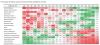
This article applies an LDA analysis of articles from a set of relevant journals (listed, figure 6) in open and distance learning to describe historical trends in the field. As someone who has been present for all of that history, the topic is naturally interesting to me. And I don't see the trends as particularly surprising - 'web based learning' was big in 2006, not so much now. AI was almost irrelevant in 2006 and tops the leaderboard today. There's a bit of cross-categorization here: I'm not sure 'health education' belongs on the same chart as 'MOOC' and 'technology-based education'. I wish also there was some sense of the specificity of the terms used. The biggest surprise? The emerging and continuing rise of 'technology acceptance'. I'm also curious about what a similar analysis from a broader set of resources would produce, and of course, what a similar analysis of OLDaily would produce.
Web: [Direct Link] [This Post][Share]
AliExpress was silently running audio in your browser to fingerprint and track your device
Skye Jacobs,
TechSpot,
2026/08/24
As Brave reports, "AliExpress wasn't recording users but instead playing a silent sound and measuring how users' specific devices processed it in order to fingerprint them." Clever. But we have a word in Canada that describes such practices: greasy. The sort of underhanded behaviour you expect from people who are fundamentally untrustworthy.
Web: [Direct Link] [This Post][Share]
The 2 behaviors that make you socially magnetic
Francesca Tighinean,
Big Think,
2026/08/24

I am not socially magnetic. I've learned to live with that. But the concept interests me, especially when it's presented as a "set of learnable behaviours", as it is here. The two behaviours? "The first was communal behavior: how warm, friendly, and well-intentioned someone appeared. The second was agentic behavior: how confident, assertive, and willing to take the lead they seemed." Fair enough. But the two words doing most of the work in this characterization are 'appeared' and 'seemed'. In my case, I'm not willing to fake it. There are cases when I'm not going to be warm and friendly, and there are times when I'm quite unwilling to take the lead. Abuses of power, especially, turn off the 'socially magnetic' part of me.
Web: [Direct Link] [This Post][Share]
Our Duty of Care in the Age of AI
Marc Watkins,
Rhetorica,
2026/08/24

I've written a fair amount about the duty of care in our use of AI, and this article reminds us od what we're missing when we don't take it into account: "higher education has created a labor model that treats human beings as disposable cogs"; "we only focus on the AI is cheating discourse and pour our efforts into pursuing academic integrity cases"; "few campuses have offered guidance about how faculty, staff, or administration should approach the question of AI in their daily interactions and task." You can't challenge criticisms of AI by attacking the messenger as I do here, but still, one would expect more consistency from them.
Web: [Direct Link] [This Post][Share]
The Horde of Fools
Carlo Iacono,
Hybrid Horizons,
2026/08/24

I mean... he's not wrong. "There were always more people thinking than people allowed to be heard. That is the whole horde. AI has let a few more of them through the gate, and the people on the wall have discovered that being heard was the only thing that ever made them special. So they point. So they scream." Who are 'they'? "The prestige thinkers who cite one another and praise one another, who pass one another around the podcasts and the panels and the conferences, and who have amplified one another for so long that their shared assumptions have started to feel, to them, like the structure of reality." Good article, much tighter than most of his writing generally.
Web: [Direct Link] [This Post][Share]
A Compass Is Not a Command
Darrell Lyons,
Beyond the Breadcrumbs,
2026/08/24
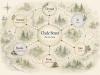
For many years I had a productive relationship with Keith Lyons, "an educator and sport scientist who specialized in the observation and analysis of performance in sport." We never met, to my knowledge, but I read much of what he wrote on his Clyde Street blog. This page is a discussion of that relationship from the Lyons perspective. It's clear and though I'm not a fan of the writing style it was engaging enough to pull me right along. Yes, it's all AI analysis - if you're a purist you can go though the archives yourself and draw your own conclusions. It all reads right to me though. You might also want to reflect on the entire Beyond the Breadcrumbs archive to learn more about him. It's humbling to think that my own life and work may show up in some future AI-generated archive accessible enough to inform and sensitive enough to create a connection.
Web: [Direct Link] [This Post][Share]
There are many ways to read OLDaily; pick whatever works best for you:
- Read in your web browser on this web page, updated weekdays
- Receive a daily or weekly email newsletter by subscribing here
- Subscribe to the RSS feed using your favourite feed reader
- Follow @OLDaily@mastodon.social on Mastodon or elsewhere in the fediverse
- Follow @OLDaily on Bluesky
- Read OLDaily as a LinkedIn Newsletter
- Integrate the open API using the JSON feed
This newsletter is sent only at the request of subscribers. If you would like to unsubscribe, Click here.
Know a friend who might enjoy this newsletter? Feel free to forward OLDaily to your colleagues. If you received this issue from a friend and would like a free subscription of your own, you can join our mailing list. Click here to subscribe.
Copyright 2026 Stephen Downes Contact: stephen@downes.ca
This work is licensed under a Creative Commons License.