
Why Open Source Matters for AI
2026/08/14

I agree with the argument made in favour of open source AI offered here by Tim O'Reilly. "I believe that the big labs are making the same strategic mistake that Netscape and Microsoft made in the mid 90s. Yes, make the models more reliable for ordinary users. But don't shut down the options for developers who don't work for you to push the state of the art forward. As Bill Joy put it decades ago, 'No matter who you are, most of the smartest people work for someone else.' No one should have a monopoly on innovation, and no one should be building a moat to hold it back."
Web: [Direct Link] [This Post][Share]
How to Educate the Poor: Global Programs, Resources & Ways to Help
2026/08/14
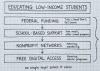
What I like about this article is that it makes it clear that there is no single way to support what they call education for the poor. As the diagram says, "no single layer solves it alone". And it offers an effective counter to single-minded programs (such as the religious and charter schools recommended in Deseret News, via the always negative Joanne Jacobs). My view: There's a lot of data showing a correlation between socio-economic status and learning outcomes, which is why support programs, including dental and health care, sit alongside good pedagogy and access to resources as essential elements in educational equity. As I said in the very first few issues of OLDaily some 25 years ago, if you want children to do better at school, feed them. (The downside of this article: it's from a very sketchy source, Unlock Knowledge and Talent Upliftment (UKTU), "an independent human-vetter informational framework". I probably should never have linked to it, but now I'm here, I may as well pass it along as a cautionary note).
Web: [Direct Link] [This Post][Share]
Empty shelves or lost keys? Recall is the bottleneck for parametric factuality
2026/08/14

It's important, I think, to understand that this article is focused specifically on recall of facts, and not cognition generally (though there are people out there who will no doubt conflate the two). It's interesting because of the way it describes five sources of failure of factual recall based on "one of five knowledge profiles: (1) encoding failure, (2) recall failure, (3) direct recall, (4) recall with thinking, and (5) inference without encoding." The authors "suggest that recall is tightly coupled to the conditions under which a fact was learned. When the query diverges from the training-time context, phrasing, or ordering in which the fact was encountered, recall becomes harder."
Web: [Direct Link] [This Post][Share]
AI, technofascism, and the unmaking of higher education. An interview with Stefan Popenici
2026/08/14
This interview (25 page PDF) is accurately described by the abstract, which frankly I would not recommend reading beyond (why link it here? for the record). "Tracing GenAI's origins from an Epstein-funded symposium and the Pentagon's chequebook to the eugenic roots of Silicon Valley's culture, Popenici contends that AI is the political project of 'technofascist' billionaires rather than a neutral educational tool." The article is historically dubious, narrowly focused, and conspiracy theory clickbait.
Web: [Direct Link] [This Post][Share]
Making 768 servers look like 1
2026/08/14
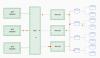
This article describes the practice of sharding databases in order to serve more requests across larger data sources than a single database could handle. In sharding, each of several (or several hundred) databases contains a certain segment of the data. This division of data is defined by a simple function (for example, each database might handle only certain record numbers - the first handles records 1-10, the second handles records 11-20, and so on). A router then sends the request to the right database depending on the request. Multiple identical routers may exist, and traffic to them is distributed through a load balancer. It's a good article, and only touches the basics of sharding (there's no discussion of how search is managed, for example), but well worth reading for a detailed outline.
Web: [Direct Link] [This Post][Share]
There are many ways to read OLDaily; pick whatever works best for you:
- Read in your web browser on this web page, updated weekdays
- Receive a daily or weekly email newsletter by subscribing here
- Subscribe to the RSS feed using your favourite feed reader
- Follow @OLDaily@mastodon.social on Mastodon or elsewhere in the fediverse
- Follow @OLDaily on Bluesky
- Read OLDaily as a LinkedIn Newsletter
- Integrate the open API using the JSON feed
This newsletter is sent only at the request of subscribers. If you would like to unsubscribe, Click here.
Know a friend who might enjoy this newsletter? Feel free to forward OLDaily to your colleagues. If you received this issue from a friend and would like a free subscription of your own, you can join our mailing list. Click here to subscribe.
Copyright 2026 Stephen Downes Contact: stephen@downes.ca
This work is licensed under a Creative Commons License.