The Future is for Everyone
2026/08/11

This is a remarkable letter, not the least because it comes from Mark Zuckerberg. The premise is that we should put AI into people's hands and have people make their own decisions about how to use it. The most important point is that "everyone will have an exceptionally capable personal agent that understands you, your goals, and everything you care about... the key to a positive future for everyone is achieving a balance of power that favors individuals. The solution is to ensure that superintelligence is broadly distributed to empower people." I am in agreement with this basic proposition, however, I don't trust the author to implement it. The history of Meta has always been consolidation and control, not free and open commerce and communication. I don't see that changing any time soon. See also: Carlo Iacono, The Future Is for Everyone Who Wins the Auction.
Web: [Direct Link] [This Post][Share]
The only reason you’ll ever need not to write with AI
2026/08/11
It takes a while for Colin Carlson to get to the 'only reason' but it's this: "Using generative AI inherently exposes you to the risk of career-ending accusations of plagiarism." It's worth noting that Carlson views the accusation as career-ending, "especially if those accusations become public, where they can be debated ad infinitum. And anything you've written, at any point, can be relitigated a half-century later." Perhaps. Or perhaps the rise of AI will push back against the imagined purity that is academic writing. After all, nothing - nothing - is completely original. Take the current post - the one that states "here's the basic point I haven't seen anyone make." Now ask yourself why it isn't a copy of the idea expressed in Plagiarism of ideas in the age of generative artificial intelligence, by David Resnik & Mohammad Hosseini, published back in May. Or Plagiarism, Copyright, and AI, written by
Mark A. Lemley and Lisa Larrimore Ouellette back in 2025. Let's stop pretending we're more original than we actually are.
Web: [Direct Link] [This Post][Share]
Social Media Have Only Partially Democratized Climate Communication
2026/08/11
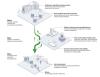
I would imagine that what this paper found about climate change communication on social media platforms applies generally to discussions in general. "Early studies initially suggested that social media gave more members of civil society and environmental and grassroots movements as well as citizens in general a chance to be heard. Over time, however, it became evident that established actors – like political actors, government bodies and news organizations – continue to shape and often dominate the discussion and dissemination of climate-related content." The result has been social media echo chambers, with differences appearing between platforms, not within them. Speaking of undemocratic, the actual research is paywalled.
Web: [Direct Link] [This Post][Share]
Tooting from the Blog
2026/08/11

If you have a blog with an RSS feed (and who doesn't, right?) then this post will show you how to send your new blog posts to Mastodon (and, potentially, Bluesky) using GitHub actions. "This would also run fine as a plain cron job on any server with Node installed, GitHub Actions isn't a requirement, just a convenient place to run it for free without maintaining a server yourself." Neat. Or as Claude would say: Clean.
Web: [Direct Link] [This Post][Share]
Is It Unethical for Academics to Monetize Substack?
2026/08/11

This article looks at a specific case: a working professor putting their public content behind a paywall on Substack. They don't need the money, but Substack gives them other incentives. "Putting everything behind a paywall is no doubt a great strategy for climbing the bestseller list, which counts only paid subscribers." I really do think there are ethical issues here. Minimally, "Hiding posts about injustices in the world behind a paywall undermines public trust... excessive focus on monetization would seem like a threat to their credibility. And this is even more true for professors asking for money from people that sit in far more precarious financial situations than themselves." That latter point matters to me.
Web: [Direct Link] [This Post][Share]
There are many ways to read OLDaily; pick whatever works best for you:
- Read in your web browser on this web page, updated weekdays
- Receive a daily or weekly email newsletter by subscribing here
- Subscribe to the RSS feed using your favourite feed reader
- Follow @OLDaily@mastodon.social on Mastodon or elsewhere in the fediverse
- Follow @OLDaily on Bluesky
- Read OLDaily as a LinkedIn Newsletter
- Integrate the open API using the JSON feed
This newsletter is sent only at the request of subscribers. If you would like to unsubscribe, Click here.
Know a friend who might enjoy this newsletter? Feel free to forward OLDaily to your colleagues. If you received this issue from a friend and would like a free subscription of your own, you can join our mailing list. Click here to subscribe.
Copyright 2026 Stephen Downes Contact: stephen@downes.ca
This work is licensed under a Creative Commons License.