“What is the terminal?”
Jon Udell,
2026/07/03
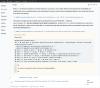
Jon Udell introduces Bram, an integrated development environment (IDE) for writing software with the assistance of Claude Code or Codex. Udell points - correctly - to how well the AI works with the underlying terminal technology - Linus shell commands, git, perl, and the rest. It makes previously complex tasks a lot easier. I have a similar experience using VS Code, another IDE, with the Claude Code plugin (don't use Claude via Copilot, that gets very expensive). The point here is that the IDE isn't replacing my learning; instead, it's doing things I was never going to learn.
Web: [Direct Link] [This Post][Share]
Why paying peer reviewers works, according to a journal’s editor-in-chief
Miryam Naddaf,
Nature,
2026/07/03

According to this article, "A biology journal that paid peer reviewers found that the approach cut the time to a first editorial decision by 85% and maintained high-quality reviews." This shows the danger of depending (or even reporting) on a single study. I have no doubt quality would decline over time as people got used to being paid. Turn-around time, meanwhile, would drop as reviewers tried to maximize income. The review process itself needs rethinking, not how it's paid for.
Web: [Direct Link] [This Post][Share]
Against an Intellectual Property Battle Over AI
Susan Sreemala,
Bot Populi,
2026/07/03

I agree with this, and with much of the argumentation that leads to it: "We find ourselves in a crisis that brings clarity. AI has made visible the deep tensions in how we organize intellectual production, tensions that the IP regime has papered over for decades. If we respond only by trying to shore up that regime, we will miss the opportunity to build something better."
Web: [Direct Link] [This Post][Share]
Quantum states and density of states
Fiveable,
2026/07/03
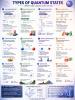
The concept of types of quantum states is genuinely new to me, and finding this awakens that joy of discovery in me. I've seen enough about quantum theory and quantum computing to conclude there is definitely something real there. But work in the field - such as this paper, also on quantum states - is beyond what I can understand without a lot of focused study. Ah, maybe, one day. The key thing to undertsand here is that it's not nonsense - it's real (so far as anything counts as 'real' in the quantum world). I did some quick reading today aftern seeing this diagram in a post by Sumit Patel in LinkedIn. I didn't think it would be definitive (after all, this is LinkedIn we're talking about). The article I link to here as several other diagrams of types of quantum states. It just underlines the fact that 'types' are things that we as viewers bring to the world; they're not inherently in the world, not until they're recognized as such.
Web: [Direct Link] [This Post][Share]
A Social Filesystem
dan abramov,
overreacted,
2026/07/03
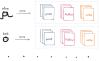
This is a very good description of how the ATmosphere protocol actually works, with the bulk of the focus on the personal data store (PDS) and how records are actually stored and named. Some of the most interesting bits are elided, like the central role of the Relay (and why it's a big problem if one relay 'throttles' another), as well as some of the intricacies of DID and how the hash plays a role in certifying data (hint: it looks a lot like blockchain). But that's just me complaining. I really like the way this article refocuses the reader from apps to files to records (and, implicitly, to data).
Web: [Direct Link] [This Post][Share]
There are many ways to read OLDaily; pick whatever works best for you:
- Read in your web browser on this web page, updated weekdays
- Receive a daily or weekly email newsletter by subscribing here
- Subscribe to the RSS feed using your favourite feed reader
- Follow @OLDaily@mastodon.social on Mastodon or elsewhere in the fediverse
- Follow @OLDaily on Bluesky
- Read OLDaily as a LinkedIn Newsletter
- Integrate the open API using the JSON feed
This newsletter is sent only at the request of subscribers. If you would like to unsubscribe, Click here.
Know a friend who might enjoy this newsletter? Feel free to forward OLDaily to your colleagues. If you received this issue from a friend and would like a free subscription of your own, you can join our mailing list. Click here to subscribe.
Copyright 2026 Stephen Downes Contact: stephen@downes.ca
This work is licensed under a Creative Commons License.