
How we’ll fight the platform war against Big AI - Anil Dash
Anil Dash,
2026/06/25

The only reason why there's even such a thing as a 'platform war' against AI is that the companies pushing AI are already, for the most part, platforms. Microsoft. Google. X/Twitter. The reason there's even a need for a war has nothing to do with AI in particular, it's because we've for the most part caved to the big platforms already. Anyhow. Anil Dash offers a few suggestions. First, get in front of it by using "open tools or interfaces that aren't controlled by the Big AI companies" to access AI services. Keep hold of the ability to "seamlessly switch between different AI providers on the fly." Where you can, use Non-commercial LLMs. And on a less useful note, he recommends getting angry.
Web: [Direct Link] [This Post][Share]
Does this help someone learn?
David Hopkins,
David Hopkins / Education & Leadership,
2026/06/25

When someone says the question should be, "does this help someone learn?" my response is usually to ask, "what do you mean by that?" Part of that is the philosopher in me, but the rest of it is a concern they're focused on teaching to specific outcomes or teaching to the test, neither of which really has the interests of the learner in mind. David Hopkins doesn't exactly take that path, but he is very concerned to make us aware that learning isn't always fun and that design should not increase cognitive effort. Standard instructivist stuff. It's as though learning is a search problem: "They find what they need, understand it and move forward with confidence." I appreciate the desire to get the message across. But that's not 'learning' in any meaningful sense.
Web: [Direct Link] [This Post][Share]
What Edtech Got Right, What It Missed, and What AI Changes Now (Jennifer Carolan, Reach Capital)
Allison Dulin Salisbury,
The Humanist,
2026/06/25

"The narrative of our field is very much a before-and-after Gen AI story." That's how this article starts, and how it's framed - though the interviewee, Reach Capital's Jennifer Carolan, is very firmly fixed on the traditional classroom environment. "I'd tell every edtech builder to become a substitute teacher. Shadow a teacher. Sit in a classroom for three days in a row—spoiler: it's boring and exhausting, and it isn't the teacher's fault, but the factory-like structure of it all." I don't think that ed tech ill succeed by solving the problems faces in the current classroom environment. Students - just like the startup founders being coached by Reach - should get out of the building. That's why the field isn't a before-and-after GenAI story. Not so long as the AI is intended to emulate a teacher
Web: [Direct Link] [This Post][Share]
Paradoxes of Openness: Power, Reciprocity, and the Governance of Scholarly Infrastructures
Katja Mayer,
The Politics of Open Infrastructures, Open Book Publishers,
2026/06/25
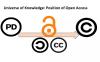
This is a chapter from a larger book, the whole of which is worth looking at. This summary doesn't do this complex chapter justice. The first paradox is power: "The central issue is no longer only access to scholarly outputs, but who controls the infrastructures through which scholarly communication is organised." This is why I have historically argued for decentralized open access, rather than platform centrlization. The second paradox is 'reciprocity', where proponents of openness have opposed text and data mining (TDM) because " the same openness that dismantled subscription barriers also created conditions under which scholarly content could be recomposed as a scalable input for platform economies" (readers should remember my many years of advocacy for a non-commercial clause to prevent just this). The third is governance: "smaller data infrastructures now find themselves overwhelmed by automated scraping requests, forced to absorb the operational costs of large-scale harvesting while lacking the resources to govern, limit, or benefit from such use." This is why (and my colleagues from EDUCAUSE three decades ago may remember) why I argues for distributed resources and aggregation, rather than federation.
Web: [Direct Link] [This Post][Share]
There are many ways to read OLDaily; pick whatever works best for you:
- Read in your web browser on this web page, updated weekdays
- Receive a daily or weekly email newsletter by subscribing here
- Subscribe to the RSS feed using your favourite feed reader
- Follow @OLDaily@mastodon.social on Mastodon or elsewhere in the fediverse
- Follow @OLDaily on Bluesky
- Read OLDaily as a LinkedIn Newsletter
- Integrate the open API using the JSON feed
This newsletter is sent only at the request of subscribers. If you would like to unsubscribe, Click here.
Know a friend who might enjoy this newsletter? Feel free to forward OLDaily to your colleagues. If you received this issue from a friend and would like a free subscription of your own, you can join our mailing list. Click here to subscribe.
Copyright 2026 Stephen Downes Contact: stephen@downes.ca
This work is licensed under a Creative Commons License.