
Four Arguments Ontologists Never Finished (And Why AI Teams Will Have Them Again)
Kurt Cagle,
Context & Chaos,
2026/06/12
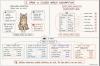
I've kept this item in a browser tab for a couple of weeks waiting to give it the proper attention it deserves, and while I never did, I still want to pass it along. There's a whole debate under the surface of the AI revolution on the relevance of knowledge structures from good old fashioned AI (GOFAI) such as ontologies, graphs and namespaces. The suggestion in this article is that new AI (that we see in large language models, for example) will not escape four issues that dogged (and still dog) these activities: open world (multiple 'truths') vs closed world (single 'truth') models; reification (statements about assertions); context graphs and the primacy of time; and the relation between 'authority' and namespaces ("there is no neutral graph"). Many of the issues people have with large language models can be traced directly to these four issues: questions of bias, authority, the meanings of words, and the passage of time create reasons to doubt generative AI, and AI in general. Well, and human knowledge too. Anyhow, this is a great article. Do spend some time with it.
Web: [Direct Link] [This Post][Share]
xAPI Extensions:A Brief Guide for Learning Engineers
Shelly Blake-Plock, Cliff Casey,
Yet Analytics,
2026/06/12

I haven't added xAPI to CList yet, but I do plan to when I get back to it in the fall. This guide will help. The focus is on xAPI extensions. An xAPI statement "may describe who did what, to which activity, and with what result, but many real-world use cases need additional information, such as environmental conditions, system state, scoring details (etc)." Hence, the need to add an extension to include the additonal information. (My favourite statement from the whole document: "There are only ~150 prepositions in English.")
Web: [Direct Link] [This Post][Share]
The Excellence Trap – A Glass Ceiling for Swedish Universities
Martin Nilsson Jacobi,
Chalmers University of Technology,
2026/06/12

As HESA comments when introducing this item, the same concern applies in Canadian research finding as well. " the excellence trap: the effect that arises when the majority of research is funded through a project-based model in which many projects require co-funding. Such requirements mean that the more successful a university is in securing competitive funding, the less room it has to invest in the long-term development of excellence." Martin Nilsson Jacobi argues, "society is not best served by allocating resources in ways that are too narrowly targeted and too short-term. Academic freedom is not only a fundamental principle underpinning democratic values; it is also the most effective means of maximising the value that academia delivers to society." Governments are able to enter into longer term contracts and infrastructure agreements with companies; I see no reason they can't do so with universities and consortia.
Web: [Direct Link] [This Post][Share]
There are many ways to read OLDaily; pick whatever works best for you:
- Read in your web browser on this web page, updated weekdays
- Receive a daily or weekly email newsletter by subscribing here
- Subscribe to the RSS feed using your favourite feed reader
- Follow @OLDaily@mastodon.social on Mastodon or elsewhere in the fediverse
- Follow @OLDaily on Bluesky
- Read OLDaily as a LinkedIn Newsletter
- Integrate the open API using the JSON feed
This newsletter is sent only at the request of subscribers. If you would like to unsubscribe, Click here.
Know a friend who might enjoy this newsletter? Feel free to forward OLDaily to your colleagues. If you received this issue from a friend and would like a free subscription of your own, you can join our mailing list. Click here to subscribe.
Copyright 2026 Stephen Downes Contact: stephen@downes.ca
This work is licensed under a Creative Commons License.