
The Adaptive Enterprise: AI, Learning, and the Work of Making Sense
Jane Bozarth,
ATD,
2026/05/04
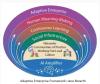
This article blends a bunch of things together. Let me tease them out. The first is the main point, that "AI is an amplifier, not a driver." We've been seeing this a lot; the human who needs the work done is the driver. "Judgment still requires context; context still requires experience." This isn't strickly true (context can come from anywhere) but human experience is the part of context AI cannot provide on its own. "Design experiences that build relationships as well as skills." Right. But do we need this? "Facilitate the conversations that support shared interpretation." This is based on the idea that "the center of the framework is human meaning-making." In other words, "meaning still emerges through human conversation and reflection." But (in my view) the task here isn't 'making meaning'. Anyhow, these are all blended together in what eventually becomes a word salad.
Web: [Direct Link] [This Post][Share]
Claude Code's Limits Are Generous. The Problem Is Your Setup.
Paweł Huryn,
The Product Compass,
2026/05/04

This is the first part of a paid article but there's more than enough here to justify reading the free segment. I'm noting it here mostly for my own purposes. I found it after seeing an algorithm-recommended LinkedIn post that referenced some of the approaches but did not link to actual code; it turns out that the content was lifted word for word from this article without attribution. It's a list of methods people can use to optimize their Claude usage so their requests don't consume so much computer time and token use. It looks like good stuff. I use the cheapest possible Claude plan so this will help a lot. Maybe.
Web: [Direct Link] [This Post][Share]
Beyond Cognitive Load Theory
The Education Contrarian,
2026/05/04

This article offers a much-needed corrective to the application of cognitive load theory in education, based on a paper on the same subject by the author and colleagues. "The core concern is not that CLT is totally wrong or irrelevant, but that it is radically incomplete, and that treating it as a general theory of education distorts both pedagogy and teacher understanding." In particular, "Children are not fragile information processors waiting to be protected from difficulty. They are unusually exploratory, socially attuned, and cognitively plastic... We propose treating learning as a dynamic interaction between cognitive, emotional, social, and self-regulatory processes, unfolding across development." That's actually about as far from cognitive load theory as you could get, but it's accurate.
Web: [Direct Link] [This Post][Share]
There are many ways to read OLDaily; pick whatever works best for you:
- Read in your web browser on this web page, updated weekdays
- Receive a daily or weekly email newsletter by subscribing here
- Subscribe to the RSS feed using your favourite feed reader
- Follow @OLDaily@mastodon.social on Mastodon or elsewhere in the fediverse
- Follow @OLDaily on Bluesky
- Read OLDaily as a LinkedIn Newsletter
- Integrate the open API using the JSON feed
This newsletter is sent only at the request of subscribers. If you would like to unsubscribe, Click here.
Know a friend who might enjoy this newsletter? Feel free to forward OLDaily to your colleagues. If you received this issue from a friend and would like a free subscription of your own, you can join our mailing list. Click here to subscribe.
Copyright 2026 Stephen Downes Contact: stephen@downes.ca
This work is licensed under a Creative Commons License.