
Whatever Happens to Music Will Happen to AI (2026)
Bruce Sterling,
Medium,
2026/04/14

Bruce Sterling was cyberpunk back when cyberpunk was a thing, and his voice, though it has mellowed with age, still resonates, now with the silky smooth notes of old oak and maple, seeing things like Jazz and AI for what they are and also what they aren't, reminding us not only that we live and create, but that we fade away and that what carries on is really only those unique notes me make in the ether. I hope to be one of those.
Web: [Direct Link] [This Post][Share]
UNESCO’s Higher Education Roadmap: What it Gets Right and What it Asks of Us
Maia Chankseliani,
NORRAG -,
2026/04/14

As is so often the case, I have mixed feelings about this discussion. Maia Chankseliani summarizes: "The roadmap links equity with pluralism in a way that goes well beyond the access agenda... genuine inclusion requires going beyond the removal of barriers to entry, to engaging seriously with plural forms of knowing, ways of understanding the world developed across different communities, traditions, and geographies." Sure, we need to do more than just open the doors to traditional universities. And there are different ways of knowing. But we do people a disservice if we open access and they find it's not based in anything like genuine knowledge at all. Telling stories is not to my mind equivalent to a proper scientific enquiry. Opening access also means opening access to the type of learning people desire. And as Chankseliani says, "Precisely how institutions can maintain meaningful quality standards while simultaneously recognising plural epistemologies is a genuine unresolved tension."
Web: [Direct Link] [This Post][Share]
A Chapter Closes, the Impact Remains
Campus Manitoba,
2026/04/14

It's disappointing to read this. "For 35 years, Campus Manitoba has supported Manitoba's post-secondary landscape through collaboration, care, and shared commitment. We are now sharing an important and difficult update. Due to changes in provincial funding, Campus Manitoba will be closing its doors on June 26, 2026." The change appears to be pretty sudden, as they just recently advertised for a new position, and also just recently made the switch to Bluesky. They operated the the OpenEd Manitoba Repository, which "is no longer being updated at this time." There's no similar notification on eCourses Manitoba, but I would expect changes there too.
Web: [Direct Link] [This Post][Share]
The impact of AI on software engineers in 2026: key trends
Gergely Orosz,
The Pragmatic Engineer,
2026/04/14
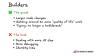
The two big impacts in software developers early in 2026 have been increasing AI costs and usage limits. Claude Code has been hit especially hard, with widespread complaints about session limits, but the trend is evident across the board. I think what we'll see is more of an emphasis on on-premises AI (to avoid the usage limits) using more open-source and open-weight models and software (to address costs).
Web: [Direct Link] [This Post][Share]
TED, Khan Academy and ETS announce new institute to reimagine higher education for the AI age
TED Blog,
2026/04/14

Obviously there's a lot of room for scepticism in this announcement, but I would be remiss if I didn't mention it here, because it will probably form the basis for a lot of the discussion - pro and con - of AI-informed learning in the future. "TED, Khan Academy and ETS announced a joint plan to launch the Khan TED Institute, a new higher education collaboration designed for an AI‑driven era. The Khan TED Institute aims to prepare learners for the next generation of jobs while cultivating the uniquely human skills required to thrive in work, life and society amid rapid technological change."
Web: [Direct Link] [This Post][Share]
I Thought I Knew When Students Were Engaged in Math Class. I Was Wrong (Opinion)
Michael Norton,
Education Week,
2026/04/14

There's this thing where some educators argue students must be thinking of the precise educational point at all times, and that anything else is a distraction. That's what's happening here. But it is, in my view, the wrong approach, because it completely does away with association, and focuses on rote memorization. But which outcome is better: a memorized fact about the underground railroad, or a person associating biscuits with the underground railroaf every time they make biscuits, for the rest of their life? The same, though less obvious, point can be applied to mathematics. "Were they thinking about math concepts? No, they were thinking about rectangles, lines, and shading." But those are math concepts - just not formalized notational math. Abstract concepts not associated with ground truth are lost, not only forgotten, but never useful in the first place.
Web: [Direct Link] [This Post][Share]
There are many ways to read OLDaily; pick whatever works best for you:
- Read in your web browser on this web page, updated weekdays
- Receive a daily or weekly email newsletter by subscribing here
- Subscribe to the RSS feed using your favourite feed reader
- Follow @OLDaily@mastodon.social on Mastodon or elsewhere in the fediverse
- Follow @OLDaily on Bluesky
- Read OLDaily as a LinkedIn Newsletter
- Integrate the open API using the JSON feed
This newsletter is sent only at the request of subscribers. If you would like to unsubscribe, Click here.
Know a friend who might enjoy this newsletter? Feel free to forward OLDaily to your colleagues. If you received this issue from a friend and would like a free subscription of your own, you can join our mailing list. Click here to subscribe.
Copyright 2026 Stephen Downes Contact: stephen@downes.ca
This work is licensed under a Creative Commons License.