
Habermas, democratic discourse, and class
Lisa Herzog,
Crooked Timber,
2026/03/18

This is a reflection on the passing of Jürgen Habermas a few days ago. I am not even remotely a Habaemas scholar, so I cannot judge on the adequacy of this summary and critique of his thought, though assuming it is well represented, the response seems reasonable to me - a politics of discourse does favour those who were fortunate enough to learn the skills and manners required for success in this forum, and that practical actions - and especially interactions - matter at least as much as words. "In other words, democracy-as-discourse, important as this idea remains, has preconditions in the wider socio-economic system of society that Habermas did, arguably, not sufficiently address."
Web: [Direct Link] [This Post][Share]
Beyond 'Blame the Student': Correspondence Bias in University Attrition Activities
Colin Bee,
Col's Weblog,
2026/03/18
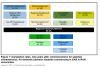
I'm not going to disagree. "Universities tend to treat dropping out, failing, or disengaging as if it directly reveals what students are like (motivation, ability, resilience), rather than seeing these behaviours as products of their circumstances and the institutional environment." This is an example of correspondence bias, "a candidate for the most robust and repeatable finding in social psychology" and more properly known as Fundamental Attribution Error (FAE), explains Colin Beer. He recommends a telling paper (51 page PDF): "Factors that contribute to completion rates for RUN students are nuanced, complex and multifaceted. The issues facing RUN cohorts and regional universities will not be addressed by adopting narratives that attribute blame to either students or institutions."
Web: [Direct Link] [This Post][Share]
GenAI for Instructional Designers: It should be the sidekick"
StefaniePanke,
AACE,
2026/03/18

Interview with Luke Hobson, "an instructional designer, author, educator and social media influencer." It's a wide-ranging discussion that I can't really summarize (but all the usual hits are in there - AI creating more work, a few cool tools, I make my own GPTs, "ethics, student data, privacy, deepfakes", AI slop, don't ask professors to change, "it should be the sidekick"). Related: Matt Crosslin: Most People Don't Need a "GenAi for Dummies" Book Anymore.
Web: [Direct Link] [This Post][Share]
Escaping the clutches of big tech - initiative from Norway
Alastair Creelman,
The corridor of uncertainty,
2026/03/18

Alastair Creelman summarizes and comments on a European report called Breaking Free - Pathways to a fair technological future (100 page PDF) published by the Norwegian Consumer Council. Though drawn directly from the executive summary, his reading of the recommendations is a lot narrower than mine. The biggest recommendation in the actual 'Recommendations' section (first, and occupying the most space) is to "tear down the walls" and create open and interoperable digital media. It also recommends governments "fund nascent competitors and infrastructure" and "prioritise open-source technology in public procurement." It also calls for stricter merger control and for competition law to be enforced.
Web: [Direct Link] [This Post][Share]
The Purpose of Protocols
Laurens Hof,
connectedplaces.online,
2026/03/18
This is a really good article that offers a lot of room for thought. It addresses a common fault of decentralized social network protocols like ActivityPub, ATmosphere and Matrix: they are silent on how the communities that use them ought to be governed. This "did not produce a neutral outcome but a highly specific one: the concentration of power in the hands of actors... its beneficiaries were predictable: whichever actors had the resources to build in the space the protocols left ungoverned." I don't think it's that simple; different protocols leave different (and differently-sized) ungoverned spaces to be exploited, and different (and differently-sized) common pool resources to be owned. I wish the had lingered longer on Elinor Ostrom's design principles for the governance of these common-pool resources. "Ostrom's central finding was that communities can successfully govern shared resources without either privatization or central authority." We need to talk more about this. And also about what it means to say a protocol creates (or requires) common pool resources. Image: Ashley Hodgson.
Web: [Direct Link] [This Post][Share]
Jennifer Berkshire: The Collapsing Dream of Ed-Tech in the Schools
Diane Ravitch,
Diane Ravitch's blog,
2026/03/18

This is a well-written argument against what we'll simply call 'the ed tech industry'. It fits in nicely with current criticisms of the introduction of AI in schools. Mostly the narrative isn't wrong - Diane Ravitch points (with a nod to Audrey Watters) to a litany of failures, and (with a nod to Anya Kamenetz) unsavory practices, and (with other relevant nods) to relentless promotion from the companies and a corresponding decline in U.S. education test scores. And yet... it strikes me as interesting is that there is no mention of No Child Left Behind and (related) the singular transformation of the U.S. system into a centralized teach-to-the-standardized-test type of management. And while I won't ignore the fact that ed tech companies were part and parcel of this transformation, it didn't have to be that way. And, I mean, education has largely survived everywhere else in the world, even in an era of ed tech, and it remains true to this day that the biggest predictor of educational outcomes isn't ed tech, its socio-economic status and (on a national scale) inequality. There is amnesia, as Jennifer Berkshire says, but it's a very selective amnesia. Related: Eric Sheninger, From Compliance to Competency (summarized).
Web: [Direct Link] [This Post][Share]
How we're reimagining Maps with Gemini
Miriam Daniel,
Google,
2026/03/18

I've had some fun - with hilarious results - trying to use ChatGPT to plan cycling routes. So I'm not really sure how well an integration of AI and Google Maps would work. But it couldn't be worse, because at least the map layer would impose constraints (such as, don't plan cycling routes over open water). If we understand the AI as an interpreter - accepting questions and translating them into map queries - then it might be useful. But there are so many ways this could go wrong. Can't fault them for trying, though. Related: Gemini Embedding - "model that maps text, images, video, audio and documents into a single embedding space."
Web: [Direct Link] [This Post][Share]
There are many ways to read OLDaily; pick whatever works best for you:
- Read in your web browser on this web page, updated weekdays
- Receive a daily or weekly email newsletter by subscribing here
- Subscribe to the RSS feed using your favourite feed reader
- Follow @OLDaily@mastodon.social on Mastodon or elsewhere in the fediverse
- Follow @OLDaily on Bluesky
- Read OLDaily as a LinkedIn Newsletter
- Integrate the open API using the JSON feed
This newsletter is sent only at the request of subscribers. If you would like to unsubscribe, Click here.
Know a friend who might enjoy this newsletter? Feel free to forward OLDaily to your colleagues. If you received this issue from a friend and would like a free subscription of your own, you can join our mailing list. Click here to subscribe.
Copyright 2026 Stephen Downes Contact: stephen@downes.ca
This work is licensed under a Creative Commons License.