
What we mean by good relationships - Network Weaver
Immy Robinson,
Network Weaver,
2026/03/06
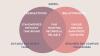
I spent some time thinking about this short article that explores "the difference between good relationships and good transactions" where a 'good relationship' is "unique, organic, and empathetic, helping us understand when to invest in building relationships versus when a transaction suffices." What made me think wasn't the distinction itself, which seems straightforward, but the terminology used. The way 'relationship' is defined blends elements of different constructs - we have 'unique' and 'sustained', which to me describes a 'connection', but in addition there is the presumption that relationships are embodied, as evidenced by 'organic' and 'empathetic'. The connection describes the relationship itself, while the embodied element describes the thing that is related. The transaction side, meanwhile, describes the exchange that happens between two entities, as opposed to the connections between them. The world view of this article doesn't grant (or doesn't require?) embodiment for transactions to occur. I would ask whether the author intended to distinguish between embodied and non?-embodied entities here, or whether it's just phrasing.
Web: [Direct Link] [This Post][Share]
Why organisms are more than machines
Adam Frank,
Big Think,
2026/03/06

This is a good article, I'll grant it that. I resist its main thesis; ultimately the argument is not successful. But it's worth state here. The thesis - as suggested by the title - is that life is inherently different from non-life. "Organisms are more than just machines, and minds are more than just computers." The main argument, which Adam Frank draws from Hans Jonas, is that "living systems are not stable collections of atoms like a rock. Instead, they are stable patterns that persist through time... a specific kind of organization through which matter and energy pass." And because life is a type of organization, and not reducible to matter and energy, it has special needs, for example, "interiority and individuality." Also, "every organism must actively maintain itself against the continuous threat of its own dissolution" and "life always has purpose." There is additionally the argument from Robert Rosen that "metabolic systems could be viewed as a special kind of organization where networks of processes close back on themselves" and hence "not Turing computable."
Web: [Direct Link] [This Post][Share]
The Hunt for Dark Breakfast
Ryan Moulton,
Ryan Moulton's Articles,
2026/03/06
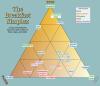
OK, it started as a joke, and it's a bit of a joke article: "Breakfast is a vector space. You can place pancakes, crepes, and scrambled eggs on a simplex where the variables are the ratios between milk, eggs, and flour. We have explored too little of this manifold. More breakfasts can exist than we have known." The concept here is that we have names for different vectors of the three basic ingredients. For example, 'Pancake' = {milk:0.5, flour:0.25, egg:0.25}. The vector space is the combination of all possible values of these three items. Why does this matter? A vector space allows us to make inferences. For example, if we're using three eggs, what are we probably making? If we're not using any eggs, what then? A vector space is also a probability space. This article goes in a different direction, searching for 'dark breakfast', where the probabilities of it being anything are low (think omelette with flour added). If you understand this, you're on the way to understanding machine learning. Via Data Science Weekly.
Web: [Direct Link] [This Post][Share]
Why We Brought MCP-I to DIF (and Why DIF Said Yes)
Alex Keisner, Dylan Hobbs,
Decentralized Identity Foundation,
2026/03/06
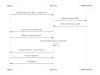
I'm quite sure there's a lot more complexity to this than the article lets on, but at the core is a serious problem: how do we know that agents represent the people they say they're representing? This is an extension of the identity problem in general, which is itself not solved (consider, for example, the ifficulty of providing age verification in a decentralized network). What's proposed here is called Model Context Protocol - Identity (MCP-I): an extension to MCP that according to this article "adds a complete identity and delegation layer for AI agents." The mechanism relies on a third party verifier, such as the company the authors represent, Vouched. In this article, MCP-I is placed nto the hands of the Decentralized Identity Foundation (DIF) as an open protocol. You can find "the full v1 spec found at the MCP-I documentation page."
Web: [Direct Link] [This Post][Share]
Future shock
C J Silverio,
Ceejbot's notes,
2026/03/06

I do think we have to think of generative AI this way: as a bicycle of the mind. Just like computers were when they came out. "It is a personal amplifier, not a generic one. It's my bicycle, and I'm the one riding it, going further because of the amplification. I still have to pedal! The bicycle goes in the direction I choose! But I'm going further and more efficiently than I could on foot." I've spent a good part of my day puttering with Claude on my RSS reader. Not because the world needs another RSS reader, but because I want one tailored to my own tastes. And it's fun to putter with code, especially if I don't have to type it all out. There's still a ton of things I want to do with this - I'm in a LinkedIn discussion about whether an AI could create for me a personal community newspaper. That sort of thing. Any how, the main advice from this post is: get in there and try it out. "We've automated away the easy part - the typing - and some of the thinking. But you can never automate away the talking and decision-making." Your kills and experience "probably matter in ways you don't know." Find out what matters. Via Matt Weagle.
Web: [Direct Link] [This Post][Share]
Group identities and inclusive multicultural democracy
Daniel Little,
Understanding Society,
2026/03/06

This is a good article. I just want to point out in passing is that it is this sort of group identity that I argue against in my 'groups vs networks' work: "Social identities refer to the dimensions of one's self-concept defined by perceptions of similarity with some people and difference from others. They develop because people categorize themselves and others as belonging to groups and pursue their goals through membership in these groups. They have political relevance because they channel feelings of mutuality, obligation, and antagonism." It strikes me as an anachronism that we would identify or form community more with a total stranger just because they look like us more than we might identify and form community with a colleague we've connected with for years. This article seems to say 'it just is this way'. I say it doesn't have to be this way.
Web: [Direct Link] [This Post][Share]
The Case for Warm Demanders in Today’s Schools
Wendy Amato,
Cult of Pedagogy,
2026/03/06

The concept of 'warm demander' is new to me, so I'll pass it along. "The concept, usually credited to education leaders like Judith Kleinfeld and Lisa Delpit, combines genuine care and cultural responsiveness (warmth) with high academic expectations and rigorous instruction (demand). It is explored at length in Franita Ware's book, Warm Demander Teachers: Healthy, Whole, and Transformational." It feels like a mild version of 'tough love'. My main reaction is that it seems far more teacher-driven than student-driven, though we read, "the Warm Demander is a facilitative leader, not a dictator. Warm Demanders emphasize student agency, classroom leadership, goal setting, and accountability." Yet look at the language the teacher uses: "I expect smooth, silent transitions... every student must contribute using established sentence stems... etc."
Web: [Direct Link] [This Post][Share]
How Video Podcasts Took Over Streaming: A Statistical Analysis
Daniel Parris,
Stat Significant,
2026/03/06

This has lingered in my in-box for almost two months as I decide whether to give it air or not, so today I'll just post it and be done with it. To begin: Steve Jobs did not invent podcasting. Arguably, Dave Winer and Adam Curry did, though the concept was in the air at the time (as I like to remind people). But I digress. What's interesting in this areticle is that it documents the dominance of video podcasting platforms (like YouTube and Spotify) over video streaming and regular audio-only podcasting. Though what I observe in YouTube is constantly trying to push me to clips from commercial media, even though I far prefer hiking and cycling videos, tech and photography, along with a good dose of history and comedy, pretty much all created by small independents. But this article makes me wonder what the author, Daniel Parris, thinks are podcasts, as he asks, "Why do people want to watch other people sit still and talk?" I mean, that can be the format - I like TWIT and GCN, for example. But I think there has been a failure here to understand that what makes a podcast a podcast isn't the speaking part. It's the independent media part.
Web: [Direct Link] [This Post][Share]
There are many ways to read OLDaily; pick whatever works best for you:
- Read in your web browser on this web page, updated weekdays
- Receive a daily or weekly email newsletter by subscribing here
- Subscribe to the RSS feed using your favourite feed reader
- Follow @OLDaily@mastodon.social on Mastodon or elsewhere in the fediverse
- Follow @OLDaily on Bluesky
- Read OLDaily as a LinkedIn Newsletter
- Integrate the open API using the JSON feed
This newsletter is sent only at the request of subscribers. If you would like to unsubscribe, Click here.
Know a friend who might enjoy this newsletter? Feel free to forward OLDaily to your colleagues. If you received this issue from a friend and would like a free subscription of your own, you can join our mailing list. Click here to subscribe.
Copyright 2026 Stephen Downes Contact: stephen@downes.ca
This work is licensed under a Creative Commons License.