Fighting AI Hallucinations One Citation at a Time: Introducing the LLM Citation Verifier
Dave Flanagan,
2026/01/23
This is a good idea addressing a pressing problem though there is one important caveat. The LLM Citation Verifier will look at the citations included in a piece of writing created by a large language model (LLM) and determine whether they are real. "The tool integrates directly into the LLM generation process, checking citations as they're created rather than after the fact." However, "The plugin taps into the Crossref API to verify Digital Object Identifiers (DOIs) in real-time." That would be great, but we have to ask, does Crossref include every possible reference? Not even close! Crossref's average citation coverage has been measured at 36.5% relative to Google Scholar (see also). It's important not to allow reference services (especially those favouring commercial media) determine the limits of what counts as 'existing'. Via Alan Levine, who credits the Distant Librarian.
Web: [Direct Link] [This Post][Share]
Triangulating the lifelong learner: neuroliberalism and the OECD’s focus on meta-cognition, affect, and wellbeing
Christian Beighton,
International Journal of Lifelong Education,
2026/01/23
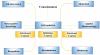
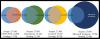
This article will require a lot of patience to read; though it is no doubt well-intentioned, it often appears to be deliberately obscure. The main point is to describe the replacement of neoliberalism in education with something called 'neuroliberalism'. It might be better (and this is my view) to think of 'neuro' here in the sense of 'neuroses' rather than 'neuroscience', though this article explains it as "a desire to not only govern behavioural externalities, but also internalities." The idea is that while previous educational policy was mostly about economic production, which would then be extracted by capitalists, the new policy is based on responding to (learned?) deficiencies in motivation, mindset and cognitive skills, again so that capital can extract value. In other words, "neuroliberalism replaces the literally mind-less pursuit of growth with a mind-full alternative." My view? Though I think it's reasonable to criticize a view of education that focuses only on employment and wealth generation, I think it's altogether unreasonable to say "concepts such as lifelong education, inflected by neuroliberalism, exist to create subjects whose function is 'enslavement' to these machines of capital investment." Image: Drigas, et al.
Web: [Direct Link] [This Post][Share]
Public NotebookLM with AI Policies, Guidelines and Frameworks
Eric Curts,
Control Alt Achieve,
2026/01/23
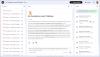
Eric Curts has collected more than I recently collected over 40 examples of AI policies, guidelines, and frameworks and uploaded them all into a public notebook in NotebookLM (it takes me back to the weeks it took me to compile and summarize a similar list of ethics frameworks a few years ago. Anyone can access the Notebook and interrogate the list, though as Curts notes, you will need a Google account that is allowed to use NotebookLM (a personal GMail account would probably do, a school account might not). "You can ask the AI any question you want related to the documents I have uploaded into the notebook," writes Curts. "The AI will only reference the documents in the notebook for the answers it provides you." Via Miguel Guhlin.
Web: [Direct Link] [This Post][Share]
Qwen3-TTS Family is Now Open Sourced: Voice Design, Clone, and Generation
Simon Willison,
Simon Willison's Weblog,
2026/01/23
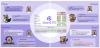
"It's important," writes Simon Willison, "that everyone understands that voice cloning is now something that's available to anyone with a GPU and a few GBs of VRAM... or in this case a web browser that can access Hugging Face." The model is described in the paper (14 page PDF) though honestly the paper is pretty incomprehensible (though I suppose with more study than I can devote to it the paper would be fascinating). " Qwen3-TTS supports state-of-the-art 3-second voice cloning and description-based control, allowing both the creation of entirely novel voices and fine-grained manipulation over the output speech." I gave it a quick test here and it performed quite well.
Web: [Direct Link] [This Post][Share]
Language models resemble more than just language cortex, show neuroscientists
Mordechai Rorvig,
Foom,
2026/01/23
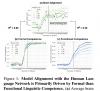
This article highlights a really interesting paper (19 page PDF) that "showed that language models, the engines of commercial AI chatbots, show strong signal correlations with the human language network, the region of the brain responsible for processing language." Even more interesting, this correlation doesn't last - as the language models become more capable, the correlation gradually fades, suggesting that (and these are my words) the models are optimizing beyond langauge. To me, this offers the tantalizing possibility that language, rather than being the thing that uniquely enables cognition, is currently the thing that is limiting the capability of (human) cognition. Anyhow, you don't have to subscribe to my interpretation to find this article and paper worthwhile. Found via the TWIT weekly podcast (about an hour in).
Web: [Direct Link] [This Post][Share]
I use the 'unicorn prompt' with every chatbot - it instantly fixes the worst AI problem
Amanda Caswell,
Tom's Guide,
2026/01/23

If you follow my videos where I'm working with ChatGPT you'll notice I use the same sort of "unicorn prompt". Iwon't keep you in suspense: tell ChatGPT (or any AI): "Don't guess." This prevents ChatGPT from making assumptions about things like the software you're using, the directories where things are located, or the sort of environment you like. P.S. don't actually follow my videos - it's just me working and they're really boring. I make them only so there will be a record for the fuure of how I think when I follow instructions or work with an AI.
Web: [Direct Link] [This Post][Share]
There are many ways to read OLDaily; pick whatever works best for you:
- Read in your web browser on this web page, updated weekdays
- Receive a daily or weekly email newsletter by subscribing here
- Subscribe to the RSS feed using your favourite feed reader
- Follow @OLDaily@mastodon.social on Mastodon or elsewhere in the fediverse
- Follow @OLDaily on Bluesky
- Read OLDaily as a LinkedIn Newsletter
- Integrate the open API using the JSON feed
This newsletter is sent only at the request of subscribers. If you would like to unsubscribe, Click here.
Know a friend who might enjoy this newsletter? Feel free to forward OLDaily to your colleagues. If you received this issue from a friend and would like a free subscription of your own, you can join our mailing list. Click here to subscribe.
Copyright 2026 Stephen Downes Contact: stephen@downes.ca
This work is licensed under a Creative Commons License.