
Canadian framework for microcredential meta-data (Technical Specification)
CSA Group,
2026/01/13

The CSA Group (formerly the Canadian Standards Association; CSA) has released for comment the Canadian framework for microcredential meta-data. For no good reason you have to enter your email address in order to access it; there's no other charge. The proposed framework "applies to all entities involved in developing microcredential offerings, issuing microcredentials, and conducting associated management or governance." I don't know whether this is an open standard; David Porter has asked. He also asked whether there's anything new or changed in the CSA proposal "given it largely replicates the 20 data fields developed in the Australian National Microcredentials Framework (2021). The comment period is open until February 1. Via Lena Patterson.
Web: [Direct Link] [This Post][Share]
CA AI Periodic Table Explained: Mapping LLMs, RAG & AI Agent Frameworks
Martin Keen,
2026/01/13

This is a video from IBM presenting a list of terms and concepts related to AI in the form of a periodic. "Once you understand it you can basically decode any AI architecture." The 16 minute Khan-style video moves along at a good clip and is easy to follow. Via David Wiley. Also, in this post, Suraj Bhardwaj offers a slightly expanded version of the table and a longish (18 page PDF) explainer document. It's a good addition, though it probably defeats the purpose of the video, which is to be simple and accessible. Related: Ian O'Byrne, why we need better language for AI.
Web: [Direct Link] [This Post][Share]
Levers for Living the Portrait of a Graduate (a 7-part series)
Abby Benedetto, Kimberly Erickson,
Getting Smart,
2026/01/13
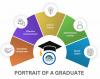
This article is the first in a series of seven looking at the concept of Portrait of a Graduate (PoG), a construct that defines "a specific set of skills that will equip their learners with what they need to thrive in their lives beyond the walls of school." The focus is on an implementation by Norwalk Public Schools (NPS) in Norwalk, Connecticut. "Based on the rollout of this first competency, Norwalk adopted a Portrait of a Graduate Competency Launch Framework that provided the system with a blueprint for the rollout of future competencies." If you look at various portraits across different systems (and I looked at a bunch) there's a lot of similarities - graduates should be 'critical thinkers', 'world citizens', etc. Honestly, they look almost exactly like the numerous definitions of "21st century skills" that were popular a couple of decades ago.
Web: [Direct Link] [This Post][Share]
In The Beginning There Was Slop
Jim Nielsen,
2026/01/13
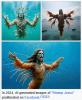
This is a really short post with an important message: Many blogs were slop. Many Geocities sites were slop. A lot of pop art was slop. Advertising is slop. B-movies were slop. Many pulp novels were slop. Pamphlets were slop. "You don't need AI to produce slop because slop isn't made by AI. It's made by humans - AI is just the popular tool of choice for making it right now. Slop existed long before LLMs came onto the scene." Image: Wikipedia.
Web: [Direct Link] [This Post][Share]
AI and the Next Economy
Tim O'Reilly,
O'Reilly Media,
2026/01/13

Again, from the perspective of the role of educational institutions, consider the following: "We may be building the engines of extraordinary productivity, but we are not yet building the social machinery that will make that productivity broadly usable and broadly beneficial. We are just hoping that they somehow evolve." What do we (as educators) need to do to redefine ourselves to address this? Tim O'Reilly argues, "decentralized architectures are more innovative and more competitive than those that are centralized. Decentralization creates value; centralization captures it." As money becomes tighter, institutions are beginning to specialize and centralize. That strikes me as exactly the wrong response in a world in which centralization is pushing us increasingly toward precarity.
Web: [Direct Link] [This Post][Share]
How to know if that job will crush your soul
Anil Dash,
2026/01/13

Education is a dance where you navigate from where you are to some sort of idea of a better opportunity. But sometimes it feels more like walking off a cliff. If you're looking at being employed after education (and I suspect there will be fewer and fewer of those) Anil Dash has recommendations to help you find the right landing place. Some of them are practical: does it pay enough, and can I continue to grow? Some of them are more global: how does it earn money, and will it do more good than harm? And others speak to working conditions, which can be the hardest to judge. In the end, you can't really know unless you know someone on the inside, and if you know someone on the inside you probably don't need this list.
Web: [Direct Link] [This Post][Share]
There are many ways to read OLDaily; pick whatever works best for you:
- Read in your web browser on this web page, updated weekdays
- Receive a daily or weekly email newsletter by subscribing here
- Subscribe to the RSS feed using your favourite feed reader
- Follow @OLDaily@mastodon.social on Mastodon or elsewhere in the fediverse
- Follow @OLDaily on Bluesky
- Read OLDaily as a LinkedIn Newsletter
- Integrate the open API using the JSON feed
This newsletter is sent only at the request of subscribers. If you would like to unsubscribe, Click here.
Know a friend who might enjoy this newsletter? Feel free to forward OLDaily to your colleagues. If you received this issue from a friend and would like a free subscription of your own, you can join our mailing list. Click here to subscribe.
Copyright 2026 Stephen Downes Contact: stephen@downes.ca
This work is licensed under a Creative Commons License.