
Date is out, Temporal is in
Mat "Wilto" Marquis,
Piccalilli,
2026/01/08
I once had a developer friend say to me, "calendars are solved." The remark has stuck in my mind ever since, because if anything is not actually solved in life, if not programming, it's calendars. I could go on about why I have two separate and incompatible calendars, one for home, one for work, just because. But I'll refer instead to this article that describes in detail why Javascript's Date object is fundamentally broken. "My issue with Date is soul-deep. My problem with Date is that using it means deviating from the fundamental nature of time itself." I hear you, Mat, I hear you.
Web: [Direct Link] [This Post][Share]
Claude Code and What Comes Next
Ethan Mollick,
One Useful Thing,
2026/01/08

Suppose I tried this in Claude Code: "Develop a web-based or software-based startup idea that will make me $1000 a month where you do all the work by generating the idea and implementing it." Would it work? Ethan Mollick tries and comes up with something that, yeah, could earn the money. If you didn't mind rip;ping people off, that is. Here's what Claude built him (with the sales link removed). What do we learn? "Claude Code is so good is that it uses a wide variety of tricks in its agentic harness that allow its very smart AI, Opus 4.5, to overcome many of the problems of LLMs." You might also want to look at his side-project, "a Claude Code window where I had the AI building a game for me for fun: a simulation of history where civilizations rise and fall, developing their own languages, cultures, and economies."
Web: [Direct Link] [This Post][Share]
AGI isn't "coming" - it's already reshaping how young people think
Open Thinkering,
2026/01/08
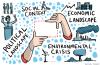
This is a longish article that begins with the problem of people forming emotional attachments to AI systems and tracing through a discussion of AI literacies. I could follow some digressions here, but better to trace directly to the main point, "How do we develop the capacities people need when AI systems are this sophisticated and pervasive?" asks Doub Belshaw. "As I've argued above, the answer isn't better school lessons, but the development of literacies across contexts, through socially-negotiated, context-dependent participation." It's the latter part of this that is most important. I don't know how we get from A to B, but we need somehow to make the transition from classroom-based instruction to content-dependent participation. Forget the 'memory test' model of assessing learning; it's no longer useful, if it ever was. Facility in 'working the network' (whatever that means in a particular context) is what will matter in the future.
Web: [Direct Link] [This Post][Share]
Ungrading 2.0: Labor, Agency, and the Research Archive
Ian O'Byrne,
2026/01/08

Ian O'Byrne is advocating a labour-based system of assessment to replace the existing points-based system. "This is not effort theater. Busywork dressed up as engagement. Labor here means visible, sustained engagement with ideas, people, and artifacts." He writes, " I'm moving to a Labor-Based Grading Contract, paired with a Digital Research Archive (learning log) that replaces quizzes, exams, and most traditional assessments." Sounds great, but in my experience you cannot create a genuine contract between two very unequal parties. Each person has to have the capacity to say no, but students don't have that right. Maybe in theory there's a way to set it up before they enrol in a particular school, program or class, but I don't see anyone in the education system advocating for that kind of openness (though maybe they should).
Web: [Direct Link] [This Post][Share]
The Thinking Class
Carlo Iacono,
Hybrid Horizons,
2026/01/08

I'm looking at this article with this other article in mind: Agile Learning's Strategies for Keeping AI (Mostly) Out of Your Course. Why would you do this? Here's a fresh take from Carlo Iacono: anxiety about AI isn't universal, but reflects the concerns of a specific class of people who practice "a narrower, culturally prestigious form of thinking: abstract, language-heavy, credentialled reasoning that can be made legible to institutions." He calls it 'prestige thinking', practised by "Writers. Researchers. Analysts. Consultants. Managers. Academics. The people who were rewarded for producing legible cognition, and who built identities around the idea that this cognition was both rare and holy. In other words, us." The upshot: "The thinking class is losing its monopoly on prestige thinking. This is probably fine for humanity in the large and definitely painful for those of us whose identities were built on that monopoly. Our anxiety is real, but it is not universal. Our loss is genuine, but it is not everyone's loss."
Web: [Direct Link] [This Post][Share]
The Case for Social AI in Education
Alex Sarlin, Sarah Morin, Ben Kornell, Jen Lapaz,
Edtech Insiders,
2026/01/08

Working with an AI chatbot is essentially a solitary exercise. This leaves the field open for social AI applications, especially in education. Applications include: facilitating group dynamics, matchmaking learners, surfacing hidden connections, relational support, and reflecting patters (there's a bit of cross-categorization in this list, obviously). The authors list a number of companies working on social AI: Breakout Learning, Honor Education, Human2Human AI, OKO Labs, PeerTeach, Swivl's M2, and YoChatGPT. I haven't sampled any of the work from these companies, so I'm not in a position to comment on them, though I've been to each of their websites, and they feel awful (presentation in universally from the teacher's or educational institution's perspective, and while they replicate existing classroom activities, none of these seems to bring anything new to the table). But yes, absolutely, there's a lot of room for AI support for social interaction.
Web: [Direct Link] [This Post][Share]
Public trust in statistics requires three kinds of openness
Ed Humpherson,
Impact of Social Sciences,
2026/01/08

"If one cannot distinguish between lies and statistics, if statistics can be easily manipulated and presented to fit preferred narratives, what then is the real value of statistics as a social technology?" It's a good question. Research involving statistics, argues Ed Humpherson, requires three kinds of openness (paraphrased): first, making the statistical data available; second, being clear about the limits of statistics; and third, listening to users of the statistics and being willing to recognise when users have valid criticism. Humpherson focuses the article on government statistics, but of course these considerations would apply to any company, organbization or institution presenting statistical research to the community.
Web: [Direct Link] [This Post][Share]
There are many ways to read OLDaily; pick whatever works best for you:
- Read in your web browser on this web page, updated weekdays
- Receive a daily or weekly email newsletter by subscribing here
- Subscribe to the RSS feed using your favourite feed reader
- Follow @OLDaily@mastodon.social on Mastodon or elsewhere in the fediverse
- Follow @OLDaily on Bluesky
- Read OLDaily as a LinkedIn Newsletter
- Integrate the open API using the JSON feed
This newsletter is sent only at the request of subscribers. If you would like to unsubscribe, Click here.
Know a friend who might enjoy this newsletter? Feel free to forward OLDaily to your colleagues. If you received this issue from a friend and would like a free subscription of your own, you can join our mailing list. Click here to subscribe.
Copyright 2026 Stephen Downes Contact: stephen@downes.ca
This work is licensed under a Creative Commons License.