
Can Scientific Communities Benefit from a Diversity of Standards?
Michelini, Matteo, Javier Osorio,
PhilSci-Archive,
2025/12/25
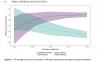
This paper is a pretty tough slog, but the conclusion has been stated with crystal clarity: we tend to think all science should be evaluated according to the same standards, but in fact the use of diverse standards leads to better outcomes. "Scientists with diverse standards can effectively collaborate to achieve satisfying outcomes, particularly when they are highly connected and willing to share intermediate results. The key mechanism driving this success, which we call proxy serendipity, allows scientists to benefit from approaches they might not have pursued independently but that ultimately prove valuable to them."
Web: [Direct Link] [This Post][Share]
The Great Contraction: On the Dignity of Constraint
syres.org,
2025/12/25

Amid all the nonsense on this web site there is one good intuition, plucked out of the air by Kende Kefale. Here it is: "A university is not a platform; it is a heat engine. Its function is to take the raw, chaotic potential of a student's mind and subject it to the intense resistance of difficult ideas, harsh critiques, and immovable deadlines. This process denatures the student's prior assumptions, allowing them to re-fold into higher-order structures of thought." Now of course you don't need a university to pose challenge and hardship to a student; for most of us, life does that, but if you're rich and cultured, this needed to be produced artificially. It functions essentially as a Boltzmann machine, a well-known neural network training mechanism shaking up existing comfortable connections in the mind, and through a process of annealing, producing a more stable and resilient network structure.
Web: [Direct Link] [This Post][Share]
How the Grinch Stole Metrics
Terence Kelly,
2025/12/25

People were looking forward to the Association of Computing Machinery (ACM) pledge that "beginning January 2026, all ACM publications and related artifacts in the ACM Digital Library will be made open access." Instead, we got a holiday surprise. "Starting on or about Saturday 20 December 2025, the DL has placed all of these useful features behind a paywall. 'Premium Access' is now required to access bibliographic and bibliometric features that had been completely free and open for the past several years." I have an interest in this as I have a number of ACM publications (specifically, in ELearn Magazine). Terence Kelly, ACM Distinguished Member and Lifetime Member, is taking to the streets.
Web: [Direct Link] [This Post][Share]
Stop Treating Note-Taking Like Learning
Lisa Nielsen,
The Innovative Educator,
2025/12/25

I understand the intent of this article. Instead of just 'capturing' the content of a lecture or presentation by taking notes, it is better to be actively engaged in learning. "Capture has become automatic, so schools need to stop spending human brainpower on it. Give students the slides. Give them the transcript. Give them the notes. Then use learning time for judgment, synthesis, and creation." But just as the value of note-taking isn't in the tools, it isn't in the activity or the content either. It's in the intention. We are always going to have information presented to us, whether by humans or by computers. How do we make sense of that information? Me, when I take note, what I'm doing is trying to organize it into a form I can understand. It doesn't matter if I ever refer to it again, what I have done is to convert what was a passive listening activity into an active creative activity.
Web: [Direct Link] [This Post][Share]
Landslide; a ghost story
Erin Kissane,
wreckage/salvage,
2025/12/25
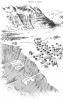
This gist of this article is that we as individuals know a lot less than we think we know; most of what we know is known collectively. In times of stress, however, the bonds that hold that knowledge slip, and the basis for what we know disappears. I think this analysis is largely correct, though not limited (as sometimes suggested in the article) to a single society. It's remarkable how closely the analogy lines up with Wittgenstein's analogy 'riverbed propositions', and I think as well that it might be useful to introduce a theory of plate tectonics to the analogy as well. Anyhow, it's a great article, worth a read.
Web: [Direct Link] [This Post][Share]
There are many ways to read OLDaily; pick whatever works best for you:
- Read in your web browser on this web page, updated weekdays
- Receive a daily or weekly email newsletter by subscribing here
- Subscribe to the RSS feed using your favourite feed reader
- Follow @OLDaily@mastodon.social on Mastodon or elsewhere in the fediverse
- Follow @OLDaily on Bluesky
- Read OLDaily as a LinkedIn Newsletter
- Integrate the open API using the JSON feed
This newsletter is sent only at the request of subscribers. If you would like to unsubscribe, Click here.
Know a friend who might enjoy this newsletter? Feel free to forward OLDaily to your colleagues. If you received this issue from a friend and would like a free subscription of your own, you can join our mailing list. Click here to subscribe.
Copyright 2025 Stephen Downes Contact: stephen@downes.ca
This work is licensed under a Creative Commons License.