
A New Era Begins
Doc Searls,
Doc Searls Weblog,
2025/11/24
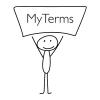
As described here by Doc Searls, "MyTerms describes how the sites and services of the world agree to your terms, rather than the other way around." To start the process, a set of five simple sets of terms are made available (a model popularized by Creative Commons). You can choose between 'service delivery only' (aka SD-BASE), 'data portability', 'data use for AI training', 'data for good', and 'data for intentcasting'. Of course, with websites like mine, I don't collect any data, there's no cookies, no accounts, no surveillance and definitely no adtech. If you want me to send you email, you tell me your email address. That's it. You don't want email any more, I forget your email address. The point of 'MyTerms' (like Creative Commons) is to facilitate commercial use, under the heading of 'free'. My version of 'free' is 'free from all this'.
Web: [Direct Link] [This Post][Share]
The Degree That Never Ends
Carlo Iacono,
Hybrid Horizons,
2025/11/24

This is an article that could stand being half its current length but which makes a useful point. Universities seeking relevance are often advised to "transform the university from a four-year credential factory into a lifelong learning partner." Sounds great, but at a certain point learning, properly so-called, ceases to be an opportunity and begins to be an obligation. "When learning never ends, that space collapses. Every book becomes a potential credential. Every skill a line item on a digital passport. Every moment of growth an opportunity to document, to verify, to add." Or in summary, "Lifelong learning promises empowerment but delivers perpetual dependency... Your expertise is not embodied but rented. Your wisdom is not developed but subscribed to. Extraction dressed as service."
Web: [Direct Link] [This Post][Share]
New Token-Oriented Object Notation (TOON) Hopes to Cut LLM Costs by Reducing Token Consumption
Bruno Couriol,
InfoQ,
2025/11/24

As this short article reports, "the recently released Token-Oriented Object Notation (TOON) aims to be a schema-aware alternative to JSON that significantly reduces token consumption at a similar level of accuracy." Basically, what it does is to remove all the extra quotation marks and punctuation in JSON and well as removing the duplication of field names in individual records. It points (in my view) to the need for a better AI pricing model.
Web: [Direct Link] [This Post][Share]
The existential struggle between being a 'we' and an 'us'
Tris Hedges,
Psyche,
2025/11/24

In Black Like Me John Howard Griffin wrote about 'the hate stare'. It is what Sarfaz Manzoor calls one of the "routine torments of discrimination." It is an example what Jean-Paul Sartre called 'the look', an objectifying glance that classifies you without perceiving you. It's not necessarily a look of hate; it can be subject to any number of emotions, but it always feels distancing. This article captures the same concept from a different direction. You and I are going for a walk; we are going for a walk, and our collective experiences are felt through our embodied subjectivity. 'We' is described through "referring to the plurality as the subject (of an action, belief, judgment, emotion, perception, etc)." But when we are seen by a third party, that person sees us, and being seen this way is a very different kind of collective experience, what W.E.B. DuBois calls "this sense of always looking at one's self through the eyes of others, of measuring one's soul by the tape of a world that looks on in amused contempt and pity." How many of our experiences in education are of 'we' and how many are of 'us'? Image: from my film Bogota.
Web: [Direct Link] [This Post][Share]
Job for 2027: Senior Director of Million-Dollar Regexes
Tim O'Brien,
O'Reilly,
2025/11/24

This short post demonstrates the difference between having AI do something for you, and asking AI how to do that thing. Imagine wanting to remove all the social security numbers from a million documents a day. Using ChatGPT 5, that could cost $6 million a year, accoring to this article. But if you ask ChatGPT how to do it, you be supplied with a regular expression (regex) that can run in any old computer code for a fraction of the cost. "Starting now, you'll be able to make a career out of un-LLM-ifying applications," comments Tim O'Brien.
Web: [Direct Link] [This Post][Share]
There are many ways to read OLDaily; pick whatever works best for you:
- Read in your web browser on this web page, updated weekdays
- Receive a daily or weekly email newsletter by subscribing here
- Subscribe to the RSS feed using your favourite feed reader
- Follow @OLDaily@mastodon.social on Mastodon or elsewhere in the fediverse
- Follow @OLDaily on Bluesky
- Read OLDaily as a LinkedIn Newsletter
- Integrate the open API using the JSON feed
This newsletter is sent only at the request of subscribers. If you would like to unsubscribe, Click here.
Know a friend who might enjoy this newsletter? Feel free to forward OLDaily to your colleagues. If you received this issue from a friend and would like a free subscription of your own, you can join our mailing list. Click here to subscribe.
Copyright 2025 Stephen Downes Contact: stephen@downes.ca
This work is licensed under a Creative Commons License.