
After trying Valve's new VR headset, I'm ready to ditch cables for good
Jacob Ridley,
PC Gamer,
2025/11/12

This appears to be the next step in what we used to call the metaverse - this announcement from Steam about its new controller, gaming PC, and most importantly, VR headset. It's light, wireless, and has something called foveated streaming, which means that it tracks your eyes and delivers higher resolution right where you're looking. They're planning for an early 2026 release so there are many questions, for example, how much they will cost. For me, the question is, can I use them with glasses (which has been my huge issue with VR up to now). Will they impact learning technology? Not right away, but there could be an impact down the road if they pass the gaming and usability test. Here's an hour-long video review.
Web: [Direct Link] [This Post][Share]
How a flawed idea is teaching millions of kids to be poor readers
Emily Hanford,
APM Reports,
2025/11/12

Miguel Guhlin linked to this 2019 article today. It's the most clearly written on the debate between phonics and alternative methods of learning to read that I've seen. Phonics is contrasted with 'three cuing', proposed in 1967 by education professor Ken Goodman, where students are focused on what the word means, not what it sounds like. My take on reading this is that phonics really works when we already know the spoken language or are in a situation where we can practice it a lot. We already know the meaning, so associating a word with a sound is a quick route to comprehension. When learning a second language, however, we don't have this advantage, and we don't want to spend five or six years fully immersed in the spoken language before learning to read it. So there is much more emphasis on meaning. And no matter how you learn, to have advanced comprehension you're going to need much more than phonics.
Web: [Direct Link] [This Post][Share]
Rethink: What is creativity without craft?
Rachel Botsman,
Rethink,
2025/11/12
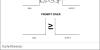
Rachel Botsman warns against a future of "creativity without craft." She draws on Scott Belsky to describe what that means: "'the messy middle' as the essential part of any creative process - the part that teaches you patience, craft, and resilience. It's where mistakes live. Where wrong turns reshape your intuition. Where you learn to sit with the discomfort of not knowing. And the part I love the most, is the deeper you go in this process, the clearer the idea gets." Fair enough, but there's another aspect to consider: the people who need bread mostly don't care about the creativity of the baker. Sure, I too love a beautifully hand-crafted loaf, but not so much that I'm willing to see bread priced out of the reach of most people. Creativity is the conceit of the creator.
Web: [Direct Link] [This Post][Share]
Google tool makes AI cheating easier, teachers say
Carolyn Jones,
The Markup,
2025/11/12

I don't think people have any real problem with this agenda: "Reasoning, logic, problem-solving, writing - these are skills that students need... I fear that we're going to have a generation with huge cognitive gaps in critical thinking skills. ... It's really concerning to me. I want their futures to be bright." But I'm not sure this is the way to get that: "Heuisler decided to ditch technology altogether in his classroom and return to the basics: pencil and paper. Tests, homework and in-class assignments are all on paper." To me, the great thing computers bring to the classroom is that they let people see the consequences of their decisions right away. With paper, you might never see the consequences of what you decide to write. Sure, maybe giving every student a Chromebook and then continuing to lecture like a medieval scholar probably isn't the best way to go. Big surprise they're playing games instead. The challenge is to use the tools to engage the reasoning and problem-solving skills.
Web: [Direct Link] [This Post][Share]
What we lose when we surrender care to algorithms
Eric Reinhart,
The Guardian,
2025/11/12

We can and should talk about care in our institutions. This article is focused on health care, and for some reason, the American health care system, but the message about AI and care applies equally to the education sector. It is essentially this: "when it is installed in a health sector that prizes efficiency, surveillance and profit extraction, AI becomes not a tool for care and community but simply another instrument for commodifying human life... when medicine is reduced to data and transactions, it not only fails patients and demoralizes doctors. It also degrades democracy itself." True, but so does anything. The problem isn't the instrument, but what is being prized. I mean, the American health care system - or education, or anything - can be awful all by itself, without AI, if the wrong things are prized. Via Miguel Guhlin.
Web: [Direct Link] [This Post][Share]
AI and the Future of Learning
Ben Gomes, Lila Ibrahim, Yossi Matias, Christopher Phillips, James Manyika,
Google,
2025/11/12
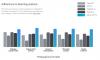
I imagine this document will be eviscerated by the anti-AI crowd, and it won't be entirely without cause. The basic premise is correct, in my view: "while AI is by no means perfect, it does have the potential to reduce barriers and allow people to learn more effectively than before." However, the picture of education offered here is what we might call 'the Davos picture' - based on the so-called 'science of learning' and littered with phrases like "enabling more personalized and focused support while reducing cognitive load" and "target learners at the right level to close understanding gaps" and "foundational knowledge, study skills, motivation" and "a resilient labor force" and "new forms of instruction or assessment" and "look beyond today's labor market to anticipate the skills tomorrow's economy will demand" and more of the meaningless talk that does not resemble at all any of the serious work being done in education and technology today.

Web: [Direct Link] [This Post][Share]
There are many ways to read OLDaily; pick whatever works best for you:
- Read in your web browser on this web page, updated weekdays
- Receive a daily or weekly email newsletter by subscribing here
- Subscribe to the RSS feed using your favourite feed reader
- Follow @OLDaily@mastodon.social on Mastodon or elsewhere in the fediverse
- Follow @OLDaily on Bluesky
- Read OLDaily as a LinkedIn Newsletter
- Integrate the open API using the JSON feed
This newsletter is sent only at the request of subscribers. If you would like to unsubscribe, Click here.
Know a friend who might enjoy this newsletter? Feel free to forward OLDaily to your colleagues. If you received this issue from a friend and would like a free subscription of your own, you can join our mailing list. Click here to subscribe.
Copyright 2025 Stephen Downes Contact: stephen@downes.ca
This work is licensed under a Creative Commons License.