
WikiDebates: Advancing Structured Dialogue Across the Wikimedia Movement
Dev Jadiyaand, Olaniyan Olushola,
Diff,
2025/11/10
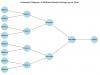
According to the website, "Wiki Debate is a participatory, debate-style engagement initiative designed to foster civil, structured discourse among Wikimedia affiliates." Jadiyaand and Olushola argue that "a modern, open debate platform is not a luxury; it is a necessity for a global network that relies on community wisdom and continuous improvement." I am inclined to agree, but the design is important. Setting up an adversarial-style area with 'winners' and 'losers' is not a recipe for consensus and progress, in my view. So I'm not sold on the specific process being implemented, "teams preparing arguments for or against key Wikimedia topics (with) moderators, jury selection, and community voting to ensure fairness." But if Wikipedia has shown anything over the years, it is the flexibility to learn and develop new methods.
Web: [Direct Link] [This Post][Share]
An argument for Classic Source Criticism in the Age of Misinformation
Hinnerk Frech,
Dataetisk Tænkehandletank,
2025/11/10

Hinnerk Frech argues with some merit that "source criticism does not care about technology. The method operates at a level that is 'deeper' than the layer of any given technology. Therefore, source criticism as a method never lacks behind the most recent technological developments." The idea of source criticism, as described briefly in this article, is that evaluation can be based (in part) on a few basic questions about the source: who was the author, when was it created, is it a first hand account, what do others say? Source criticism works in the age of AI-generated content, argues Frech. For example, "the 'who is the author' question easily debunks a large chunk of AI-generated profiles on social media today. It is impossible to figure out where the material is coming from, so we cannot trust it."
Web: [Direct Link] [This Post][Share]
Build Your Own Database
Nanda Syahrasyad,
Not a Number,
2025/11/10

"If you were to build your own database today, not knowing that databases exist already, how would you do it?" This is a really neat article and visualization of how to build a key-value database from scratch. What I really like about it is that it takes you step by step through the thinking process - from the idea of just putting statements like '18=cat' in a text file to append-only databases to sorting and indices and search.
Web: [Direct Link] [This Post][Share]
The Microchip Era Is About to End
George Gilder,
Discovery Institute,
2025/11/10

George Gilder, in a Wall Street Journal article last week (paywalled, but archived at GgNZ0), wrote that "the end of chips" is coming. "What's next? A wafer-scale integration model, which bypasses chips altogether." As Ken King writes in LinkedIn, "The next computing age will not be defined by smaller chips but by unified wafers—compact, energy-efficient processors that condense today's sprawling data centers into devices the size of a suitcase." To be clear: wafers are already here, and have been in development for some time (they're not something recent being developed by Elon Musk, despite what is suggested in the article). The actual building where I work also contains the Canadian Photonics Fabrication Centre (CPFC), "the only end-to-end pure play compound semiconductor wafer manufacturing facility in Canada." CPFC was mentioned in the federal budget last week ("exploring options to best position the Canadian Photonics Fabrication Centre to attract private capital"). You can also read about an American wafer initiative in this 2020 in this Venture Beat article. Now there are sceptics, of course, touting the benefits of microchips. And microchips won't disappear; you won't be using wafers in your phones or watches.
Web: [Direct Link] [This Post][Share]
The 450 Movement. I do peer review and I want you to pay...
James Heathers,
Medium,
2025/11/10
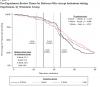
At $450 per review, I confess that I would probably rescind my longstanding personal policy of not doing peer reviews and maybe start doing them.To be clear: I've done lots of project and funding reviews as part of my day job; it comes with the salary and I don't mind doing it (I actually learn a lot). But academic journals aren't my employer, and they're not paying my employer. They expect people to work for them for free. That doesn't interest me. But if they were paying? Yeah, especially during my upcoming retirement as I look for new forms of part-time income to supplement my public service pension (which is not, as the media claims, gold-plated), doing a few reviews a week would work really well for me. But of course, large and wealthy publishing corporations didn't get that way by actually paying their academic employees. See also: An Experiment with Referees at the Journal of Public Economics. Via Andrew J. Steinmetz.
Web: [Direct Link] [This Post][Share]
There are many ways to read OLDaily; pick whatever works best for you:
- Read in your web browser on this web page, updated weekdays
- Receive a daily or weekly email newsletter by subscribing here
- Subscribe to the RSS feed using your favourite feed reader
- Follow @OLDaily@mastodon.social on Mastodon or elsewhere in the fediverse
- Follow @OLDaily on Bluesky
- Read OLDaily as a LinkedIn Newsletter
- Integrate the open API using the JSON feed
This newsletter is sent only at the request of subscribers. If you would like to unsubscribe, Click here.
Know a friend who might enjoy this newsletter? Feel free to forward OLDaily to your colleagues. If you received this issue from a friend and would like a free subscription of your own, you can join our mailing list. Click here to subscribe.
Copyright 2025 Stephen Downes Contact: stephen@downes.ca
This work is licensed under a Creative Commons License.