Giving voice to women students: designing oral assessments for inclusion and validity
Maria Rae, Joanna Tai, Phillip Dawson,
Assessment & Evaluation in Higher Education,
2025/11/03
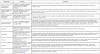
There's a lot of content in this paper to argue for what is, on reflection, a fairly obvious and valid point, but of course without the argumentation it would be too easily dismissed as irrelevant. Here's the argument: in response to the use of AI by students to complete assignments, many educators are proposing that oral assessments be used instead. However, oral assessments put people who have difficulties speaking in public on the spot. "Oral assessments have traditionally been viewed as more 'male-orientated'. Conversely, women have greater public speaking fear, report lower levels of confidence, tend to assess themselves worse and face bias against feminised voices." Oral presentation also embeds cultural differences into assessment. Now, sure, that doesn't mean we should never use oral presentation (after all, it's required in a lot of the jobs people are learning to do). But it does mean these differences need to be recognized and planned for.
Web: [Direct Link] [This Post][Share]
Advanced Learning Analytics Methods
Mohammed Saqr, Sonsoles López-Pernas,
SpringerLink,
2025/11/03
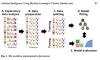
This is a remarkable book, rich in detail, that delivers what the title promises. To master this book would take a long slow read, and would also involve working through the R tutorials that accompany many of the chapters. I (obviously) did not read it at anything like this sort of depth, because I have other things to do for the rest of the month. But I did read lightly through two thirds of the chapters, enjoying especially the discussion in Part III on complex dynamic systems, including the intro section by Saqr, et al., and the section on transition network analysis. For those concerned (as I am) about the tendency of analytics to apply generalizations to individuals, the final section on idiographic analytics, that is, "within-person analysis is conducted on a single person (N=1)." There's just so much stuff in this book, I really regret putting it aside and moving along. Open access.
Web: [Direct Link] [This Post][Share]
Open Science Network
Bonfire,
2025/11/03
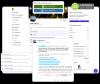
I may as well just quote Laurens Hof: "The Bonfire project allows for various types of fediverse platforms to be build. Bonfire can be used to build social platforms, this is called the Bonfire Social part. But Bonfire is also working towards an Open Science version of the platform, called Open Science Network. The platform connects to various scientific integrations, such as persistent researcher identifiers (ORCID), archival repositories and DOIs, and federated open-science infrastructure so discussion can become formalised, creditable and preserved. A demo video of what that looks like can be seen here. Bonfire says they expect to have a 1.0 release candidate ready before the end of the year. In other science-to-fediverse connections: Encyclia is a bridge that connects ORCID records to the fediverse, and they started bridging the first few researchers ORCID's accounts to the fediverse." How natural it would be to connect this to online learning platforms.
Web: [Direct Link] [This Post][Share]
This label will put your journal's research integrity in black and white
Famira Racy,
Public Knowledge Project,
2025/11/03
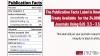
The major question this article raises for me is whether these are the indicators that reveal a journal's research integrity. The 'Publication Facts' label lists the following for each article: peer reviewers (#), data available (y|n), external funding (y|n), competing interests (y|n), articles accepted (%), days to publication (#), indexed in (links), editorial team (links), publisher (link), society (link). Some alternatives better revealing journal integrity might include: ethical review (y|n), author h-index (#), citations (#), same-journal citations (%), corporate funding ($), publisher profits ($), average sample size (#), diversity (%), and probably a few more I haven't thought of. Rather than viewing integrity in black and white, I'd like to see it displayed in full colour.
Web: [Direct Link] [This Post][Share]
'Keep Android Open' Campaign Pushes Back On Google's Sideloading Restrictions
2025/11/03
I can't help but comment wryly on how inevitable it was that Google would eventually close access to its open source platform. Thus, today, Slashdot: "A 'Keep Android Open' campaign is pushing back on new rules from Google that will reportedly block users from sideloading apps on Android phones. It's unclear who's running the campaign, but a blog post on the free Android app store F-Droid is directing users to visit the campaign's website, which urges the public to lobby government regulators to intervene." The best sideloaded apps. One of the apps that people have been sideloading: Bromite, an ad-blocking version of Chrome.
Web: [Direct Link] [This Post][Share]
The Metal Box: Building My Proxmox Homelab
Ian O'Byrne,
2025/11/03

Obviously not everybody can build and maintain their own personal data server, and that's too bad. But as this article amply demonstrates, it's still a lot to set up. Still, as Ian O'Byrne writes, it can be an incredibly valuable exercise. "You will break things. That' not failure. It's how you learn to truly understand the system. Every rebuild makes you more confident and faster at diagnosing problems... The key is building in ways that make rebuilding safe: maintaining good backups, clear documentation, and separating your OS from your data." I'll be watching future articles on this with interest. It's not for everybody, but it may well be for me. Related: Proxmox.
Web: [Direct Link] [This Post][Share]
There are many ways to read OLDaily; pick whatever works best for you:
- Read in your web browser on this web page, updated weekdays
- Receive a daily or weekly email newsletter by subscribing here
- Subscribe to the RSS feed using your favourite feed reader
- Follow @OLDaily@mastodon.social on Mastodon or elsewhere in the fediverse
- Follow @OLDaily on Bluesky
- Read OLDaily as a LinkedIn Newsletter
- Integrate the open API using the JSON feed
This newsletter is sent only at the request of subscribers. If you would like to unsubscribe, Click here.
Know a friend who might enjoy this newsletter? Feel free to forward OLDaily to your colleagues. If you received this issue from a friend and would like a free subscription of your own, you can join our mailing list. Click here to subscribe.
Copyright 2025 Stephen Downes Contact: stephen@downes.ca
This work is licensed under a Creative Commons License.