
Things You Maybe Don’t Know about Conferences
Natalya Hierholzer,
Online Learning Consortium,
2025/10/31

So I learned from this article that food is the greatest cost for a conference organizer. For example: "a can of soda costs the organization up to $14... OLC is typically charged $158 per gallon of coffee." Why? Location: for example, OLC Accelerate is being held at "the magical Swan and Dolphin Resort in sunny Orlando, Florida." Why? I know, it's hard to find event venues that don't have restrictions on external food and services. But it's hard to find any venues that will charge more than premium hotels in Florida. My advice: if you can go online, do it. If you can't go online, find good and reliable venues that don't rip you off. Students and taxpayers are paying those fees, in many cases. It doesn't seem right to turn around and give it to Disney for a $14 can of Coke.
Web: [Direct Link] [This Post][Share]
Introducing CommonsDB Explorer
Doug McCarthy,
CommonsDB,
2025/10/31

From the website: "CommonsDB Explorer helps you discover declarations about Public Domain and openly licensed works. These declarations are provided by trusted repositories of cultural, scientific, and creative materials, including the Europeana Foundation and Wikimedia Commons. By bringing together rights information from these sources, CommonsDB makes it easier to confidently reuse, share, and build on openly available content." I'm not sure I would ever have the time to use it to declare my 40,000 images, but for institutions with the resources, it offers a good way to document the status of their resources.
Web: [Direct Link] [This Post][Share]
What is transdisciplinary research?
Utrecht University,
2025/10/31
The diagram from this post was shared on LinkedIn today and it offers an interesting (if coincidental) companion piece to the 'authentic universities' paper also shared today. What I like is that it offers a look at their changing role - their 'third mission' without stating what they need to be (there's none of this 'deduplication' agenda). Indeed, making decisions up front and top-dopwn is exactly what universities shouldn't be doing. "Engaging stakeholders is often critical for addressing problems because we can't understand or solve societal challenges without their knowledge and action. It is also more likely that research ideas are adopted by stakeholders when we engage with them directly and build trust over time. There is a long history of participatory practice and extensive academic literature that lends rigor to this approach."
Web: [Direct Link] [This Post][Share]
Experimental evidence of the effects of large language models versus web search on depth of learning
Shiri Melumad, Jin Ho Yun,
PNAS Nexus,
2025/10/31
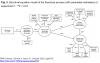
This article is a good example of why it's important not to generalize from a single study. Here's the story the study presents: "compared with those who used ChatGPT, participants who used Google search invested more effort in gathering and synthesizing information, as manifested in more time spent on the search task. This greater search effort led participants to develop deeper knowledge from their search, as manifested in greater felt learning from the search results, greater felt ownership over the knowledge they acquired, and thinking that the search results contained more comprehensive information on the subject." Now, is the effect the result of using AI? Or is it a result of different sources found through each search. I find Perplexity, for example, doesn't discriminate in search results the way I do when using Google. I skip over the churnalism, for example, while Perplexity does not. If I'm using Google Scholar, this distinction is even more pronounced. This study doesn't really trace the difference in effort to the cause, so it just blames the result on AI when it could be an entirely different factor. As the papers so often conclude, more research is needed.
Web: [Direct Link] [This Post][Share]
Authentic Universities: Effective university identities in times of transition
Frank Ziegele, Ulrich Müller,
Passagen Verlag,
2025/10/31
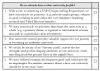
Dramatic changes in society - from political reinterpretations of 'facts' to developments in AI - are forcing universities to rethink their identities. According to this book (191 page PDF) they need to find their 'authentic' identities, which means " its particular strengths and distinctive characteristics combine to form a coherent and clearly profiled identity, one that is in accord with the needs of society as a whole and with the expectations of the stakeholders." This creates a 'third mission' (after teaching and research), "to become involved in policy discussions and decision-making by supplying the facts and findings that offer an objective basis for this... seeking out points of contact with society and promoting a cross-fertilisation of ideas." This in practical terms means specialization, differentiation, prioritization, and communicating this 'authentic identity' to the world. On the one hand, this seems to respond to significant need for change with a branding exercise. It is also a restatement of the oft-heard call for deduplication. But an actually intelligent system requires redundancy and interoperability of the sort that 'authentic identity' seems to fail to provide. Via HESA's Friday Fifteen.
Web: [Direct Link] [This Post][Share]
There are many ways to read OLDaily; pick whatever works best for you:
- Read in your web browser on this web page, updated weekdays
- Receive a daily or weekly email newsletter by subscribing here
- Subscribe to the RSS feed using your favourite feed reader
- Follow @OLDaily@mastodon.social on Mastodon or elsewhere in the fediverse
- Follow @OLDaily on Bluesky
- Read OLDaily as a LinkedIn Newsletter
- Integrate the open API using the JSON feed
This newsletter is sent only at the request of subscribers. If you would like to unsubscribe, Click here.
Know a friend who might enjoy this newsletter? Feel free to forward OLDaily to your colleagues. If you received this issue from a friend and would like a free subscription of your own, you can join our mailing list. Click here to subscribe.
Copyright 2025 Stephen Downes Contact: stephen@downes.ca
This work is licensed under a Creative Commons License.