
Ground-level Impacts of the Changing Landscape of Higher Education
Glenda Morgan,
On EdTech,
2025/10/23
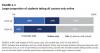
This article examines a report from the Virginia Community College System (105 page PDF) and punctuates it with some relevant questions for college systems generally. The summary is pretty accurate and picks out exactly the diagrams I would have, including especially the huge drop in in-person only classes (and corresponding jump in online and hybrid course delivery) over the last ten years. Two of the three questions address this: "How do we deliver effective student supports as enrollment moves online? As demand shifts away from on-campus learning, do physical campuses need to get smaller?"
Web: [Direct Link] [This Post][Share]
Meet Mico, Microsoft’s AI version of Clippy
Tom Warren,
The Verge,
2025/10/23

For those of you who don't remember Clippy, let me assure you that Clippy was... annoying. At first glance it appears that Mico will be no less so. "Mico is now being turned on by default in Copilot's voice mode, where you'll also have the option to turn the bouncing orb off." Ack. More, there's a Learn Live version of Mico that is "a Socratic tutor that 'guides you through concepts instead of just giving answers.'" Trust me, when I ask an AI something, I want an answer, not a dialogue about how my previous intuitions about the subject were wrong. And the Learn Live version of Mico distinguished by - get this - its glasses. Because of course glasses = teacher nerd, right? Related: Copilot rolls out group chats.
Web: [Direct Link] [This Post][Share]
HP ZGX Nano AI Station - AI PC for Business
Hp,
2025/10/23

Back in the day, we used to have external hard drives. Now we're entering the world of external AI drives. It's made possible through devices like this AI workstation and connecting software such as the ZGX Toolkit that "streamlines AI workflows by pairing powerful local compute with open-source tools, built-in discovery, and easy export". Relevant systems in this category include HP's ZGX (more), Nvidia's Project DIGITS, Acer's Veriton GN100 AI Mini Workstation, and Lenovo's Mini AI Workstation. Prices are in roughly the $US 3000 range, which if history teaches us anything, will be in the $300 range for the same power in just a few years. You'll be able to put a few on a network and access them with your Raspberry Pi computers.
Web: [Direct Link] [This Post][Share]
Jacob McDowell, Externalism without Essentialism: Hilary Putnam on Natural Kind Terms - PhilArchive
Jacob McDowell,
PhilPapers, Synthese,
2025/10/23

When we teach people about what words mean, what are we teaching them? Is the meaning of a word based on what the word refers to in the world? Is it based on some sort of convention about what such words mean? Or is the meaning of a word based on something else entirely? This paper looks at two philosophers who agree on an 'externalist' conception of meaning, that is, that meaning is based on what the word refers to in the world. But is there, as Saul Kripke would argue, a necessary connection between meaning and the object being referenced? Hilary Putnam offers a 'twin earth' argument where, say, we use the word 'water' in the same way, but where the actual substance of water isn't H2O, it's XYZ. Meaning could still depend on what we refer to, but it's not necessary that we always refer to the exact same thing. This is a fun paper describing these considerations and it offers the sort of argument that makes me think meaning isn't externally based at all. 32 page MS-Word. Image: Philosophy Now.
Web: [Direct Link] [This Post][Share]
OpenStax to NotebookLM Workflow
Tom Woodward,
Bionic Teaching,
2025/10/23
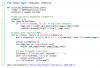
So I think we're about to be deluged by a ton of these AI-based learning platforms. They'll be designed along the same lines as the AI-based news services and even the new AI-based browsers - that is to say, they'll insert a layer of AI in between the user and the actual source. Tome Woodward is experimenting with that kind of thing here, as he uses Notebook LM as (shall we say) an 'interpreter' for an OpenStax textbook (is 'interpreter' the right word to use here? I haven't really seen any terminology that describes this, and 'interpreter' works in both an ordinary and technical context). There are many questions - does the AI add value, does it interpret the base text accurately, does it insert its own spin or marketing, does it enclose the public commons of knowledge and information? Woodward doesn't offer answer to these questions, but he's beginning the sort of exploration we need to undertake in order to get a sense of the whole domain.
Web: [Direct Link] [This Post][Share]
ChatGPT's Atlas: The Browser That's Anti-Web
Anil Dash,
2025/10/23

OpenAI has released a new ChatGPT browser called Atlas. Not surprisingly, it has generated a lot of commentary, the most trenchent of which is this post from Anil Dash. It "actively fights against the web," he argues, and it's hard not to agree. "Atlas substitutes its own AI-generated content for the web, but it looks like it's showing you the web," he notes. And that's a problem. If I search for 'Tylor Swift', I want to see Taylor Swift's own web page, not an AI generated article about Taylor Swift. "The clear intent was that I was meant to stay within the AI-generated results, trapped in that walled garden." But it's not just that. Why are we typing queries into our browser at all? The great thing about the web is that we can click a link and be taken somewhere. "It's very clear," writes Dash, "that a lot of the new AI era is about dismantling the web's original design."
Web: [Direct Link] [This Post][Share]
The Human Fabric of Knowledge Architecture
François Rosselet,
LinkedIn,
2025/10/23
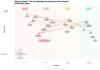
We've said all this here before, but now that it comes in the form of a Real LinkedIn Article, maybe more people will believe it: "In this world, strategy isn't planned but continuously sensed... You have systems that detect pattern shifts and surface strategic implications in real time. Expertise isn't siloed but networked. The best answer to a question isn't in one person's head. It's synthesized from ten people's partial knowledge, combined in seconds, not weeks. Learning isn't periodic but embedded. You don't send people to training. The systems they use teach them as they work, compounding expertise with every interaction." The author references Wardley Maps but doesn't provide a link; here's one.
Web: [Direct Link] [This Post][Share]
News Integrity in AI Assistants
Pete Archer, Jean Philip De Tender,
EBU, BBC,
2025/10/23
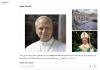
Obviously we do not want generative AI services such as Gemini, ChatGPT and CoPilot providing wrong answers to questions about the news. So the findings in this report are concerning, as we find significant sources of error in citing sources, getting facts right, and providing context. But as always, we should compare what we have now with what we had before, which was social media sites like Twitter and Reddit, parody sites like the Onion and Beaverton, and late night television like Colbert and the Daily Show. Oh, and the real news? Well you tell me, which one is accurate: Fox News or MSNBC? Sky News or Al Jazeera? This report itself exhibits some of the flaws it describes: it complains, for example, that ChatGPT says Pope Francis is the current pope, but when I tested it, it correctly reported that Leo XIV is the current pope. It labels as "editorializing" factual statements like "it is crucial to limit the rise in global temperatures" and "Trump's tariffs were calculated using his own, politically motivated formula." And it argues "publishers need greater control over whether and how their content is used by AI assistants," a claim not even remotely supported by the evidence offered in the paper. They're right to point to a problem, but perhaps they have a vested interest in overstating it.
Web: [Direct Link] [This Post][Share]
There are many ways to read OLDaily; pick whatever works best for you:
- Read in your web browser on this web page, updated weekdays
- Receive a daily or weekly email newsletter by subscribing here
- Subscribe to the RSS feed using your favourite feed reader
- Follow @OLDaily@mastodon.social on Mastodon or elsewhere in the fediverse
- Follow @OLDaily on Bluesky
- Read OLDaily as a LinkedIn Newsletter
- Integrate the open API using the JSON feed
This newsletter is sent only at the request of subscribers. If you would like to unsubscribe, Click here.
Know a friend who might enjoy this newsletter? Feel free to forward OLDaily to your colleagues. If you received this issue from a friend and would like a free subscription of your own, you can join our mailing list. Click here to subscribe.
Copyright 2025 Stephen Downes Contact: stephen@downes.ca
This work is licensed under a Creative Commons License.